
BY JOHN HOUANIHAU
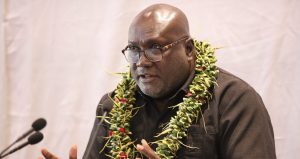
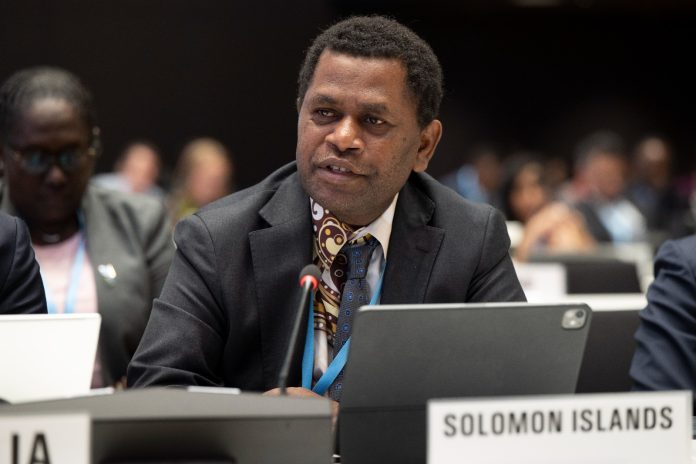
Member of Parliament (MP) for South New Georgia/Rendova- Tetepare Constituency, David Gina, said the government tends to spread money thinly across too many programs.
He voiced this when delivering his speech during the Sine Die Motion in parliament this week.
“When targeting is weak, budgets look busy on paper but produce little change on the ground. Let me give you two quick examples. The budget figures we have recently scrutinised show persistent problems with targeting,” he said.
He said that the total budget for education in 2026 is $2.8 billion, yet only $83.7 million, around 5 percent, is allocated to development.
“The rest is absorbed by the current costs, including $129 million for teacher payback. We are paying salaries and arrears, but investing very little in classrooms, water, sanitation, and the unreformed lead delivery.
“In agriculture, where the government says growth and exports are the priority, the problem is again clear. The Ministry’s total budget falls from $90 million in 2025 to about $87 million in 2026, with development funding cut by about 20 percent. At the same time, over $72.5 million in donor-funded advanced warrants temporarily prop up activity,” Gina said.
He said that growth is driven largely by prices and donors, not sustained national investment.
“We speak of deficit reduction, yet the deficit still sits around 7.5 percent, with projected improvement rates relying heavily on donor support. Removed donor assistance and the underlying fiscal position remains fragile,” he said.
He said that this is not consolidation driven by reform, it is consolidation driven by assumptions.
He adds that borrowing pressure also coexists with spending patterns that weaken returns.
“Education and health budgets remain dominated by recurring costs, with development shares of roughly 5 percent in education and 8 percent in health. Borrowing in such a structure sustains wages and arrears rather than builds productive assets. If borrowing continues to rise while reform lags, future budgets will be retained by repayment schedules, not by Parliament’s priorities,” he said.
He said that fiscal responsibility requires borrowing only where returns are clear, closing revenue leakages and protecting development space.
“Again, that is the test this House must apply as we conclude this session,” Gina said.