Home Blog Page 1542

Deeper concerns over accountability and resourcing relating to the state of RSIPF police vehicles

0

DEAR EDITOR, the Solomon Islands Police Commissioner recently said the Force had 100 vehicles but struggling to maintain them,

Mr Varley explained, “A lot of our vehicles are breaking down regularly and a lot of them have been gifted and donated over the RAMSI years.”

The Commissioner went on to say that the Force was looking into an Australian programme to look into the overall fleet repair status and sustainability of the vehicles.

In 1999 I supported a plan to introduce a mobile repair and serviceability unit capable of inspecting and servicing the fleet of police vehicle which then consisted of less than 40 vehicles throughout the whole country.   The plan did not materialise because the government could not financed the establishment of such a unit.

In those days there was no regional government support to prop-up the local resources and operational requirements of the police service, with the exception that in 1997, prior to the general election in the Solomon Islands, the Taiwanese Government gave the police some new land rovers, a bus and several motor cycles.

Several key historical problems existed in the RSIP in those days and these were the poor pay of police officers and limited resources for equipping members in their work and the very poor state of police facilities and housing.

In 1999 the strength of the RSIP was less than 800 because a strict moratorium on recruitment prevented recruitment to fill the authorized establishment set at 999.

The 14 years that RAMSI spent in the Solomon Islands brought about many of the reforms in the local police service that one had planned for but could not achieve due to the dire financial state of the Solomon Islands Government in the period 1997-1999.

All are appreciative of the help Australia gave in those years

It is no doubt in Australia’s strategic interest to continue to see the reformed RSIPF maintain standards and to be operationally resourced but I take the view that it is the responsibility of the Solomon Islands Government, not Australia, to ensure the needs of the local, sovereign, police service.

When I addressed the TRC in October 2010, I said,

“The police service must never again be allowed to degenerate into the state in which I found it in 1997 but must be fully equipped, trained, resourced and maintained in an operational state of readiness at all times.”

Some might disagree with me that in the ongoing circumstances of economic difficulties the Solomon Islands Government must assume the responsibility of providing for its own national police service but my view is the fiscal crises surrounding government spending must not threaten public safety as was the case when internal ethnic divisions erupted in late 1998.


Yours sincerely

FRANK SHORT

Dual Citizenship and Parliament

0

Allowing dual citizenship transforms a portion of the population from a financial burden to a resource

GARY HATIGEVA

SINCE it was proposed and drafted, I have been puzzled and trying to understand the concept of dual citizenship and this made me wonder, how many more of our citizens are thinking the same?

To start off, based on in-depth readings and researches, dual citizenship involve the immediate holdings with more than one Citizenship, with each inferring certain rights and responsibilities that would normally adhere to a citizen in each of the individual countries.

These rights and duties apply, in most cases, irrespective of the length of time that the person spends in that particular country or the extent of his or her political, economic or cultural ties.

We have also been asking about the differences between citizenship and nationality so to understand this, let’s take the United Kingdom as an example, which is made up of the ‘home nations’ of England, Northern Ireland, Scotland and Wales.

If you were born and raised in any of the four constituent nations, you are British. If asked your nationality, you would in all likelihood describe yourself as English, Irish, Scottish or Welsh.

The main difference is that citizenship is a political term, drawing its importance from the economic, political and social rights and obligations that come with it.

And one might also ask, why would a government allow one of its citizens to pledge allegiance to another country and remain a citizen?

Well, after all, many of the rights and responsibilities of the second or third citizenship held may lead to a clear conflict of interest. It may mean voting in another country’s elections, running for office or even serving in the armed forces of a potentially hostile country.

And you might also ask, what the economic benefits are for any country, Solomon Islands for that matter and why then do we find that governments are not only tolerant, but in many cases welcoming of this phenomenon?

Researches show that governments do so to harness the energy and financial resources of their geographically dispersed population.

Researchers and specialists have also agreed that Migrant networks influence cross-national ties between homelands and host-lands. They are an economic and political resource, acting as the human face of their homeland.

So, they engage in lobbying, pressuring host governments for different policies that benefit their homeland and through engagement promote their homeland’s interests and become would-be ambassadors.

From these findings, I can or if you care, we can confidently conclude that economically, allowing dual citizenship transforms a portion of the population from a financial burden to a resource.

In October 2013, the World Bank reported that remittances, people sending money back home, totalled up to $414 billion in the developing world and India alone received $71 billion from its citizens living abroad in 2013.

For the individual, moving abroad can either be financial heaven or an absolute nightmare depending on the level of planning that goes into the move.

Dual citizenship can have several distinct advantages including the freedom to travel, the ability to find a better place to settle and perhaps retire.

For the international transient investor there are many considerations. It may allow you to broaden your financial horizons through the expansion of your investment activities and the heightened privacy that it may allow, which depends very much on your personal circumstances, dual citizenship may also be extremely beneficial from a tax-planning perspective.

And that also depends on individual home country’s laws, expatriating can come with a host of financial implications that you must be aware of and successfully navigate early on to avoid the all too common, and potentially costly pitfalls.

Tax considerations alone include remittances, exemptions, double tax treaties, residency and domicile considerations, overseas tests, sufficient ties tests and split year treatment. These in turn will impact inheritance tax, capital gains tax, estate tax, income tax and gift tax back home.

Just like in the case of some of the international footballers with dual citizenship who must decide which country to play for, choosing whether to focus your economic activity in your homeland or host-land throughout your life may turn out to be one of the most important financial decisions you will have to make.

The considerations will vary substantially based on an almost infinite number of very individual factors. If you don’t have the required knowledge, time and inclination to personally manage this financial conundrum, then it may be prudent to consult with a professional adviser.

And as Parliament prepares to meet in two weeks, it is also the cry of our foreign nationals for Parliament to consider the bill and have it become law.

These people were economically forced to give up their Solomon Islands citizenship or rights, which is a trend that continues to see growing stats. Showing more and more of our people are looking to where there are green pastures.

The proposed dual citizenship bill for Solomon Islands was promised to be introduced to Parliament by this year and parliament needs to put prioritisation into its bills. Which bills will have direct and long term positive impacts on our human resources and economy?

PM agrees on Pacific Games proposal with PNG counterpart

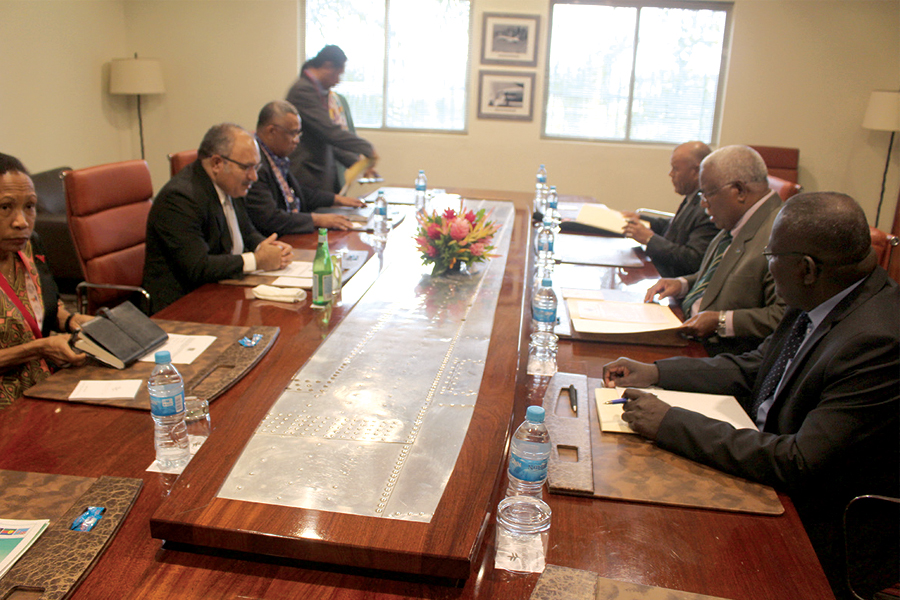
Both leaders discussing during the bilateral meeting.

PRIME Minister Rick Houenipwela has initiated a new proposal with his PNG counterpart Peter O’Neil which will see PNG providing financial support towards the Pacific Games.

Both Prime Ministers met yesterday for bilateral talks and agreed for PNG to redirect a portion of its grant assistance of K40 Million to help build infrastructures and provide technical assistance to Solomon Islands for the 2023 Games.

This will be subject to joint consultations between both parties.

Prime Minister Hou has acknowledged that Solomon Islands can learn a lot from PNG following their successful hosting of the Games in Port Moresby in 2015.

The Prime Minister said this grant can be put to good use if it is redirected to infrastructure projects like the Pacific Games rather than on untied commitments like in the past.

“We appreciate and acknowledge budget support to Solomon Islands over the years and believe this grant can be utilised more through tangible and impact projects,” Hou said.

PNG Prime Minister Peter O’Neil in response has welcomed the initiative by the Solomon Islands Prime Minister.

“PNG has a lot to offer in infrastructure development and are prepared to assist Solomon Islands in its preparations towards the 2023 Games,” he said.

Prime Minister O’Neil said he will send his Sports & APEC Minister and his team next month to start identifying areas and meet with Solomon Island officials to kick off this initiative.

The PNG Prime Minister has also encouraged the Solomon Islands Government and people to work together to successfully deliver the 2023 Games and to avoid last minute preparations.

“PNG stands reeady to support Solomon Islands,” O’Neil assured Hou.

Meanwhile, both leaders have also acknowledged the long and cordial relationship shared between the two countries.

Both leaders have also acknowledged that there should also be more emphasis on the trade and investment opportunities shared and the people to people connections.

Hou and O’Neil have also agreed to fast track the technical development and cooperation framework between the two countries.

This will guide the formulation of future memorandum of understanding for sustainability of selected industries and sectors for economic growth.

–OPMC PRESS

SI & PNG agree to harmonise student visa arrangements

0
Prime Minister Rick Houenipwela and his PNG counterpart Peter O’Neil

PRIME Minister Rick Houenipwela has successfully submitted to his Papua New Guinea counterpart Peter O’Neil to harmonise visa arrangements for our students.

The Prime Minister raised with his PNG counterpart that the current visa arrangements whereby student visas are obtained in Port Moresby has caused a lot of inconvenience to Solomon Islands students and has affected their studies.

Therefore, the Prime Minister has requested to his PNG counterpart to consider returning student visa arrangements to Honiara.

As such, PNG Prime Minister Peter O’Neil has accepted Prime Minister Hou’s request to harmonise the current arrangement so that student visas can be obtained at the PNG high commission office in Honiara rather than in Port Moresby.

“This is one of the areas that have affected our students and I thank you Prime Minister for taking into consideration our concern that had been affecting our students,” Hou said.

Hou has also raised the issue with the timely disbursement of student allowances of our sponsored students under the TESAS scheme to his PNG counterpart which Mr O’Neil has agreed to consider and address.

These are welcoming news for our students.

–OPMC PRESS

Nurse association supports mass deployment to Vanuatu

0

BY LYNTON AARON FILIA

SOLOMON Islands Nursing Association (SINA) fully supports the mass movement of registered nurses to work in Vanuatu this year.

This announcement follows the news that 100 of our experienced nurses will leave this year for Vanuatu.

SINA believes this move will promote Solomon Islands and explore new ideas and work experience at the regional level.

SINA National General Secretary, Mr Steven Maitani said the association also appreciates Vanuatu’s gesture to employ our nurses.

“We are not discouraging the idea, and nurses have all the rights to explore new ideas to boost its professional career,” Maitani said.

However, having said this, Maitani also understands the adverse impacts this brain drain will have on the medical and health service of Solomon Islands; more so on senior positions of management level and qualified nurses.

He also believes Solomon Islands should have policies which would guideline mass movements of nurses overseas.

Maitani said SIMA and the Ministry of Public Service have worked on a document which looks at this area, adding that it is in the pipeline.

“But the nurses who wanted to work in Vanuatu, it is not a big deal, we have newly graduated students which will take up the role soon,” Maitani said.

It is understood that representatives of Vanuatu’s health ministry were in the country two weeks ago for consultation and recruitment of local nurses.

And, according to the popular Facebook Yumi Toktok forum, 100 nurses are expected to leave for Vanuatu.

It is also cited that conditions of service offered in Vanuatu are three times better than what our nurses are receiving here.

Benefits under the agreement includes the employer will pay airfare for the employee, spouse and two children.

Country’s nurses to Vanuatu are ones trained at SINU, the Pacific Adventist University (PAU) Ato’ofi campus in East Kwaio Malaita province.

In 2011, Vanuatu’s Ministry of Health first recruited more than 25 Solomon Islands nurses.

Buses continue to defy HCC bylaw

0
Buses

By Gary Hatigeva

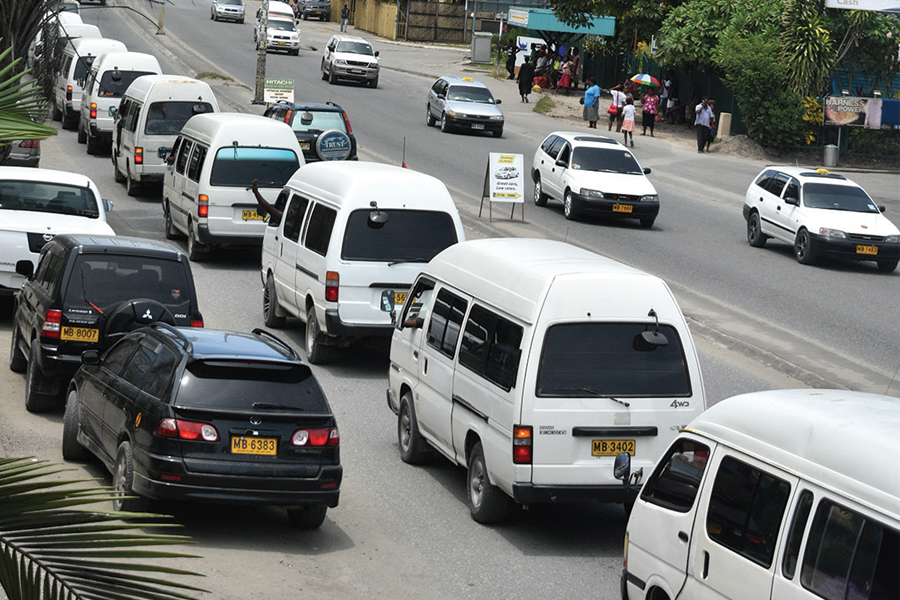
BUSES are still running the illegal short routes and operating with invalid licences, according to recorded data.

The new bus route Honiara City bylaw is well in its second month of implementation.

This goes to show that these service providers continue to disobey the authorities despite warnings being issued time and time and again.

Following a good number of Facebook uploads on buses being caught running these routes, Island Sun visited the HCC for updates and got confirmation that a lot of bus operators and drivers still choose to defy the authority.

Ms Freda Nokari of the HCC Law Enforcement Unit when interviewed revealed that over 20 cases have been reported to the authorities in the past few days alone, and that are of buses cited to have carried on with the banned routes.

Nokari however added that around 17 buses were processed after being held and have appeared in court for breach of the HCC ordinance on bus routes and licences.

Based on the reported cases, Nokari said the Unit is now working in close collaboration with the Honiara Police Traffic to crack down on these buses and if caught, will surely face charges and are expected to appear in court, and will pay a hefty fine if found guilty.

Meanwhile, HCC says Social Media continues to play a vital role in updating and informing the general public and seeing that most of the buses caught are also uploaded onto face book, the general public especially social media users are urged to use the HCC page to report these cases.

“People with complaints and cases are most welcome to visit the HCC Law Enforcement Unit if they find similar happenings,” Nokari reminded.

The authority however calls on bus owners especially employees to obey what the authority has put in place and reminded that it will be their (buses) loss if the authority catches up on them.

“Honiara is just a small city, so you will always be caught.

“Citizen Journalism is at play, with the simple mobile phone cameras at work in every corners, streets, and junctions of Honiara,” another commentator stressed.

“Remember, it is a hefty fine if found guilty so take note of that, unless if you are prepared to pay such fines,” a spokesperson from the office of the Honiara City Mayor emphasised when contacted yesterday.

“The Bus Route Ordinance came into force in early January and all bus operators are expected to comply with,” the spokesperson said.

He explained that under the new protocol, HCC expects all buses to pay their annual business licences and work within their allocated destinations.

The Mayor was not available to respond to queries on this, but the spokesperson who wishes not to be named reiterated the Mayors earlier warnings, emphasising that buses failing to comply will face a penalty of $20,000 and they can also risk losing their operational (business licences).

The short route issue continues to pop, making headlines in most of the local forums on social media, which attracted wide discussions, having also suggested that the authorities need to put heavier penalties, with the inclusion of strong monitoring mechanisms.

Commuters interviewed have also suggested that with the ignorance of bus drivers and conductors, HCC must strongly monitor and punish those who do not comply.

They said HCC’s attempt to monitor these activities has been very weak and ignorant buses usually take advantage of the peak hours where lesser eyes from the authorities are sensed especially in the morning and during lunch hours.

Others however felt that a boost to the monitoring activities or measures will only drain HCC both in its resources and finances.

They further suggested that an alternative but effective approach would be to increase the penalty for offenders.

The spokesperson however warned that disobedience of buses, by committing these same offences and are caught more than ones, could also lead to them (buses) losing their business or operational licences.

Former banker to appear in court

0

BY JENNIFERKUSAPA

A man facing 19 counts of larceny by servant will appear in court today for mention

This is the case against former employee of the Central Bank of Solomon Islands, Tommy Qazobatu.

The accused Mr Qazobatu is facing 19 counts of larceny by servant in relation to incidents which occurred in 2013 while working with the Central Bank.

The allegations said that Qazobatu was stealing more than SBD$800,000 when he was an employee of the CBSI between the months of February and March of 2013.

The bail for the accused is extended until today.

A private lawyer is representing the accused.

An Australian direct aid project failing

0

DEAR EDITOR, in the Solomon Times newspaper, yesterday, February 12, 2018 a coconut crushing mill operator in Malaita Province, Billy Funusulia, revealed a troubling story in which a potentially income generating project is failing because of operating costs and marketing options

Quoting the newspaper article this is what was revealed: “Operating a coconut crushing mill is a great income generating opportunity for many rural Solomon Islanders.

“But keeping the operation going and maintaining the crushing mill machine can be challenging and costly.

“Billy Funusulia looks after his community crushing mill at Gwa’adingale village, Malu’u, in north Malaita.

“He said the challenges faced by rural communities operating coconut crushing mill are enormous.

“The most critical challenge is finance and keeping the operation going,” Mr Funusulia said.

“There were a lot of overhead costs that are beyond the income we are generating from this operation,” he added.

The community coconut crushing mill Mr Funusulia is managing was funded through Australia’s direct aid program more than a year ago.

Mr Funusulia said since their operation started last year, they’ve so far made three shipments.

“But we were unable to cover our costs,” he admitted.

“In fact our trend in revenue has gone from bad to worse.

“Thus, we were not able to regularly produce coconut oil as expected.”

Mr Funusulia said unlike copra producers, crushing mill operators are very selective in buying coconut fruits that are needed to extract the oil.

“So it is not that easy to get the quantity and the quality we want,” he explained.

“Furthermore, the local coconut oil market is being monopolised.

“So mill operators have no choice because the local buyer controls the selling price.”

“Mr Funusulia said he believed if there are more local buyers, mill operators will have choices to sell their oil to the highest offer.

“He also appealed to the Ministry of Agriculture and Livestock (MAL) to assist coconut mill operators to meet the challenges.

“We are struggling to keep our operations going,” he said.

“I know there is the National Coconut Rehabilitation Program through which assistance in the agriculture sector can be sought.

“The government should come in and help us through this program.”

“When contacted, Deputy Director of Planning within MAL, Simon Iro said the Ministry can help when requests are made through the formal process.

“In the case of those in north Malaita, submissions for assistance should be channelled through the relevant offices at Malu’u and Auki.

“He said the Malu’u based agriculture officer should receive the request and send it to their Auki office for approval, before it is communicated to Honiara.

“Mr Iro said once Honiara office receives the request then they will respond to it, as it comes under Malaita Province.

“He also revealed that coconut crushing mill operators around the country have to work along with Kokonut Pacific Solomon Islands (KPSI), in order for them to control the costs incurred in their productions.

“If they employ more than five people in the crushing mill then they will experience losses,” Mr Iro concluded.”

The bottom line here, it seems to me, is Mr. Funusulia and others like him operating coconut crushing mill plants throughout the country needs to start making a profit and not subjected to bureaucratic rules akin to ‘passing the parcel’ or restricted practices tied to a monopoly in the coconut oil market when it comes to selling their product.

Yours sincerely

FRANK SHORT

SINCW planning new round of training programmes

0

DEAR EDITOR, the Solomon Islands National Council of Women (SINCW) is expecting to launch its first round of training programmes next week under the slogan “Strongem Woka blo Ologeta Merefo Jonim Politiks lo Solomon Aelans.”

According to a press a press statement from the SINCW (quote)

“The first two training programs will be delivered in the provincial centres of Auki for Malaita Province and in Buala for the Ysabel Province for those who will be supporting intending Candidates in their Campaigns.

“The next similar Training Programs will be for Honiara, Guadalcanal and Central Provinces and the rest of the Provinces where women have been identified and been trained in their preparations to stand in the forthcoming Provincial and National General Elections.

“These second series of training will be for “Train the Trainers” and are intended to train Campaign Managers and Manageress’s who will conduct Campaign Advocacy Programmes in the Provincial Wards and Constituencies where aspiring women are being identified to run either in the coming Provincial Assembly and National General Elections early next year.

“The Women in Leadership and Gender Advocator, Mr. Casper Fa’asala, who is responsible for designing and delivering of these training programs from the Solomon Islands National Council of Women has said that the series of Training of Trainers programmes will be designed to enable participants to better understand the basic concepts of democratization, accountability, the electoral processes and elections, patriotism, nationalism, citizenship, rights of citizens, including governance and leadership.

“The Training of Trainers programme will mainly focus, also, on strengthening the skills and knowledge of Campaign Managers to develop strategies for winning an election.”

Yours sincerely

FRANK SHORT

Enquiry for carved nativity set

0
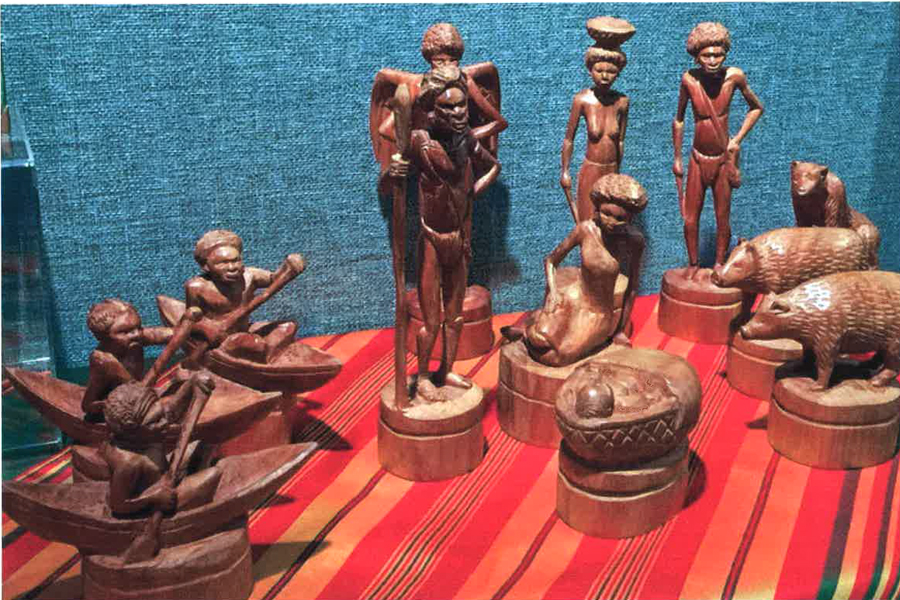
Enquiry for carved nativity set

DEAR EDITOR, I have received the following message from Canada via my website.

“I am writing on behalf of Monsignor Gregory Ace who came across this Nativity set on the internet. It was carved in Solomon Islands. Would you know the name of the artist who carves items like these, or are there other artists who would carve this type of Nativity set? It is for a display in the church at Christmas. Any information about this would be appreciated.”

I would appreciate the artist who carved the set getting in touch with me, please.

My email address is [email protected]

Yours sincerely

FRANK SHORT