Home Blog Page 145

St Luke Parish launches 2026 church activities

0

BY BEN BILUA
Gizo

SAINT Luke Parish in Gizo, Western Province, has officially launched its 2026 church programs and activities with a special service yesterday.

The opening program began with the Holy Eucharist and was followed by a small feast attended by parishioners and church leaders.

Speaking during the event, Gizo Parish Chairlady Mrs. Ilene Ziudanga urges church groups to work diligently this year to strengthen the church’s mission.

She said improvements are needed, particularly in coordination and support to ensure church activities run smoothly.

Although 2025 was a successful year for the parish, she said change in some things is needed.

“We need to change some of the things we did last year. Church groups must work together in accordance with their mandates,” she said.

Ziudanga also reminds the Companions group, Mothers’ Union group, Sunday School and youth leaders to prepare their programs and have it submitted to the vestry to avoid clashes in activities and programs.

She acknowledges the Parish Priest, Father Barclay Voze for his continued leadership throughout 2025 and into 2026.

She said the parish recorded several achievements last year, including the hosting of outgoing Bishop of the Diocese of Isabel during his final tour and welcoming 60 members of the Melanesian Brotherhood Mission team in December.

She calls on all parishioners to continue supporting church programs and activities throughout the year.

In his remarks, Voze thanked parishioners for their ongoing commitment and support to the church, highlighting St Luke Parish’s active involvement in both pastoral and community services.

He also encourages members to support the ongoing construction of the Melanesian Brotherhood household in Gizo.

Voze said he looks forward to working closely with parishioners and stakeholders in Western Province to further strengthen church programs in 2026.

For feedback, contact: [email protected]

Editor: [email protected]

The rainy season continues

0

BY JOHN HOUANIHAU

Cloudy skies with showers are still affecting most parts of the Solomon Islands as the country remains under rainy season conditions.

According to observations from Solomon Islands Meteorological Service (SIMS) weather forecasting office, Saturday’s weather satellite imagery, a trough is located south of the country and continues to influence weather, bringing widespread cloud cover and rain across most provinces.

SIMS in its official Facebook page said showers are expected to be scattered, with isolated rain falls possible at times, particularly during the afternoon and evening.

The statement said that winds across most coastal and open waters are forecasted to be westerly at around 5 to 15 knots, producing slight seas.

SIMS said at this stage, there are no weather warnings and continues to remind the public that the country is currently in its rainy and cyclone season, which runs from November through April.

During this period, SIMS said weather systems can develop or intensify quickly, bringing sudden heavy rain, strong winds, or rough seas.

Therefore, residents in low-lying and flood-prone areas are encouraged to remain alert, monitor local weather updates, and take basic precautions.

SIMS also advises that mariners and inter-island travellers check forecasts regularly before departure.

The Solomon Islands Meteorological Service will continue to closely monitor the situation and provide updates as conditions evolve.

For feedback, contact: [email protected]

Editor: [email protected]

COCOA LEVEL UP

0

Australia supports cocoa storage expansion in Guadalcanal

BY JOHN HOUANIHAU

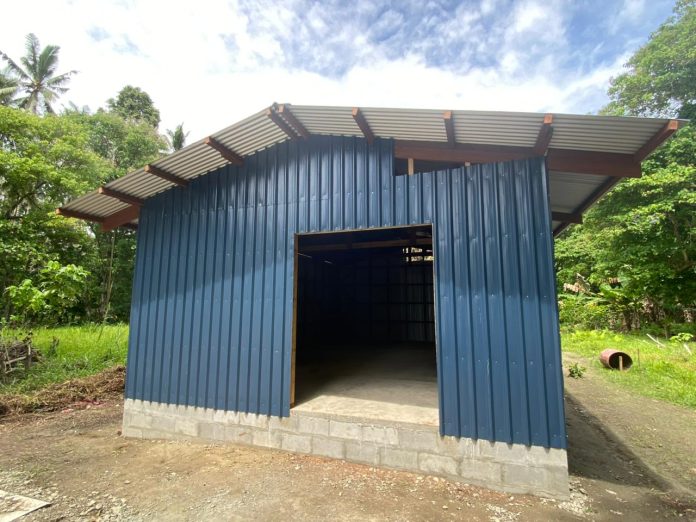
The Solomon Islands Australia Partnership is supporting the expansion of a cocoa storage warehouse operated by JCS Enterprise in Northeast Guadalcanal.

A statement from the Australian High Commission (AHC) said this is to strengthen local supply chains and improve market access for cocoa farmers.

The project aims to address one of the key challenges faced by cocoa producers in the area; inadequate storage capacity which often limits farmers’ ability to maintain quality, meet buyer demand and access better prices.

This expanded warehouse will provide improved storage facilities, allowing cocoa beans to be handled, stored and transported more efficiently once completed.

The investment is expected to benefit cocoa farmers and surrounding communities by reducing post-harvest losses and enabling more consistent access to domestic and export markets.

The AHC statement said improved storage will also help farmers time their sales better and increase opportunities to earn higher and more stable incomes.

JCS Enterprise, a locally owned business, plays a growing role in the cocoa value chain in Northeast Guadalcanal, working directly with smallholder farmers.

The expansion of its storage facilities is expected to create additional employment opportunities during operation, contributing to local economic growth.

Australia remains Solomon Islands’ number one economic partner, investing in initiatives that support private sector growth, boost productivity and improve livelihoods.

Australia, through the Solomon Islands Australia Partnership, continues to support practical infrastructure that strengthens local businesses and creates jobs.

The cocoa sector is an important source of income for many rural households in Solomon Islands, and targeted investments in infrastructure such as storage facilities are seen as critical to unlocking its full potential.

By supporting local enterprises like JCS Enterprise, the partnership aims to build resilient supply chains and ensure more Solomon Islanders can benefit from increased trade and market opportunities.

The warehouse expansion reflects the partnership’s ongoing commitment to support sustainable economic development and inclusive growth across the country.

Photo: AHC

For feedback, contact: [email protected]

Editor: [email protected]

Australia backs clean energy infrastructure in Solomon Islands

0

BY JOHN HOUANIHAU

Australia is supporting Solomon Islands’ transition to clean and renewable energy through significant investments in climate-smart infrastructure, including solar-powered health facilities and markets, as well as the country’s first-ever hydropower project.

The Australian High Commission in Solomon Islands (AHC) stated this in a statement yesterday.

According to the AHC, the support follows an announcement last week by Australian Foreign Minister Penny Wong of more than SBD3 billion (AUD550 million) in new grant financing for infrastructure across the Pacific, with a strong emphasis on climate resilience and renewable energy.

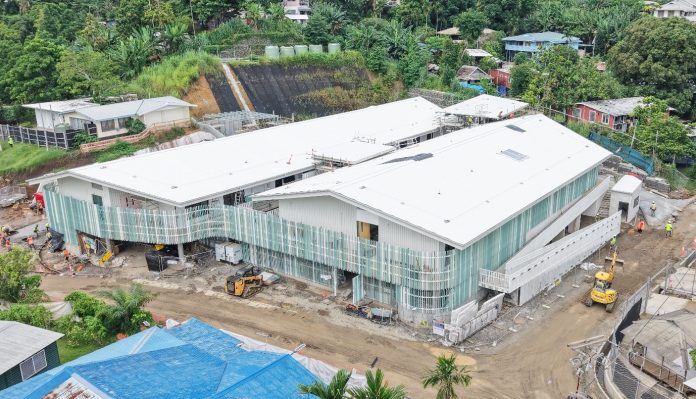
The statement said that several Australian-backed projects in Solomon Islands are already operational or nearing completion. The Naha Birthing and Urban Health Centre, expected to open soon, will be powered by 350 solar panels that meet its daytime electricity needs at no cost. The facility also incorporates climate-smart features such as shading, cross-ventilation and landscaped garden spaces to reduce heat and energy use.

Solar energy systems have also been installed at new markets in Buala, Malu’u and Seghe, improving safety and usability through reliable lighting, including for overnight operations.

The Buala Market solar system generates 29 kilowatts of power and includes battery storage capable of providing essential lighting for up to a week during extended periods of rain.

Australia’s High Commissioner to Solomon Islands, Jeff Roach, in the statement said the projects reflect both countries’ shared commitment to reducing global emissions and supporting Solomon Islands to meet its Paris Agreement targets.

“Green power not only makes good climate sense, it also reduces operating costs and lowers exposure to volatile global fuel prices,” Roach said.

Progress is also advancing on the Tina River Hydropower Development, Solomon Islands’ first hydropower project, with tunnel boring expected to begin soon.

Once completed, the project will provide reliable electricity to Honiara, reducing power costs for households, businesses and government, said the AHC statement.

It further adds that Australia is funding 22 kilometres of transmission lines linking the hydropower site to Honiara’s electricity grid, as well as access roads and project facilities.

Australia is also supporting off-grid renewable energy through the AUD75 million Renew Pacific program, strengthening local skills and long-term energy sustainability.

Photo: AHC

For feedback, contact: [email protected]

Editor: [email protected]

Prolonged SIICAC leadership vacuum raises governance concerns: TSI

0

BY JOHN HOUANIHAU

Transparency Solomon Islands (TSI) has raised serious concerns over the continued absence of a Director General at the Solomon Islands Independent Commission Against Corruption (SIICAC), warning that the prolonged leadership space is weakening oversight and undermining the country’s fight against corruption.

The warning comes as Transparency International prepares to release the global Corruption Perception Index (CPI) on 10 February, a key international benchmark for governance and accountability.

In a statement titled “Corruption Wins When Oversight Sleeps,” TSI said SIICAC has remained without a substantive Director General since April 2025, when the contract of former Director General John Kouni expired. Despite interviews and recommendations conducted in late 2025, the position remains unfilled.

TSI said the situation has been further complicated by the Judicial and Legal Service Commission’s (JLSC) decision not to endorse a candidate recommended by the interview panel. While the Ministry of Public Service has clarified that no formal appointment was ever made, the vacancy has persisted and become a matter of growing public concern.

According to TSI, the absence of SIICAC’s mandated head has created an “oversight gap” that limits the commission’s ability to set direction, review cases, and enforce accountability.

“The prolonged vacancy undermines public confidence, delays institutional reforms, and risks weakening accountability mechanisms at a time when governance integrity is under close scrutiny,” the statement said.

TSI also highlighted that the SIICAC Commission itself has not convened a meeting since its appointment, raising further questions about how corruption cases can be reviewed or approved without leadership endorsement.

Without a Director General, TSI warns that SIICAC lacks the authority and operational leadership needed to drive investigations, implement policy reforms, and carry out public education campaigns. Key programmes, including coordination with law enforcement agencies and national and international partners, are reportedly stalled or slowed.

The civil society watchdog said the unclear recruitment process and continued delays risk eroding trust in government institutions and creating perceptions of political interference.

Transparency Solomon Islands has joined other civil society groups, governance advocates, and voices on social media in urging the government to urgently fill the position through a transparent and fair process.

It said appointing a Director General is critical to restoring public trust in SIICAC, ensuring corruption cases are investigated and prosecuted effectively, and safeguarding Solomon Islands’ international reputation as a democracy committed to accountability and the rule of law.

TSI also suggests that if no suitable local candidate is available, the government should consider an interim appointment in consultation with development partners, pointing to Papua New Guinea’s ICAC as an example where external leadership support has enabled progress.

“The prolonged vacancy in SIICAC’s leadership is not just an administrative delay, it is a governance risk,” TSI said.

It urges the GNUT-led Executive Government to act swiftly and appoint a Director General with the independence, integrity, and authority needed to lead the fight against corruption.

“Corruption thrives where oversight is weak,” the TSI statement concluded.

For feedback, contact: [email protected]

Editor: [email protected]

Gov’t aware of public sentiments on ‘slow pace of development’

0

BY SAMIE WAIKORI

Prime Minister Jeremiah Manele has acknowledged the public’s concerns about the pace of development in the country.

While the government is doing its best to advance the nation, he reminds citizens that tangible progress takes time and cannot happen overnight.

Manele made the remarks in response to media queries about growing public dissatisfaction with the government’s performance.

During a press conference earlier this week, the Prime Minister addressed these concerns, explaining that the government understands the public’s desire for visible results.

However, he pointed out that development is often a complex, process-driven endeavour and involves lot of factors to consider.

For example, Manele said legislation is process-related. Passing a law in parliament may seem like the easy part.

“The real challenge lies in implementing it, issues such as capacity, compliance, and enforcement are far more difficult to manage,” he said.

On infrastructure development, Manele noted that the government faces challenges not only due to the country’s geography but also limited financial resources.

“We’ve been fortunate that many of our infrastructure projects have been funded by our international partners over the years.

“However, it’s not always easy for us. We have competing priorities. Of course, we’d like to build more roads, bridges, wharves, and airstrips, but these things cannot be completed in just one or two years—or even five years. It all depends on available resources,” he said.

The Prime minister emphasised that the geographical spread of the country, with its nine provinces, presents an inherent challenge to infrastructure development.

“The government is committed to progress, but again, resources are a key factor in achieving this,” Manele added.

While acknowledging that the government hasn’t made significant strides in building new infrastructure recently, apart from probably one or two, Manele explained that much of the focus has been on repairing and maintaining existing infrastructure.

“When considering new infrastructure projects, we also need to assess the strategic importance and potential benefits of the location.

“We must ask ourselves: Will this project create opportunities for jobs and income?” he said.

In terms of job creation, Manele highlighted the government’s focus on Technical and Vocational Education and Training (TVET) to equip young Solomon Islanders with valuable skills.

He also recognized the importance of the labor mobility programme, which provides temporary employment opportunities abroad, but stressed that it is not a permanent solution.

“Looking ahead, the government understands that we need to invest in our productive sectors.

“That’s why we’ve been focusing on agriculture, tourism, fisheries, and of course, the mining sector, to create more jobs locally,” Manele said.

However, Manele cautions that these efforts won’t yield immediate results.

“Building these industries will take time and it won’t happen overnight.”

For feedback, contact: [email protected]

Editor: [email protected]

Life in the highlands for women in Oliveti community

0

BY JOHN HOUANIHAU

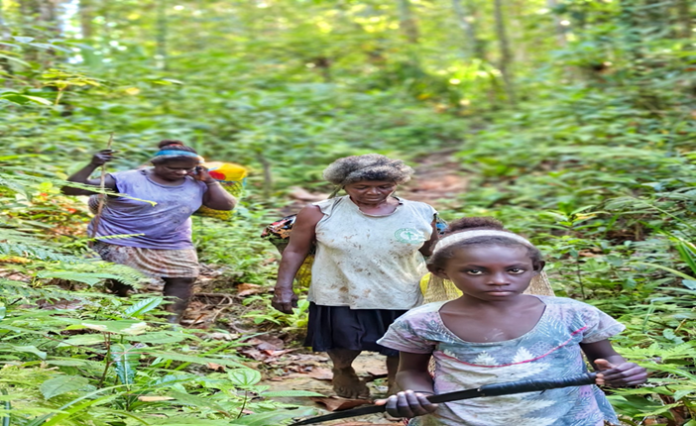
High in the mist-covered hills of Choiseul Province, Oliveti Village sits among green forests and towering mountains.

It was a place where time seemed to move slowly, and the old ways of the village people is still very much alive.

But within this peaceful landscape, it is the women of Oliveti who carry the weight of the village on their shoulders, weaving the fabric of daily life through their work, their wisdom, and their strength.

Each day in Oliveti begins before the first light of dawn, where the women rise early, long before the roosters crow or before the sun begins to peek over the horizon.

Their homes, built from local materials like bamboo, timber, and palm leaves, are simple but durable, and filled with the quiet hum of daily activity.

As the cool morning mist began to lift from the valley, the women go about their chores, preparing breakfast for their families.

Breakfast is often healthy root crops like taro or potatoes which are cooked and served with vegetables plucked from their own gardens.

The morning meal was simple but nourishing, a reflection of the land that feeds them.

“The women are the bridge between the old and the new,” said Vaelyn Voqa a mother of five.

“One of the most important roles the women play is gardening.

“They managed the gardens that feed the village or families—gardens filled with root crops like sweet potatoes, yams, as well as fruits. Their hands work tirelessly in the soil, planting, weeding, and harvesting to provide for their families,” she said with smile.

The women in Oliveti like many others, ensure crops are harvested at the right time.

In the afternoons, after a day’s work in the garden or after spending time with the children, the women would engage in various crafts.

“The skill of weaving was passed down through generations. I learn the art from my mother before I moved here with my husband in 2012. I weave baskets, a skill that took years to perfect. Sometimes I send them to Honiara and Taro to sell at the market,” she said.

For the women of Oliveti, weaving was not just a means of making a living; they were expressions of their identity, their connection to the land, and their role in the community.

A traditional craft and one as an identity of the women of Oliveti.

Life in Oliveti was not lived in isolation for women as they share everything, from the burdens of daily chores to the joys of raising children. The community was built on mutual support, and it is the women who ensure that this support system remains strong.

Like women across the Solomon Islands, the women of Oliveti are no strangers to hardship. There were times when the rains didn’t come, and the crops withered. There were times when sickness struck the village, and many were unable to afford medicine. But even in the face of difficulty, the women stood strong. They were the backbone of the village, the ones who kept things running when life was tough.

“Women here work together. To achieve what we want, or the community want, we usually come together, discuss as sisters, and carry on with what we want. At the end of the day, we see our achievement,” she said.

Oliveti village has begun to seeing the arrival of new ideas and technologies. Solar-powered lights replaced the kerosene lamps, and mobile phones now make it easier for families to stay in touch with the outside world.

“With these new changes came new opportunities and challenges for the women,” she said.

The women of Oliveti work hard, as they do every day, to ensure that their families and their village thrive. They carry with them the strength of generations, the strength of women who had always known that their role in Oliveti was not just about surviving, but about shaping the future of their community.

It is the women who keep the heart of the Oliveti. They are the silent draftswomen of Oliveti’s story, a story of strength, community, and love that will continue to echo through the hills for generations to come.

For feedback, contact: [email protected]

Editor: [email protected]

Kuava village establishes CPC

0

BY BEN BILUA
Gizo

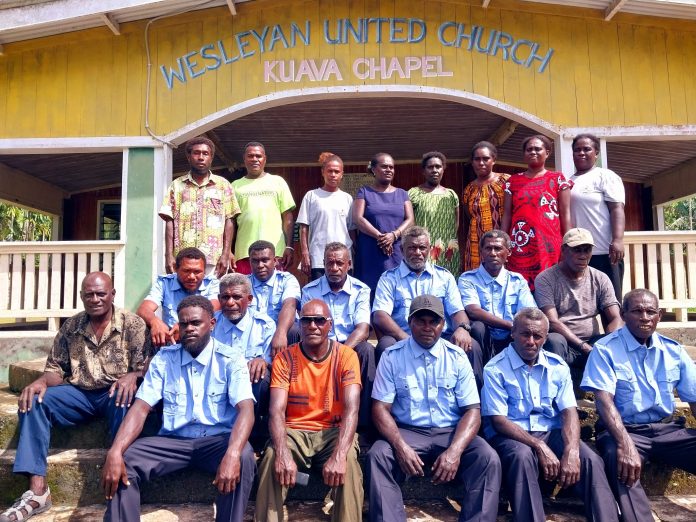
KUAVA village in Vella La Vella, Western Province, has established a Crime Prevention Committee (CPC) in a bid to restore safety, peace and harmony in the community.

Secretary of the Kuava CPC, Mr. Vosta Zapo, said the committee was appointed three weeks ago with more than 30 men and women selected from within the community.

He said the members have taken vows to serve and protect the village.

Zapo said the CPC has already held three meetings since its establishment and has formulated community bylaws that were presented to Kuava residents for feedback before being submitted to the Royal Solomon Islands Police Force (RSIPF) in Gizo for scrutiny and endorsement.

“We are expecting our bylaws to be endorsed and implemented later this month,” he said.

Zapo said the move comes at a critical time, as Kuava village has recently been shaken by serious crime incidents.

“Kuava village is like a crime scene at the moment following the death of two people.

“The second case happened just recently where a teenage boy was stabbed and later pronounced dead,” he said.

Zapo said the establishment of the CPC is a major step forward for the community to live in unity and harmony.

“We are tired of hearing about murder cases and we want to stop that,” he said.

Zapo said copies of the final bylaws and proposed penalties have been submitted to Gizo Police for verification and endorsement so they can be recognized as community laws.

“We are expecting to enforce the bylaws at the end of the month after police make their amendments and give their endorsement,” he said.

For feedback, contact: [email protected]

Editor: [email protected]
Gov’t continues to face challenges renting private offices

0

BY SAMIE WAIKORI

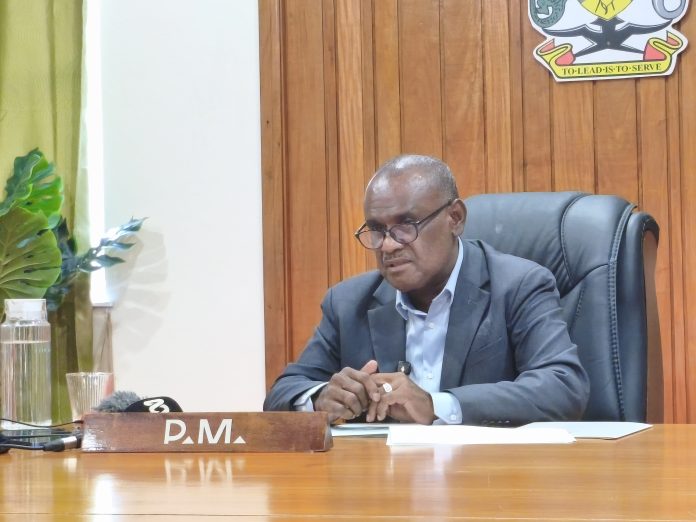
Prime Minister Jeremiah Manele says the government continues to face long-standing challenges in renting private facilities for government offices, despite its commitment to eventually own office buildings.

Speaking at a press conference earlier this week, the Prime Minister made the remarks in response to questions from local media regarding the large amount of public funds spent on renting private office spaces.

“We’ve been struggling with this, as a number of ministries do not have their own office space or buildings.

“So, this is not a new issue. Government ministries have difficulties securing space because they do not have their own government buildings where they can carry out their work,” Manele said.

As a result, he said many ministries have relied on rented facilities over the years.

Looking ahead, Manele said the government would like to see ministries housed in their own buildings, but acknowledged that this cannot happen overnight.

“For now, our advice is for all Permanent Secretaries, as accounting officers, to negotiate for cheaper or more reasonable rental rates for private buildings,” he said.

The Prime Minister also noted that some ministries have resorted to renting residential properties that were not designed for office use, due to the shortage of available office space.

Despite the challenges, Manele said the government continues to encourage ministries to construct their own office buildings.

He cited the Ministry of Public Service as an example, noting that it built its own office building a few years ago under the initiative of the Permanent Secretary at the time. He said the project took two to three years to complete.

“We encourage ministries to do the same. Of course, it is not always easy with SIG funding, as it may take two or three annual budgets to complete an office building,” Manele said.

He added that ministries are also encouraged to seek alternative funding sources, stressing that it is always beneficial for the Solomon Islands Government to invest in its own office infrastructure.

For feedback, contact: [email protected]

Editor: [email protected]

Population growth rate outpaces economic growth: PM Manele

0

BY SAMIE WAIKORI

Prime Minister Jeremiah Manele has highlighted a key challenge facing the country, and that is that population growth rate is currently outpacing the economic growth rate.

And being with this status, it has significant implications on the development of the country.

Speaking at a press conference on Monday, Manele explained that development can only occur at a rapid pace if the economic growth rate surpasses the population growth rate.

Unfortunately, he said Solomon Islands has been grappling with the opposite trend.

“Over the years, our population growth rate has been much higher than our economic growth rate. These are factors we continue to struggle with,” Manele said.

As a government, he said they will continue to issue statements outlining what they intend to do, demonstrating their commitment to deal with these issues.

However, Manele noted that the government’s ability to act depends on the competing priorities the country faces, including the availability of resources and the state of various sectors of the economy.

He also emphasized that these challenges are particularly important as the country prepares to graduate from the Least Developed Countries (LDC) status in 2027.

“These are issues we may continue to face, and we will have to manage them going forward,” Manele said.

For feedback, contact: [email protected]

Editor: [email protected]