BY LORETTA B MANELE
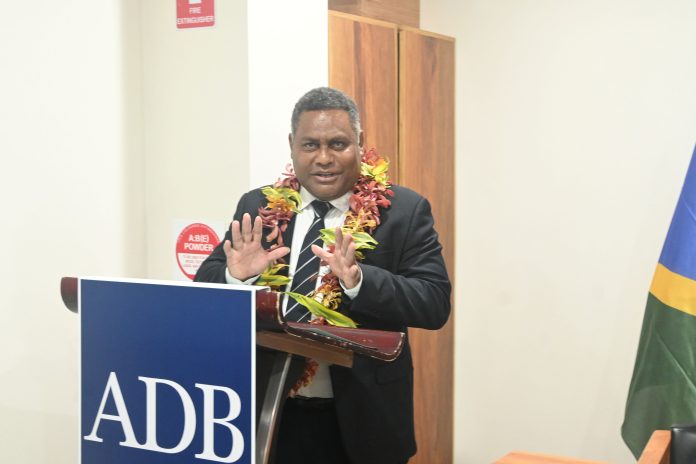
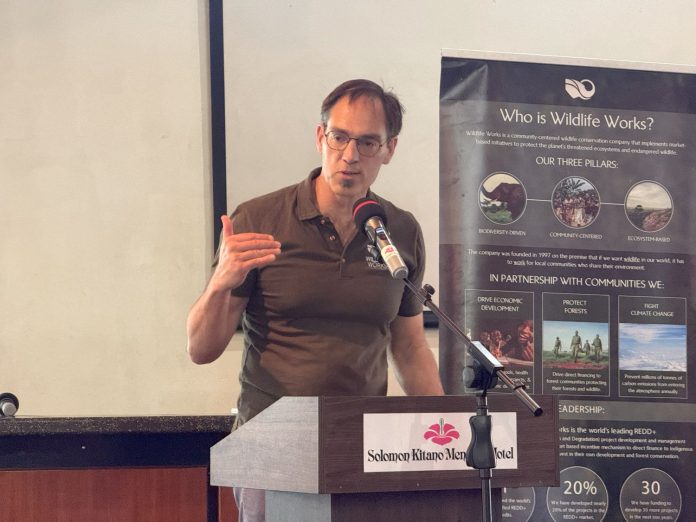
Brian Williams, Wildlife Works Carbon (WWC) regional vice president of Asia Pacific said recognising customary land rights in forest conservation is a must.
He said this at the signing of a MOU (Memorandum of Understanding) between the Ministry of Forestry and Research (MoFR) and WWC at Mendana Hotel yesterday.
Williams said it is a privilege to be in Solomon Islands for the signing of the agreement.
“On behalf of our organisation, I would like to express our sincere appreciation for the trust reflected in this agreement.
“We approach this partnership with deep respect for the sovereignty of the Solomon Islands, for its constitutions, and especially for the customary landowners and communities,” he said.
Willams said the forests in Solomon Islands are globally significant but first and foremost, they belong to the people of this country held under customary tenure, stewarded across generations and deeply connected to identity, culture and livelihood.
“Any initiative in forest conservation or carbon development must therefore be grounded in clear recognition of customary land rights, and it must ensure that landowners and communities are meaningful decision makers and beneficiaries, not observers in the process,” he said.
Moreover, Willams said the MOU represents an important first step which is that it creates a framework to explore how high integrity forest carbon initiatives can support national climate leadership while strengthening forest economies and reinforcing community stewardship of forests.
He said at Wildlife Works, their experience has shown that durable climate solutions rest on three foundations.
“First is integrity, both robust science, transparent monitoring, and alignment with national systems.
“Second, genuine community partnership, where customary landowners are central to design, governance, and benefit sharing.
“And third, long-term commitment, because protecting forests is a generational responsibility,” he said.
Willams went on to say that they recognise that carbon markets are evolving and expectations around safeguards, transparency and that equitable benefit sharing are rightly increasing.
He said they welcome this evolution and are committed to work closely with the government, provincial authorities, and landowners to ensure that any future work reflects the highest standards and respects Solomon Island’s laws and customary systems.
Williams further said that the signing marks the continuation of careful consultation, technical assessments, and collaborative design conducted with transparency and respect.
He concluded that the partnership has potential to demonstrate how conservation, community rights and sustainable development can reinforce one another; positioning Solomon Islands as a leader in high integrity and community-centred climate solutions.
“We are honoured to begin this journey together,” he said.
For feedback, contact: [email protected]
Editor: [email protected]