Home Blog Page 113

Sanau lauds Small Mala Constituency for delivery of machinery 

0

By RODRICK DESURI 

Auki 

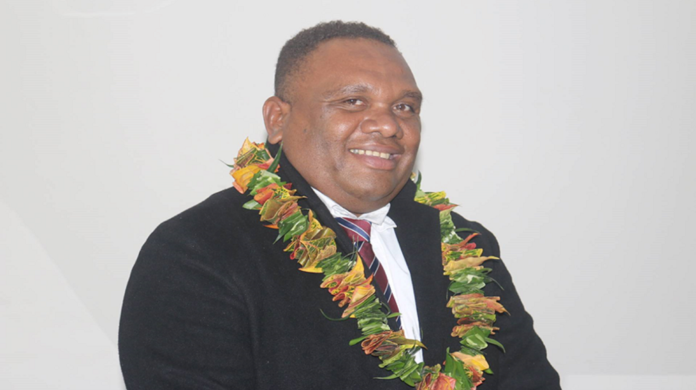
Small Malaita Road Project Camp Manager, Joe Sanau, has expressed appreciation to the Small Malaita Constituency for the successful delivery of much needed materials and machinery for the road project.

Mr. Sanau said the delivery of the machineries is a significant boost in supporting the road construction upgrade currently underway in the constituency.

He said that with the arrival of machineries, there will be improvement in transportation, access to services, and overall living standards for communities across Small Malaita will improve.

“On behalf of the people of Small Malaita, we would like to thank both the People’s Republic of China (PRC) and Solomon Islands Government for your continued support towards improving our infrastructure and community development in the constituency,” he said.

Constituency Development Officer (CDO), Mr. Brown Honimae assured the Solomon Islands government and PRC that Small Malaita Constituency remains committed to ensuring that all machinery and equipment are properly managed and effectively utilized to deliver sustainable and benefits for the people and communities of Small Malaita.

The constituency office launched its Phase II Road Infrastructure Program on July 9, 2025, at Ou’oumatawa, Small Malaita.

The primary goal of the Constituency development plan is to improve the socio-economic well-being of rural communities by providing access to government services and creating an enabling environment for economic opportunities.

The road project was headed by a team directly employed by the Constituency Development Office, in accordance with Section 17 of the CDF Act 2023.

For feedback, contact: [email protected]

Editor: [email protected]

BLC discusses death penalty, parole and sentencing issues during drugs bill inquiry

0

BY JOHN HOUANIHAU

The Bill and Legislation committee (BLC) have raised concerns about weaknesses in existing laws, including sentencing practices, parole eligibility, and the possibility of capital punishment.

During BLC hearing into the Dangerous Drug amendment Bill with Public Solicitor, BLC members questioned whether current legal frameworks are strong enough to address serious crimes and whether some provisions should be revisited as part of broader legislative reforms.

One issue raised by Leader of Opposition Mathew Wale, was the debate around the death penalty and whether it could ever be considered in the Solomon Islands legal system.

However Public Solicitor George Gray questioned whether authorities, including the Governor-General, would be prepared to authorise such a sentence if the law allowed it.

Mr Gray said that international human rights conventions which Solomon Islands is a party to, largely discourage or abolish capital punishment, emphasising that many countries have moved away from practices such as hanging.

The discussion also focused on how life imprisonment is applied in practice within the country’s justice system.

Gray said that life sentences often include a non-parole period set by the court, meaning offenders can apply for parole after serving a specified minimum term.

“For example, someone convicted of murder may receive life imprisonment with a non-parole period of 15 years. After those 15 years, the person becomes eligible to apply for parole, subject to good behaviour and other conditions,” he said.

The BLC also questioned the rationale behind remission provisions under correctional service regulations, which allow prisoners to be released earlier than their full sentence if they demonstrate good behaviour.

The BLC committee encouraged the Public Solicitor’s Office to review relevant legislation and identify areas where amendments may be needed.

The BLC is considering recommending consequential amendments to several laws to strengthen the overall legal framework when it comes to illegal drugs.

For feedback, contact: [email protected]

Editor: [email protected]

BLC raises concerns over $15 million drug penalty and lack of data

0

BY JOHN HOUANIHAU

The Bills and Legislation Committee (BLC) have questioned whether the proposed $15 million fine and life imprisonment penalty in the Dangerous Drugs Amendment Bill 2025 will effectively deter international drug traffickers operating in the region.

During the committee’s inquiry, before Public Solicitor Office, BLC raised concerns regarding sophisticated drug trafficking networks often operating across oceans may not be discouraged by the proposed penalties.

Public solicitor George Gray said that trafficking operations have become increasingly advanced, pointing to reports of narcotics being transported across oceans from South America using specialised vessels.

“If traffickers can travel from South America to this part of the world using narco-submarines, they are clearly organised and sophisticated,” he told BLC.

Meanwhile, the BLC committee also questioned how the proposed $15 million penalty was determined, asking public solicitor whether the amount would truly deter organised international traffickers rather than only local offenders.

The BLC committee suggested that Solomon Islands consider a zero-tolerance approach, particularly toward high-value drugs such as methamphetamine and other highly addictive substances from a policy perspective.

Another major concern raised by the BLC during the inquiry was the legal definition of drugs under existing laws.

The issue emerged following a case last year involving a foreign national who could not be charged because the specific substance was not clearly defined under existing legislation.

The BLC said that the law should adopt a broader and more flexible definition of controlled substances so authorities would not need to return to Parliament each time a new drug appears.

The inquiry also revealed that key agencies including police, customs, health authorities, ports, and aviation regulators have limited data on the scale of drug trafficking entering the country.

Committee members said the lack of reliable data makes it difficult to determine whether Solomon Islands is facing an emerging drug crisis or is already experiencing widespread trafficking.

For feedback, contact: [email protected]

Editor: [email protected]

Public solicitor highlights maritime law gap in drug enforcement

0

BY JOHN HOUANIHAU

George Gray from the Public Solicitor’s Office warns that weakness in Solomon Islands’ maritime legislation could undermine efforts to combat drug trafficking, particularly through the country’s vast ocean territory.

Appearing before the Bills and Legislation Committee during its inquiry into the Dangerous Drugs Amendment Bill 2025 last month, Gray said the current legal framework does not adequately support enforcement against drug trafficking at sea.

“The submission focused on maritime enforcement under the Delimitation of Marine Waters Act, which defines the country’s maritime zones. However, the Act does not provide for a “contiguous zone,” a maritime area recognised under the United Nations Convention on the Law of the Sea (UNCLOS) that allows coastal states to enforce certain laws beyond their territorial sea,” he said.

He said this absence limits Solomon Islands’ ability to intercept vessels suspected of drug trafficking before they enter territorial waters.

He said that under the current law, Solomon Islands exercises full sovereignty only within 12 nautical miles of its territorial sea.

“Beyond that, the country’s powers in the 200-nautical-mile Exclusive Economic Zone (EEZ) are restricted mainly to the management and conservation of natural resources. This creates a gap in enforcement. Without a contiguous zone, authorities may not have the legal authority to intercept suspected drug traffickers before they reach our shores.

“The submission also raised concerns about the increasing use of so-called “narco-submarines” by international drug traffickers. Such vessels have been detected in parts of the Pacific, including reports of suspected sightings in Solomon Islands waters near Lord Howe, Dai and Ramos Island,” he said.

He said that drug traffickers are unlikely to transport large quantities of narcotics through airports and are more likely to use maritime routes across the Pacific.

“To strengthen enforcement, the office recommended amending the Delimitation of Marine Waters Act to formally establish a contiguous zone extending up to 24 nautical miles from the baseline. This would allow authorities to exercise limited enforcement powers relating to customs, immigration, fiscal and sanitary laws,” he said.

He said that this will help close this legal gap and improve Solomon Islands’ ability to combat illicit drug trafficking through its maritime boundaries.

For feedback, contact: [email protected]

Editor: [email protected]

Minister Wasi to attend ADB forum in Philippines

0
Minister for MAL, Franklyn Derek Wasi.

BY JUNELYN KELLY

The Minister for Agriculture and Livestock Development (MALD), Franklyn Derek Wasi is set to attend Asia and the Pacific Food Systems (AFS) Forum 2026 in Philippines this month.

MALD confirmed this in a statement following a courtesy visit yesterday by Asian Development Bank (ADB) Solomon Islands Resident Mission Country Director, Anthony R. Gill, ahead of the forum.

The forum, hosted by the ADB, will take place from 16–19 March 2026 at its headquarters in Manila, Philippines, under the theme “Feeding the Future, Sustaining the Planet.”

The statement said Minister Wasi will attend the forum as the head of the Solomon Islands Ministry of Agriculture and Livestock Development and Representative of the Solomon Islands Government following an invitation from ADB.

The upcoming Asia and the Pacific Food System forum 2026 hosted by the Asian Development Bank is set to gather over 500 participants from across the region.

The statement said the forum aims to foster discussions on critical strategies to transform food systems, strengthen climate resilience and enhance food and water security.

ADB’s commitment to agricultural development in the Solomon Islands remains strong with ongoing support for various initiatives which include agribusiness value addition, livestock development, farmer capacity building and improving access to farming equipment.

These efforts are designed to boost productivity and improve rural livelihoods across the islands, the statement said.

Photo: Supplied

For feedback, contact: [email protected]

Editor: [email protected]

PATH FORWARD

0
Captain Samoa's Otete Kitiona and Solomon Islands head coach Daniel Barrett pose for a photo, Press conference and training sessions ahead of the FIFA Women's World Cup Qualifiers 2027, OFC Qualifiers, National Stadium, Honiara. Photo: Joshua Devenie / www.phototek.nz

Barret calls for stronger development pathways to lift SI women’s football

[Published on Friday, March 6, 2026]

BY RICHARD MENANOPO

Solomon Islands women’s national football team head coach, Daniel Barrett says strengthening local development and creating pathways for players to gain overseas exposure will be key to lifting the country’s women’s football standards in the future.

Barrett made the remarks following Solomon Islands’ narrow 2–1 loss to Samoa women’s national football team in their final match of the FIFA Women’s World Cup 2027 OFC Qualifiers Round 2 at the National Stadium Honiara on Thursday evening.

The defeat brought an end to the hosts’ campaign after three days of exciting football that saw six matches played in Honiara.

Speaking after the match, Barrett said the reality facing smaller Pacific nations is the growing presence of overseas-based players in rival teams, something Solomon Islands currently lacks.

“Let’s be realistic about this tournament. The American Samoan team is all Americans. They’re not American Samoan. They are girls that come and they play college football or professional football in America.

“Samoa also has players who play in Australia, New Zealand and America as well,” Barrett said.

Barrett said this makes domestic development even more crucial for Solomon Islands if the country hopes to keep pace with regional rivals.

“We as a nation can’t draw on girls playing outside to come play for us. So, what we do here with our girls is so important now to keep up with these nations.

“A good development system is going to be very, very important here,” he said.

Despite the heartbreaking defeat, Barrett praised his players for their effort in what was a tightly contested encounter against Samoa.

“We lost the game today, working really hard trying to win it. We attacked as much as we could. We wanted to play more on the front foot and take the game to Samoa.

“I think we did that, just unfortunately we couldn’t get one more goal than them tonight,” he said.

The decisive moment came through an unfortunate own goal, but Barrett was quick to defend the player involved, saying such moments are simply part of the game.

“In football you have good luck and bad luck. Unfortunately we had some bad luck in that situation. It’s not the player’s fault at all.

“I’ll go in there and tell the girls how proud I am of them tonight,” coach Barrett said.

Solomon Islands also created several promising opportunities late in the game, including a shot that rattled the crossbar, which Barrett believes show the team’s attacking potential.

“Maybe we missed the chances tonight because in the other two games we didn’t have lots of opportunities to attack.

“If we played another two more games, I think you would have seen even more improvement,” he said.

Looking ahead, Barrett believes helping the country’s best talents gain opportunities overseas could significantly strengthen the national team in future tournaments.

“One thing I would like to help do now is to try and get our best players here playing abroad as well.

“Then we can bring them back to play for the national team when the games are on,” he said.

The Round 2 qualifiers in Honiara brought together teams from across Oceania, delivering several entertaining matches and giving local supporters a chance to witness international women’s football at home.

For Solomon Islands, the campaign may have ended, but Barrett believes the experience gained will play an important role in shaping the future of women’s football in the country.

Photo credit: SIFF

For feedback, contact: [email protected]

Editor: [email protected]

Samoa defeats Solomon Islands in final elimination match for round 2

0

[Published on Friday, March 6, 2026]

BY TONY IROGA

Samoa ended their qualifying campaign on a high win with a 2-1 win over Solomon Islands in an entertaining contest on Thursday at the national stadium in Honiara.

Only pride was at stake for both sides, having already been eliminated from contention for the semi-finals, with Solomon Islands keen to produce a performance to lift the home-ground supporters.

Malia Jessop opened the scoring for Samoa with just over 10 minutes left in the first half, producing a fantastic left-footed effort into the far corner, having been found by a Shylah Balla-Ateli cutback.

Ileen Pegi almost levelled for Solomon Islands, forcing Meripa Seumanutafa into a good save, before Sandy Ani Holland did the same, with the Samoa stopper tipping her effort over the bar.

In an interview with Island Sun yesterday Samoa team captain Jaedeci Uluvili said they unfortunately didn’t make it to the semifinals, so the next upcoming tournament would be next year, the South Pacific Games.

“So hopefully we can prepare well and have more training camps before that happens, “she said.

She added that she definitely feels like if they had more preparation leading up to this tournament, because they only had a week’s camp in Auckland, and then they travelled here and had a couple of days to acclimatise to the weather and train together as a team.

“So definitely if they had more time prior to the tournament, it would have been better for them,” she said.

She also thanks their fans back home.

“Thank you for supporting us, it’s very much appreciated, and thank you for just following us through the tournament.

“It’s very hot, and I think the girls did well to adjust to the weather, considering we’ve come from all parts of the world,” she said.

The deserved equaliser duly arrived in the 63rd minute, Pegi looping in an effort having been teed up by Teisika Rotoava inside the area.

The parity lasted only a quarter of an hour, however. Samoa retaking the lead when Edith Nari stretched to head away a free-kick, only succeeding in lifting the ball over Margaret Kofela and into her own net.

Solomon Islands continued to create chances in the final minutes as they pressed for an equaliser, including rattling the crossbar, but Samoa’s defence was able to hold on and sign off from their campaign with three points.

Photo credit: Tony

For feedback, contact: [email protected]

Editor: [email protected]

Vulnerable aviation entry points could allow drug smuggling, CAASI warns

0

[Published on Friday, March 6, 2026]

BY JOHN HOUANIHAU

The Director of the Civil Aviation Authority of Solomon Islands (CAASI) has warned that vulnerable entry points within the aviation system could facilitate the smuggling of dangerous drugs into the country, despite existing security measures.

Brian Halisanau made the statement when appearing before the Bills and Legislation Committee (BLC) during its inquiry into the Dangerous Drugs Amendment Bill 2025 last month.

Mr Halisanau said while civil aviation service providers are responsible for preventing dangerous articles including illicit drugs from being introduced onto aircraft, there remain gaps that could be exploited.

“The current amendment concerns the introduction of dangerous drugs into the country. For civil aviation, threats are mitigated through entry point security control measures of neighbouring states. However, vulnerable points can also facilitate entry,” he said.

He identified insider threats, limited surveillance of general aviation, and intermodal transport as areas of concern.

He said that general aviation private and non-commercial flights poses monitoring challenges, particularly when aircrafts enter from remote locations.

He also highlighted scenarios where individuals may enter Solomon Islands by outboard motorboat or yacht before using domestic flights to transport drugs to Honiara.

“These are areas where we recognise there is room for improvement,” Mr Halisanau said.

He said there is need to strengthen airline agent capacity at outer airports to ensure baseline security screening measures are effectively implemented.

According to Mr Halisanau, standard aviation security measures include the screening of passengers, cabin baggage, checked baggage and cargo for commercial aircraft both departing and arriving in Solomon Islands.

“The screening of persons, their cabin baggage, hold baggage as well as cargo are fundamental measures that are adopted,” he said.

He said that CAASI also supports increasing penalties under the proposed amendment, saying tougher punishment would act as a deterrent to smugglers and others involved in drug-related offences.

“It will serve as a strong deterrent for the public and smugglers, controlling behaviours that threaten Solomon Islands society,” he said.

However, he said that enforcement alone is not sufficient.

“CAASI is advocating for a mix of screening methods that specifically target drug detection, as well as strengthened joint intelligence systems among relevant authorities,” he said.

Mr Halisanau said that such procedures are already provided for under the Solomon Islands National Civil Aviation Security Programme, which brings together stakeholders responsible for aviation security.

He said continued coordination and system improvements would be critical to prevent aviation channels from being exploited for drug trafficking.

For feedback, contact: [email protected]

Editor: [email protected]

Wale says authorities are ‘in the dark’ on meth trafficking routes

0

[Published on Friday, March 6, 2026]

BY JOHN HOUANIHAU

Opposition Leader Mathew Wale has expressed concern that key enforcement agencies remain uncertain about how methamphetamine (Meth) drugs are entering the country, describing the situation as “sitting in the dark”.

He made the statement during the Bills and Legislation Committee (BLC) hearing into the Dangerous Drugs Amendment Bill 2025 last month when he addressed representatives from Solomon Ports Authority (SIPA), the Civil Aviation Authority of Solomon Islands, and Leroy wharf.

“The police were here before and then Customs, and going on the data they have collected, we should have no problem. They’re talking about grams to kilograms of drugs going through this country,” Mr Wale said.

He said that officials had reported five or six incidents, yet methamphetamine use is now widely reported.

“But we know the use of meth is now widespread, so it’s coming somewhere. And if you don’t know, I don’t know who should know.

“We’re trying to make policy responses and make law, but we’re all feeling in the dark, because you’re in the dark. You’re sitting in the dark, all of you,” Wale said.

He challenged authorities to provide clearer insight into trafficking routes and enforcement gaps so that parliament’s response could be properly calibrated.

“We should see the picture clear so that we know what we’re talking about and our response is calibrated to make sure it is adequate,” Wale said.

Mr Wale also questioned whether the proposed penalties under the amendment would be sufficient to deter major traffickers.

He said that the Bill proposes significantly increased fines, including penalties of up to $15 million and life imprisonment for certain offences.

However, he argued that such measures may not be effective in practice.

“Our lifetime here is not a lifetime, suggesting that remission and pardon processes could result in early release,” he said.

He also said that he doubted whether a $15 million fine would deter individuals moving kilograms or tons of drugs across the country.

“For us it’s big money. But someone who is moving kilograms or tons of stuff through, $15 million Solomon dollars is probably not consequential,” he said.

Mr Wale said that the amendment appeared too narrow in scope while acknowledging that administrative collaboration and security platforms are important.

“This amendment looks straightforward and simple, but it betrays a lack of depth in the approach they have taken. It’s not responding to broader issues,” he said.

For feedback, contact: [email protected]

Editor: [email protected]
Illegal roads sparks environmental damage

0

[Published on Friday, March 6, 2026]

BY MORRIS NAFU

A significant portion of the environmental damage in Bloody Ridge National Historical Park in East Honiara is said to have been caused by excess illegal access roads, according to the park’s 2025 Annual Report released earlier this week.

The report highlights a growing crisis where unauthorized routes are facilitating littering, ecological disturbances, and heavy vehicle usage that has led to severe road erosion.

Beyond the environmental toll, these illegal paths have created safety risks for visitors and placed an additional operational strain on park rangers tasked with enforcement.

In response to the degradation, the Ministry responsible for the park implemented a series of measures designed to manage access while attempting to maintain community stability.

These actions included the introduction of resident vehicle permits, targeted awareness campaigns, and the gradual closure of specific illegal routes.

While these steps were deemed necessary to protect the ecological integrity of the park, the report acknowledges that the enforcement measures occasionally resulted in community tensions and security incidents.

A significant complication identified in the report is the logistical challenge of identifying alternative access routes for surrounding communities when illegal roads are closed.

In many instances, the proposed alternative roads are located outside the official park boundaries.

This creates a jurisdictional hurdle. Because these alternative routes fall under the responsibility of other ministries responsible for road planning and infrastructure, the Ministry of Culture and Tourism (MCT) faces difficulties justifying involvement under existing government procurement systems.

Specifically, it is difficult for the ministry to utilize park resources for infrastructure works that extend beyond the park boundary.

Despite these involved constraints, the park team was compelled to dedicate substantial time, funding, and operational resources toward facilitating or constructing alternative access routes.

These interventions were deemed essential to reduce community backlash and allow enforcement measures to proceed safely.

However, the financial cost has been significant. The diversion of funds to build or facilitate roads outside the park has placed additional pressure on the park’s limited budget.

The report further noted that spending has diverted money that was originally intended for core conservation and development activities within the Bloody Ridge National Historical Park.

As the Ministry continues to balance the need for environmental protection with the infrastructure needs of the surrounding communities, the tension between conservation goals and community access remains a critical challenge for the park’s future management.

Bloody Ridge battlefield is a site of iconic status receiving worldwide recognition.

It is sometimes referred to as the turning point of WWII in the Pacific.

In recognition of its historical importance Bloody Ridge was declared a national park in 2017.

For feedback, contact: [email protected]

Editor: [email protected]