Home Blog Page 593

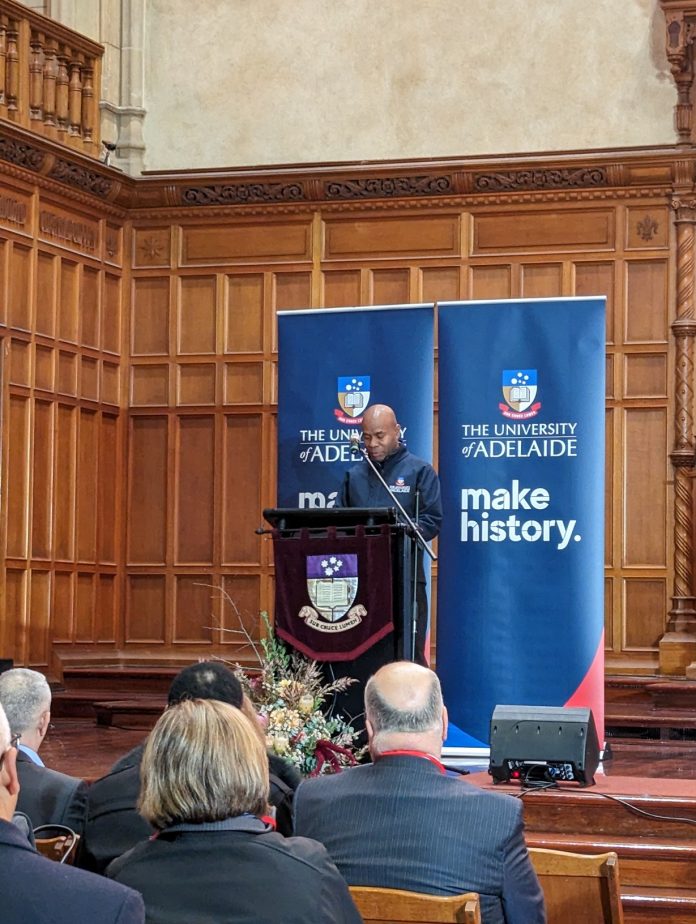
Habru presents University of Adelaide’s vote of thanks

0
Priestley Habru giving the vote of thanks. Photos supplied

BY IRWIN ANGIKI

A Solomon Islands scholar was given a rare and highly prestigious opportunity last week.

PhD candidate at the University of Adelaide, Priestley Habru, was selected to present the University’s vote of thanks at a high-level Heads of Missions’ visit led by two Australia Government Ministers.

The visit was held on Wednesday, June 28, at the University of Adelaide where 13 projects were on display.

Priestley Habru with Senator the Honourable Penny Wong

Australia’s Minister for Foreign Affairs, Senator the Honourable Penny Wong, and Tourism Minister, Hon Don Farrell, who are both graduates of University of Adelaide, graced the event.

They led a high-level team of 70 high commissioners and ambassadors.

The down-to-earth Mr Habru, when asked to comment yesterday, said: It was indeed an honour to be given the opportunity by the university to say the vote of thanks and share a little about myself and as a former Australian Awards scholar.

“Also, to meet and chat with Senator Penny, so down to earth person, whose home town is here in Adelaide was a humbling experience.”

It is understood Solomon Islands’ high commissioner to Australia was in Honiara at that time, engaged in the historic visit to the Solomons by Australia’s deputy prime minister, Hon Richard Marles.

Three members of the Regional Perspective Project team with Senator the Honourable Penny Wong

Habru is one of Solomon Islands’ prominent journalists and the co-founder of the Island Sun Newspaper, which he helped establish in 2006.

He is part of the Regional Perspective Project led by his supervisor, Professor Joanne Wallis, and a Pacific team comprised of research fellows Derek Futaiasi from Solomon Islands, Maima Koro from Samoa and PhD Candidate William Waqavakatoga from Fiji.

Logging closes school

0
Member of Provincial Assembly for Ward 10 in Western Province Freedom Tozaka.

BY MAVIS N PODOKOLO

Western Province’s Beulah Secondary hit hard by lack of funds and contaminated water supply

HEAVEY logging operations has led to the premature closing of Beulah Provincial Secondary school in the Western province, it is reported.

Logging activities are reported to have led to contamination of the only water source, the Ziata river and its reservoir.

Impacts of covid-19 are also said to be contributing factors to the school’s closing, with reports saying the school lacks funds

Freedom Tozaka MPA ward 10, North Vella la Vella said having the school closes its academic year very early is a sad thing.

“It is sad to hear Our Premier School owned by Western Province Government Beulah PSS to have its earlier closure. I know for sure that our innocent children will be the most victims by having their studies affected,” Tozaka said.

He said it is known that COVID impacts have contributed alot and had huge impact leading up this earlier closure of the school.

Tozaka said further to that this year all schools in the country will close their academic year early because of the Pacific Games  2023 and this will contribute alot to Beulah PSS students academic performances especially for year nine, year 11, and 12 as those are exam classes with its current issue at hand.

“We can’t blame anybody here, but only the current Western Province Government. They have never have serious plans for Beulah PSS even when I questioned the current Provincial Education Minister in recent Assembly budget meeting 2023/2024 regarding Beulah PSS future development plans,

“Even in the current Western Province Government Budget 2023/2024 nothing much to salvage the current situation to be honest,” he said.

That said, he called on the Western Province Government to find solution for this either short term or long term plans to address this serious matter by having a budget set aside for Beulah PSS.

Women of East Choiseul Constituency equipped with multi-livelihood skills

0
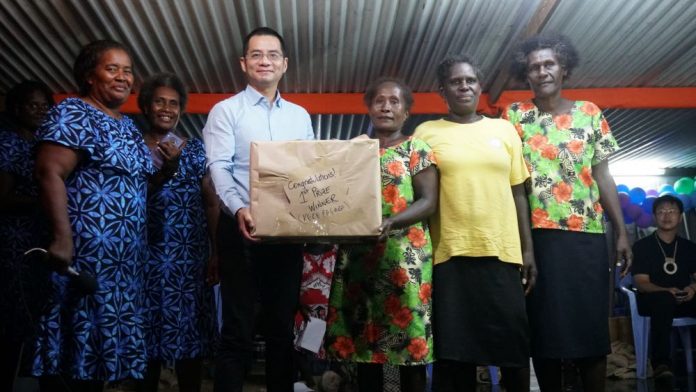
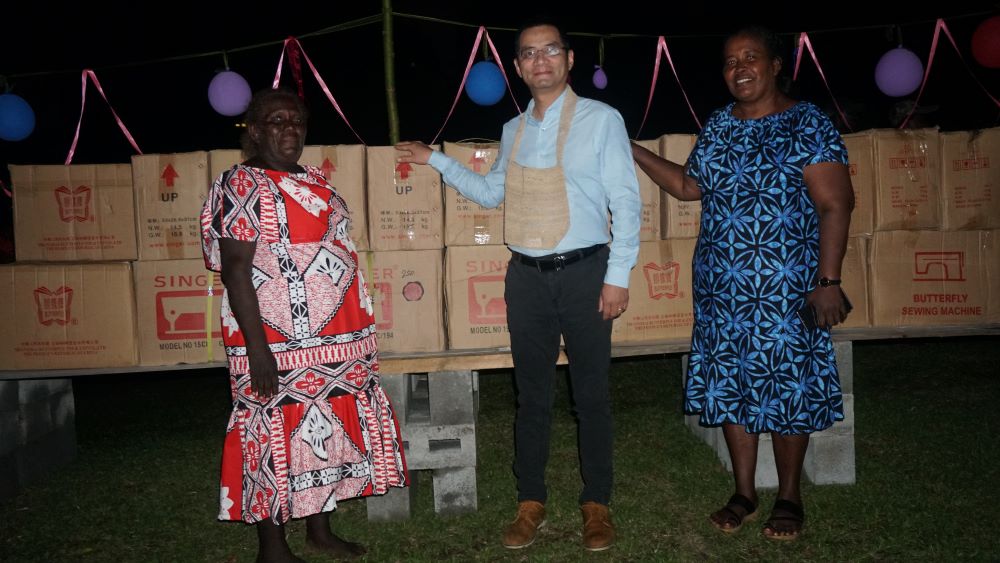
Minister Counsellor Ding Yunghua of the Embassy of the People’s Republic of China (PRC) in Solomon Islands and Madam Sogavare and team presented a sewing machine to women of Kerapagara during the closing event of the two weeks workshop organized for women of East Choiseul Constituency (ECC) . Photo credit- MAVIS PODOKOLO

BY MAVIS N PODOKOLO

WOMEN of East Choiseul Constituency were equipped with multi livelihood skills in a two-week workshop with the focus to empower women to become self-reliance and entrepreneurs to support their families.

The workshop was organized by Madam Emmy Sogavare and is supported by the Embassy of the People’s Republic of China (PRC) in Solomon Islands through the Constituency Development Funding (CDF) for the East Choiseul Constituency (ECC).

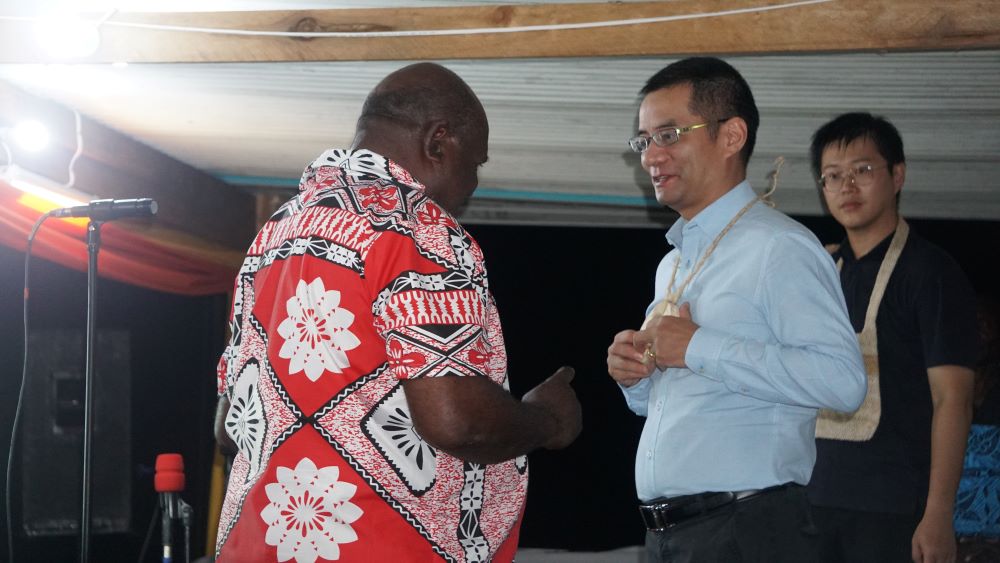
Constituency Development Officer for ECC presents gifts to Mr Yunghua and Mr Hao

During the training women have been taught how to sew, how to bake, they were also trained on how to do floral arrangements, how to fix their own sewing machines when machine is malfunctioned and how to die lavalavas.

Emmy Sogavare the lead organizer of the event said she salutes the women of ECC who came out willingly in number and actively participated in this first of its kind longest workshop.

“With the skills, and talent you have received I want you to move and go forward with it. Build the skills that you have received. When you go forward and you let God go with you, you will definitely achieve your dreams and goals in lives.

“I want to also highlight that women of East Choiseul, my heart is with you. From now on I encouraged you to go forward never complain just go. You may not see and receive the fruit of your hard work over night but just go. Whatever small knowledge we have impacted on you during the 2 weeks workshop please carry on from there .Use it well so you can earn money,” Sogavare said.

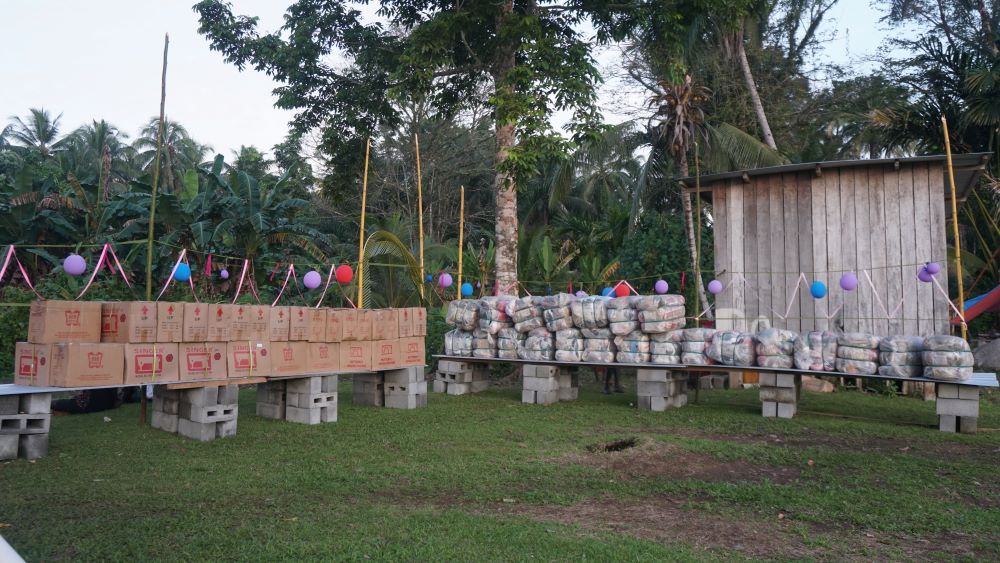
The sewing machines and bales of second hand clothing that were delivered to ECC women

On the same note she lauded the coordinator for EEC women Joy Madada for the courage she had and humbling herself in taking up this role.

“I know women are had to deal with because they are mothers themselves with different mindset but for ECC women I’m so happy that you all have come with one understanding to be part of this program. Thank you so much for supporting Madada,”Sogavare said.

She further adds by thanking Minister Counsellor Ding Yunghua and Attache Guo Hao from the Embassy of the People’s Republic of China (PRC) in Solomon Islands for gracing the closing program of the training.

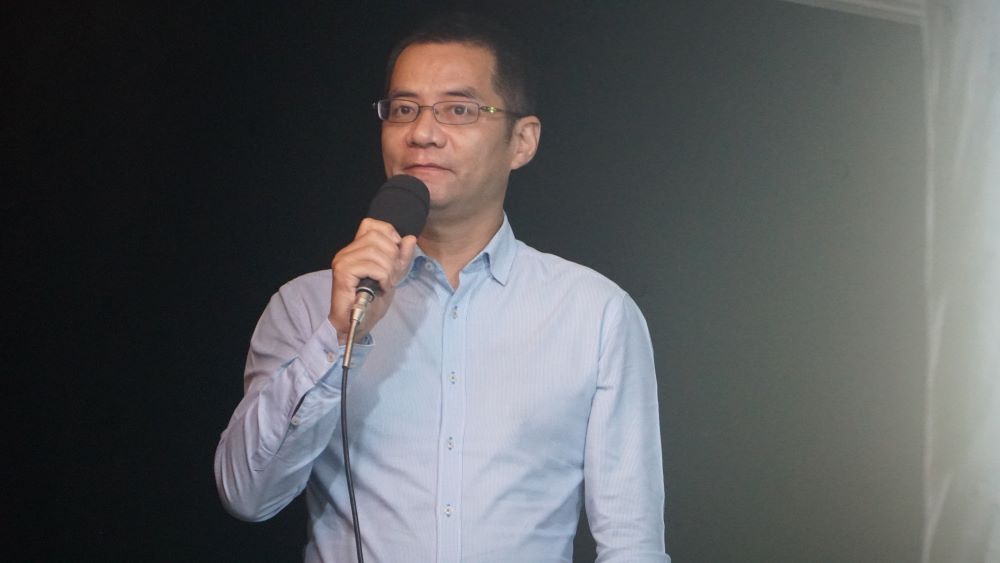
Minister Counsellor Ding Yunghua delivers his remarks

“To Councilor Ding and Mr Hao thank you so much for being part of this event. You have seen it yourself that these women were so grateful to have you here in East Choiseul. Besides, thank you for financing this event through the CDF for East Choiseul Constituency,” Sogavare said.

She also thanked the facilitators for making time and willingly transfer the knowledge they have to East Choiseul women.

Minister Counsellor Ding Yunghua of the Embassy of PRC in Solomon Islands said his colleague and himself were so privileged to set foot on East Choiseul Constituency 

“We are so honoured to be here. As soon as I set foot on the Island I feel the unique culture of East Choiseul Constituency and feel the hospitality and friendship from you.

“ My special thanks goes to Honourble Prime Ministers and Madam Sogavare for organizing this event and bringing us all together  and for us to have the chance to meet the ladies and enjoy the hospitality and to also see the  development center for ECC,” Yunghua said.

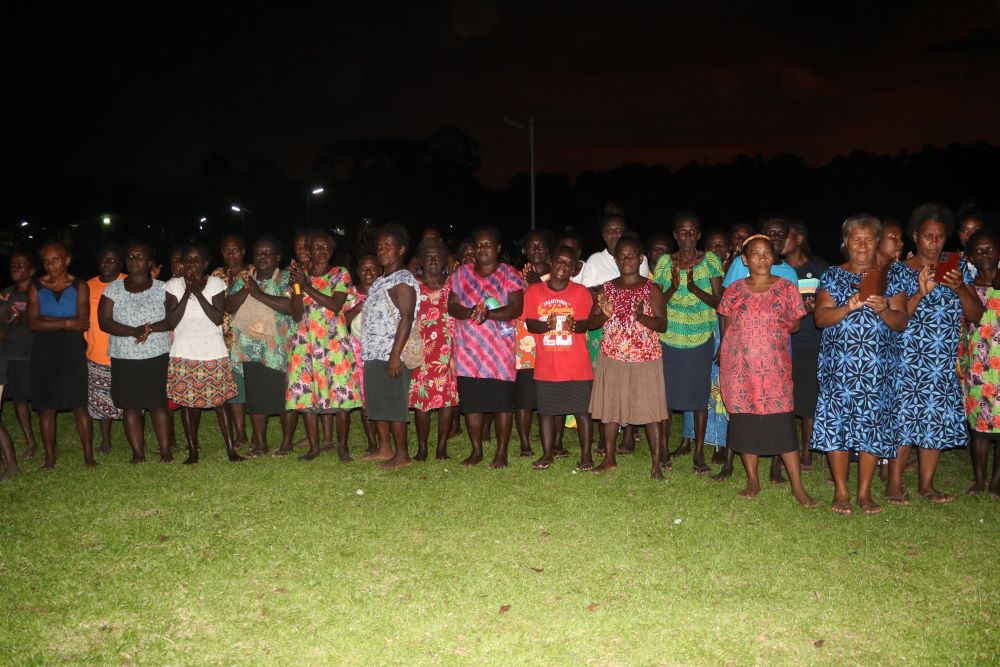
Some of the women of ECC who were part of the event

He adds by congratulating women for successfully completing the workshop.

“I want to congratulate the ladies for successful completing your workshop. I saw the concrete outcome of the workshop, you’ve learned how to decorate the table, and you’ve learned how to make cakes. Those skills will definitely empower you, your families and communities in developing your communities’ economy.

“In China there is a saying that reads “Women can hold up half of the sky” that is why the Embassy of China, the Ambassador and we are willing to support the causes of women in this country and in this constituency by giving your sewing machines.

“We will continue to do that, this is a noble course and value this course because when women developed, the whole family developed and the country developed,” Yunghua said.

Women’s Coordinator for ECC Joy Madada said it is quite a very long time that she worked with women inside this constituency and she had seen changes happening in women of East Choiseul in terms of trainings.

“The two weeks workshop has accommodated women leaders of all four wards within the East Choiseul from Katario ward to Kiruqela ward. It is the first ever biggest workshop that we held inside our constituency center,” Madada said.

She said organizing such workshops is not but she is grateful that through awareness raised prior beginning of the workshop has make it easier to gather these women.

Mr Ding and Madam Sogavare officially hands over the sewing machines and bales of second hand clothing to Joy Madada

“Apart from that, in terms of moving these women from their home villages to come this center it requires money, but I’m am grateful for our Member of Parliament Manasseh Sogavare and  Madam Sogavare to support us financially with the support of PRC through the Constituency Development Funding (CDF) for East Choiseul  in making this event a successful one.

“My heart is full of joy seeing my women excited and having their hands full with some resources that they took home to educate other women in their community,” Madada said.

Moreover, as part of the closing event of the workshop Mr Ding have handed over 60 sewing machines, 24 bales of second hand clothing and nine boats and nine engines to the women of four wards in east Choiseul as part of their incoming generating activities to enable women effectively utilize the skills  they have acquired from the workshop.

The workshop was held at the constituency development center in Kumanibae village, Choiseul province.

Destroyed PG 2023 facilities isolated incident: NHA

0
Chairman of NHA and Secretary to Prime Minister Dr Jimmie Rodgers.

BY EDDIE OSIFELO

THE recent destruction of a few facilities at the main stadium for the Pacific Games 2023 was described by the NATIONAL Hosting Authority (NHA) as an ‘isolated incident’.

Dr. Jimmy Rodgers, the Chairman of NHA and Secretary to the Prime Minister, clarified this during a Talk Back show at the Solomon Islands Broadcasting Corporation (SIBC) yesterday.

He stated that the incident did not reflect the attitudes of the local workers and only involved one to two individuals.

He emphasized that the Solomon Islands is a happy and appreciative country that values the investments made by China, other donors, and the Solomon Islands Government in the facilities.

According to Rodgers, the project employed 600 local workers and additional workers from overseas.

However, as the work is nearing completion, the number of workers will be reduced, and some overseas workers have already returned to their countries.

In recognition of the contributions made by the local workers, the NHA plans to issue them certificates of recognition for the legacy they have left behind in the new facilities.

Recently, the Sol2023 National Hosting Authority, along with senior officers from the Labor division, conducted a question and answer session with 400 local employees who were laid off by the contractor China Civil Engineering Construction Corporation (CCECC).

These workers were specifically hired for the PG2023 main stadium project.

The purpose of the session was to address any concerns and provide clarity regarding the redundancy process and the upcoming completion of the project.

The NHA affirmed that the majority of the facilities are expected to be finished by the end of August.

Tuasulia faces election petition

0
Member of West Kwara’ae, Alfred JM Tuasulia. Photo supplied

West Kwara’ae new MP faces election petition despite landslide victory

BY EDDIE OSIFELO

NEWLY elected Member of West Kwara’ae, Alfred JM Tuasulia, is facing a petition despite his landslide victory in the by-election held in May.

This follows allegations of bribery committed by Tuasulia at Bio Bridge, Bubuitolo, Fauabu clinic, Taisol, and Buma prior to the polling day.

The petition has been filed in the High Court by losing candidates Fred Ramoli and Barnard Gale, as well as a registered voter, Bobby Ngalingwa’a.

The petitioners want to emphasize that an Election Petition should not be considered a private matter but rather a case of public interest.

They believe that it is important to ensure free and fair elections, which are the cornerstone of our democracy, particularly in the West Kwara’ae constituency.

The petitioners acknowledge that in our Melanesian context, gift-giving is a cultural norm.

However, during elections, this can become blurred and fall under the offense of Election Bribery as stated in the Electoral Act 2018.

They highlight that only the High Court can determine what conduct is appropriate during elections, and it is crucial for people to understand the difference between culturally appropriate gift-giving and corruption.

The petitioners expressed the view that merely complaining and murmuring about corruption will not lead to a better understanding, but seeking the court’s determination through an Election Petition is necessary.

If the petition is successful, it would mean that Tuasulia was not duly elected, found guilty of Election bribery and treating, and would be barred from contesting any elections for five years.

The petitioners also mention that criminal prosecutions may be pursued against Tuasulia and others involved, as election bribery is considered a corruption offense.

The advocate for the petitioners is David Lidimani, a private lawyer and a candidate who did not succeed in the by-election.

Tuasulia assumed office following the passing of the long-term MP for West Kwara’ae, Samuel Iduri, who had been battling a long illness.

Millions of dollars untapped in Northwest Guadalcanal beaches

0
Piaru Beach in Northwest Guadalcanal. Photo credit - MCT

BY NED GAGAHE

Northwest Guadalcanal beaches are an important tourism asset for the country. Trapped within it are millions of dollars of untapped potentials, which Ministry of Culture and Tourism (MCT) discovered in a survey conducted in February 2023.

MCT Technical Advisor Mr Björn Svensson and MCT Beach Development Coordinator Joan Sautehi presented the findings at a brief presentation with the media yesterday in the presence of Tourism Division Director (acting) Mr. Gregory Auta’a and Principal Tourism Officer (training) Rachel Sibisopere.

MCT led initiative, the Northwest Guadalcanal Beach Development Initiative is part of MCT’s preparation towards the country hosting Pacific Games in November.

MCT has been tasked with improving tourism attraction sites around Honiara in particular the beaches in North West Guadalcanal.

MCT surveyed all beach operations in Northwest Guadalcanal which included in depth interviews with the beach operators.

“41 beach operations were identified, including 6 that also offers accommodation.

“Out of those operations 27% were found to have acceptable facilities. At the majority of beaches facilities are either non-existent or in a very poor state. Domestic tourist spends an estimated $713,600 SBD per month on entrance fees, accommodation and other services.

“This adds up to 8.5 million SBD per year, the equivalent of 530 full time jobs (based on SI minimum salary).

“These beaches are important tourism assets with huge, largely untapped potential. They are also very important to Honiara residents, as one of the few recreational areas available to the public.

“Despite the poor state of the beaches, they are a major contributor to the local economy in Northwest Guadalcanal.

“In conjunction with the site survey, a visitor survey was also conducted. 193 regular beach visitors participated and provided detailed feedback on their experiences.

“By analyzing these surveys MCT was able to identify the key issues that is limiting domestic tourism in the region: Facilities – dilapidated or nonexistent, particularly the lack of toilets and running water.

“Safety – theft, harassment, roadblocks, drunk and disorderly behavior. Environment – poor waste management, lack of infrastructure to manage waste. Services – nonexistent services and low level of hospitality. Access – Rapidly deteriorating roads.” MCT said.

Furthermore, MCT said it will address some of those issues through community awareness, training of operators, funding of facility upgrades and waste management capability.

MCT said the issues of safety and access are overarching issues for the whole region.

MCT is currently mobilizing and coordinating relevant stakeholders to address these issues.

Meanwhile, according to Joan Sautehi the Beach development Initiative is geared towards two important goals.

She said the short-term goal is the Sol23 Pacific Games preparation of local attractions and the long-term goal is to boost economic development of Northwest Guadalcanal region through domestic tourism.

MASI lauds SI journos dominating regional climate change story awards

0
Gina Kekea. Photo supplied.

BY IRWIN ANGIKI

Solomon Islands journalists have won four of six awards in the inaugural Pasifika Environews awards, announced yesterday by President of Fiji, His Excellency Ratu Wiliame Katonivere in Suva to celebrate World Ocean Day.

They are Charles Piringi (In-Depth Solomons), Ben Bilua (Island Sun), Moffat Mamu Ghala (Solomon Star) and Irwin Angiki (Island Sun).

Charles Piringi, Solomon Islands winner of the SPREP Best Environment Story

The Solomon Islands Media Association (MASI) is over the moon about it with a jubilant president, Gina Kekea reacting to the announcement with a huge “congratulations!”.

“As MASI president, I am proud of the achievements of the Solomon Island journalists in the regional award,” she said.

“These achievements are what MASI wants to see and hear and are proud of. Solomon Islands have very good journalists working in a stringent environment and unfavorable working conditions.

“Despite the challenges, the determination and passion by the journalists is what I as MASI president is proud of.

“I congratulate the winners again and wish them all the best in bringing out the stories that matter to the people, no matter what.

“Congratulations!”

Ben Bilua of Solomon Islands who is the runner up of the OPOC Best Ocean Story.

The inaugural Pasifika Environews awards is a collaboration between the Pacific Islands News Association (PINA), Internews Earth Journalism Network (EJN), Office of the Pacific Ocean Commissioner (OPOC), and the Secretariat of the Pacific Regional Environment Programme (SPREP).

The two other awards were won by journalists from Fiji.

The awards honour exemplary reporting on environment, ocean, and climate change in the Pacific, a media statement from the Pasifika Environews yesterday said.

Investigative journalist Charley Piringi won the SPREP Best Environment story for his investigative piece on mining in Guadalcanal.

Moffat Mamu Ghala, Solomon Islands winner of the Pasifika Environews Best Climate Change Story.

“As an environmental and investigative journalist, this is one of the stories I am so keen on working on. It took me six months to work on the story alone,” he says. “Gathering information for the story was challenging especially when there were officials who were not so willing to share information, and there was also the challenge of traveling down to remote Guadalcanal where the mining operation was happening. I traveled two times to the remote village for interviews, and at some point, I was not allowed to enter the mine site to do my work. Simply, it is not easy working on environmental stories that involve mining and logging in the country.”

Makereta Komai, Pacific Islands News Association Manager and PACNEWS Editor, commended the winners and journalists who submitted entries.

Irwin Angiki of Island Sun Newspaper who is the runner up of Pasifika Environews Best Climate Change Story.

“We were impressed with the quality of the entries received from journalists across the region. We thank our partners – Internews Earth Journalism Network, Office of the Pacific Ocean Commissioner, and the Secretariat of the Pacific Regional Environment Programme for supporting this inaugural Pasifika Environews Awards,” Komai said.

The winners of the three main categories will each receive USD$1,000 prize money while the runners-up will each receive USD$500.

The winners of the Pasifika Environews Awards are:

•             SPREP Best Environment Story – Charles Piringi, Solomon Islands

•             Runner Up- Sera Sefeti, Fiji Islands

•             OPOC Best Ocean Story- Vijay Narayan, Fiji Islands

•             Runner Up- Ben Bilua, Solomon Islands

•             Pasifika Environews Best Climate Change Story- Moffat Mamu Ghala, Solomon Islands

•             Runner Up- Irwin Angiki, Solomon Islands

Preferred supplier system – one of government’s wallet-holes

0

BY IRWIN ANGIKI

Government’s preferred supplier system is one which is wrapped in controversy despite its purported creation with good intentions.

Not for its initial purpose of bringing about efficient service for government to the people, but rather, for notions of corruption, abuse and exploitation.

And, like other reported similar activities in loopholes in the titanic government machine, while it is practised both openly and discreetly, it is hushed and no one talks about it – more so to a journalist.

In December last year, the issue of a corrupted preferred supplier system was brought to the floor of parliament for the first time, by a newly elected member of parliament (MP) presenting his maiden parliament speech.

Two constituency development officers have agreed to speak on condition of anonymity, a rare success in a journo’s attempt to crack through a tightly-knit network of Solomon Islands’ elite and their cronies.

The Ministry of Rural Development (MRD) is responsible for implementing the preferred supplier system.

A well-placed source had also agreed to speak on condition of anonymity.

However, while this seemingly patriotic public servant was keen to exonerate the preferred supplier system, there were some compromising information that was kept from the journo.

The preferred supplier system was designed to help government services be more efficient, enabling government to make use of trusted, legally registered companies to supply goods and services to citizens.

Companies vying for a place in government’s preferred supplier list have to go through a stringent process whereby their integrity and capacity are scrutinised. Once having passed all these checks, a company can be given a one-year licence to be a government preferred supplier.

This year 67 companies successfully convinced the MRD that they were worthy of being government’s preferred suppliers for 2023, a slight increase from last year.

Every year the number of preferred suppliers increases, the source says.

Among the preferred suppliers, there are certain companies which have been there ‘since day-one’ and are unofficially referred to as the ‘traditional suppliers’. They are the ones who have proven themselves every year. One can say they never disappoint.

Once selected, a preferred supplier company can be used by either a member of parliament (MP) for the constituency programmes or a government ministry for any project.

Now, this sounds good, until whispers of abuse suggest otherwise.

Just before Christmas, 2022, West Kwaio MP Claudio Tei’ifi, having just won his constituency’s by-election in October of that year, displayed the traits of the innocent newby, horrified by realities of corruption in the country’s government systems.

One of them was the preferred supplier system.

Addressing the Sine Die motion in parliament, MP Tei’ifi said he was “shocked to note that prices of materials and goods accepted between MRD and the Suppliers in the Preferred Supplier Agreement or PSA are either doubled or tripled more than the normal price for over-the-counter purchases or sales by some hardware companies in the PSA.

“For example, a hardware in Honiara is selling a Makita plane for 1,980 dollars as displayed on the price tag in the shop.

“That same Makita plane when it is acquired by the constituency under the PSA is charge 4,180 dollars, a difference of 2,200 dollars. More than enough for another Makita plane

“Basically, the government under the Preferred Supplier Agreement is agreeing on and contracted to purchase and implement a project at a cost of two or three projects. This is not a joke and is not sustainable for use of public funds to benefit the people of this nation. This is a total rip off and day light robbery of public funds, in a scheme that is seen as normal and legalised through government contracts and agreements.

“If this scenario or scheme is applied to all government funded projects, it simply means the government is budgeting for a project at a cost of two or three similar projects. The same for government recurrent expenditures.

“Where is the tax incentives, remissions, and exemptions applied to government expenditures in this?

“No wonder, we appropriated billions of dollars for projects over the years and yet nothing much achieved.”

The two constituency development officers who spoke to the paper in confidence, verify MP Tei’ifi’s concerns. [Constituency Development Officers are seen as the MP’s right-hand. They act as the MP’s secretary, liaison person between MP and constituents, manage and implement constituency projects and programmes]

“Some MPs use preferred suppliers as ATM machines,” one CDO said.

“For example, my boss [MP] would give a list of constituents to collect hardware materials from the preferred supplier, and inside this list, there are ghost names, sometimes, names of his children, grandchildren, nephews, nieces, etc. And, he would go and collect the cash equivalent of the listed material amounts, and also give the preferred supplier their cut.

“I’ve accompanied my boss [MP] on a few occasions to do this, he goes by himself other times.”

A constituent of one of the small constituencies, Mead [not her real name], shared her experience with a preferred supplier, which stood out to her as a symptom of corruption, but she could not openly express her disappointment to her MP for fear of being left out of little assistances she receives from him.

“I was given a $5,000 voucher for the constituency’s preferred supplier at Kukum. I had made a list of goods that I wanted to get, which I had estimated based on the shelf prices, totaling near $5,000.

“However, the preferred supplier after going through my list, reduced the items before giving them to me, saying my initial list had surpassed $5,000 worth of goods. He did not provide prices for each item.

“When we returned home and went through the items and the new list, we found out that they only totaled near $4,000 by estimate, according to prices of the same goods in other shops in Honiara. Which means that we have been cheated of $1,000.”

Management and staff of this particular shop declined to comment. The CDO of Mead’s constituency declined to comment.

During MP Tei’ifi’s speech in parliament on the matter, he noted that a contributing factor of government losing funds through the preferred supplier system is that the responsible ministry, MRD, channels 76 percent of constituency funds (CDF) through the preferred supplier agreement (PSA).

“I was puzzled and surprise to know that more than 76 percent of the CDF grant is disbursed through the Preferred Supplier Agreement or simply say to the hard wares for acquisition of hardware materials and goods.”

Tei’ifi suggested that government “seriously and quickly consider redirecting the use and accounting for CDF grants by developing a blue print and improving the CDF Act”.

Prime Minister Manasseh Sogavare told parliament when closing the sine die motion that he was ‘shocked’ to hear of Tei’ifi’s revelations implying some MPs and cronies benefiting out of government’s procurement system.

Mr Sogavare assured the nation then that he would ‘follow up’ on these allegations.

To date it is unclear whether he has actioned this promise.

‘NO MINING MACHINES THROUGH’

0

Atori landowners make another bold stand against mining company landing at their seafront

BY SAMIE WAIKORI

Atori landowners in East Malaita are once again making a stand to block a mining company’s machineries from landing on their shores.

Following a successful stand by Atori landowners early last month, the New Asia Mining Company has reportedly used a different tactic, which is to try and land their machineries few at a time and using passenger ships instead of its landing crafts.

As of yesterday evening, Atori landowners, having heard of this plan by the company, gathered at the seafront waiting for the company machineries.

MPA for ward 16, Preston Billy Faarobo, whose ward includes Atori, said they stand united not to allow any mining machineries to land at Atori.

Mr Faarobo said they had received reports that MV Gulatatae was heading to Atori with two machines onboard.

The machines, a landcruiser and a dump truck, reportedly belongs to New Asia Mining Company and were to be offloaded at Atori, he said.

“The vessel departed Honiara on Wednesday evening and expected to arrive at Atori today (yesterday) afternoon. Since today (yesterday), we gathered waiting for the vessel to arrive at Atori.

“We all agreed to only one resolution and that is to turn the vehicles back and not to allow them set foot on Atori shore. This is our message and its clear and simple as that.

“Further to that, we the landowners of Atori seafront are united against the mining company to access any of our seafront,” Faarobo said.

Meanwhile, landowners of areas in which the New Asia Mining company is purportedly planning mining operations have said that they are surprised and suspicious with just how fast the company attained a mining licence for their area.

The landowners of interior East Malaita have called on the ministry of Mines to explain to them. They have also made the same call on the company. To date, neither party has responded.

They said prospecting was just done in the first quarter of this year, and the way the process was “so fast that now reaches the operation stage” has dumbfounded them.

The landowners said they willing to partner for development, but only when every process is transparent and inclusive of their terms and conditions.

Corruption through a local lens

0

Solomon Islanders are vulnerable to corruption practices due to poor living standard and lack of financial security.

This is according to interviews with Gizo residence in the Western Province of Solomon Islands.

Independent research carried out in February – March this year found that financial insecurity and poor living standard are two elements that encourage corruption to thrive in Solomon Islands.

A summary of the finding from the interviews describes reason why corruption is ingrained in all of the society in Solomon Islands.

Out of 20 people interviewed, 18 responded that people accept bribery for many reasons – the most common reason was poor financial security.

To get a clear understanding, let’s look at Solomon Islands as a country and the struggle people faced on a daily basis.   

Firstly, and for most, Solomon Islands is a country where access to employment is very difficult and people find themselves in very low paid jobs with no savings.

Money, they get from their salaries are not enough to meet basic needs such as water and electricity bills, school fees as well as family basic needs like clothes and healthy foods.

According to the latest data provided by Trading Economics, Solomon Islands standing on unemployment is at 1.8 percent.

Solomon Islands youth unemployment rate for 2021 was 1.93%, a 0.25% increase from 2020.

Secondly, poor standard of living is another factor that contributes to corruption practices. According to the interviewees, almost half of Solomon Islanders are living below or on the poverty line and this lures them to fall into corruption practices when there is opportunity.

When asked which corruption practices are common in Solomon Islands, all 20 interviewees agreed that bribery, diversion of public funds, nepotism and conflict of interest are common corruption practices popular in Solomon Islands.

Interviewees have different views on who or which institutions are most corrupt practitioners in Solomon Islands.

Sixteen out of 20 interviewees point at national leaders and those holding top offices as the most corrupt people while four respondents believe that corruption has permeated throughout the society.

An Anglican Priest who was among those interviewed, Rev Barclay Voze describes corruption as a virus that has invaded the lives of Solomon Islanders.

He says corruption thrives because people have disregarded their morals and values particularly their Christian upbringing which prohibits corruption.

“We call ourselves a Christian country but our action failed to reflect this notion. We have been pulled by demonic forces and I believe this is the reason why corruption is difficult to eradicate in our country.

“If we have the moral responsibility to serve our country and serve the God who we believe, there will be no corruption in country,” Voze commented.

Another interviewee, Leilani Makini shared similar sentiment saying that corruption manipulates the desires of people from money, wealth and power.

She blames leaders for turning a blind eye on corruption practices.

“There is high rate of unemployment, high number of school drop outs with limited work opportunities for those coming out from tertiary institutions.

“Our laws are also weak to fight corruption. Anti-corruption institutions in the country have limited provisions to carry out their duties, So, at the end of the day, corruption practitioner always get away without penalties.

“Corruption is a result of many factors, from poor financial security to poor living standard and it will continue to thrive unless leaders of this country address these issues,” Makini says.

Another interviewee, Ms Julie Misimake says power and money are the root cause of corruption in Solomon Islands.

She says most corruption practices always involve money in exchange for favor and power to the other party.

“Our country is shaped according to our culture and tradition where dominance is one of the elements of life in our society.

“To become dominance, those with higher class influenced the lower class through barter system in exchange of money or gift.

“This action comes tin the fore prior to national general election where intending candidates dish out huge amount of money to voter in echange for their votes,” Julie says.

The investigation also found there is confusion between corruption practices and culture and traditional moral obligations.

Not only that, lack of legislation to prosecute corruption practices also played a pivotal role to management breakdown.

According to a lawyer, government top officials especially Permanent Secretaries and Members of Parliament are immune to law as there is no legislation specify provisions to directly hold the officials accountable.

The lawyer also mentioned that very limited cases of corruption ended up in court but in most cases the accused always find leverage to walk free due to poor legislation.

Solomon Islands is ranked 77 and score 42 in the Corruption Perception Index (CPI) in 2022.

According to CPI perception researchers, Solomon Islands fell one point compared to 2021 – in other words, the perception of corruption practices worsened in 2022.

However, there are questions as to why Solomon Islands lost one point and spiraling downward at the CPI index record.

Interview respondents agreed that corruption exists in both public and private sector.

What is corruption in a Solomon Islands Context

There is no clear definition of what is corruption in Solomon Islands. This is because Solomon Islands has deep respect for its culture and tradition where practice of giving is described as goodwill and not corruption.

In the eyes of Solomon Islands culture and tradition, the act of giving or conflict of interest are not criminal offense.

Anti-corruption Institutions

Anti-corruption institutions in Solomon Islands are mere agent of the state – they exist under the law but lack power to carry out their duties.

These anti-corruption institutions Ombudsman Office, Office of the Auditor General, Attorney General Office Transparency Solomon Islands are like “dogs without teeth”.

It is obvious that the media so as other NGOs do exposes corruption practices however, these anti-corruption institutions including the local police fail to investigate those who are involved in corruption practices.

Worst still, reports compiled by these anti-corruption institutions means nothing as there is no law to deal with corruption practices.

In conclusion, corruption is not negotiable in a country like Solomon Islands where standard of living is very expensive and life expectancy is rated highest in the world.

BY BEN BILUA, for anti-corruption story grant.