THE MFMR collected more revenue than projected in the budget for the last five years to 2016 averaging 51 percent more over that period.
The above statement was expressed in Ministry of Fisheries and Marine Resources’ (MFMR) Business Plan (2018-2023).
In relation, MFMR mentioned that the growth in the actual revenue collected peaked in 2015 when it collected 73 percent more than the projected budget figure for that year.
The business plan explained that the difference between actual and budgeted revenues was the result from the ministry’s intentional decision to lower revenue estimates to mitigate risks associated with higher estimations.
“The MFMR has, in the last two years to 2016 collected $593 million for the Solomon Islands government. The MFMR will continue to provide effective services to improve and increase its revenue collection for the government”, said MFMR.
Moreover, a recurrent issue for MFMR is not being able to access appropriate financial resources on a timely basis for it’s recurrent and development expenditures which has constrained effective delivery of services, fisheries programs and projects.
However the ministry has expressed that it wants to alleviate this issue so it can improve on the current revenue collections for the government as well as to implement fishery programs and projects to increase revenue collection and promote social and economic benefits in all provinces throughout the country.
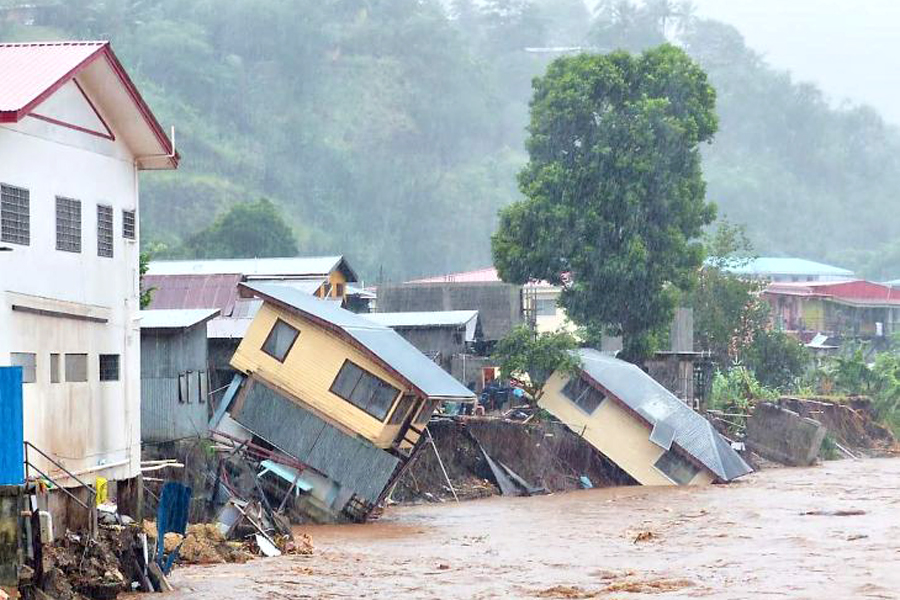
Deforestation consequencies….photo taken during the April flash flood at the mataniko bridge-China town
BY ELLISON.T.VAHI
Deforestation consequencies….photo taken during the April flash flood at the mataniko bridge-China town
SMALL Island developing states around the world faces a range of specific development challenges, now complicated by the emerging adverse impacts of climate change in rising sea levels, more variable and unpredictable rainfall, and more intense extreme weather events.
According to a report from the Solomon Islands Water Sector Adaptation Project, shows that Some communities in Ontong Java, Reef Islands of the Temotu Province, Lau Lagoon of Malaita Province, Roviana Lagoon in the Western Province and Santa Catalina of Makira Province to name a few have already experienced their root crops, such as taro, dying due to salt water intrusion.
As the nation’s future depends on its capacity to adapt to and mitigate the impacts, Local capacity is also key.
Solomon Islands communities are exposed to a number of natural hazards, worsened by climate change, such as coastal erosion, sea level rise, drought, heavy rainfall and flooding.
The impacts are multiple and interconnected. For instance, there are communities living along the coastlines and on low lying islands/atolls who, due to rising sea levels, are facing increased coastal erosion, inundation and salt-water intrusion. This impacts their fresh water supplies, a serious problem, especially when communities depend on the groundwater sources for drinking.
These issues can also greatly affect food and land security, soil fertility and the livelihood of the community as a whole.
Furthermore, drought is a major hazard for communities that depend primarily on rainfall. When there is none or little water available, this greatly affects people’s health and impacts public health safety.
The most obvious reason is that Solomon Islands is situated in the tropical region prone to natural disasters. Our people, our places and our systems are rendered more vulnerable due to a weak economy, limited access to basic services, different levels of education and the isolation and fragmentation of islands.
The capacity for communities to survive natural hazards varies across the country, affected by these factors.
Hence, the climate and weather is shifting as rainfall patterns vary and are unpredictable with more intense heavy rain in a shorter period has caused flooding and landslides.
Not enough technical capacity and, often, financial limitations makes it challenging to implement programs addressing climate change.
A lack of public awareness and understanding of climate change is another barrier. Whilst, awareness and education programs for government, communities, schools, institutions are really important to building capacity and improved decision-making.
Recognizing the seriousness and urgency of addressing climate change impacts the establishment of a National Climate Change Policy 2012 – 2017 was an important step forward in supporting the implementation of adaptation in communities. The policy reflects the Government’s engagement in ensuring climate change initiatives are guided and implemented accordingly.
Relevant ministries such as the Ministry of Environment, Climate Change, Disaster Management and Meteorology (MECDM), the Ministry of Mines, Energy, and Rural Electrification (MMERE), and the Ministry of Agriculture and Livestock are supporting climate change adaptation programs such as of the Solomon Islands Water Sector Adaptation Project focused on securing sustainable water supplies, sanitation and hygiene and the Strongem Waka lo Community for Kaikai project which helped local communities manage climatic pressures on food production.
The Government is also investing in Automatic Weather Stations nation-wide, to collect data for weather forecasting and early warning systems, as well as awareness campaigns in both rural and urban communities, considered to be essential to disaster preparedness.
UNDP works with Solomon Islands Government ministries to implement adaptation programs like SWOCK, UN REDD, ‘Building Resilience of Health Systems in Pacific Island Least Developed Countries to Climate Change’ and SIWSAP. With support from global funds such as the Adaptation Fund and the Global Environment Facility – Least Developed Country Fund, these programs work at the national, provincial and community levels, rolling out new or improved infrastructure, providing trainings and building sectoral capacity.
These investments help protect the livelihoods of our communities to adapt to climate change impacts.
MINISTRY of Fisheries and Marine Resources (MFMR) will actively focus on five strategic areas in quest to successfully communicate their mission statements, services, activities and achievements to it’s array of audiences.
This was expressed in the ministry’s Communication Strategy (2018-2020) which was recently launched and is linked to the current MFMR (2017-2019) strategy.
The ministry will work on fisheries policies, fisheries management, operational plans and functional services, staff, development programmes and projects and partnerships.
Under the fisheries policies, MFMR expressed that they will continue to develop, review and update policies for the orderly management and development of fishery operations including offshore, inshore, provincial and aquaculture.
In relation, based on these policies, the policy, planning and legal division along with MFMR’s communication officer will identify key policy messages to use in communications.
Moreover, in fisheries management, operational plans and functional services, the ministry said its tactic would be updating commercial operators about existing requirements and changes through paper and electronic means and during the application for new and renewed fishing licenses.
In terms of staff, MFMR highlights that they are the best and cost-effective means of communicating information given their consistent contact with customers, stakeholders and partners thus staff who are well informed and trained to deal with the media will help project the vision of MFMR.
Henceforth, the ministry expressed that it will organise and deliver a number of media and public relation trainings for all MFMR staff.
On grounds of development programmes and projects, MFMR has been working with key stakeholders, partners and various communities throughout the country to promote and deliver programmes and projects to enhance community fisheries livelihoods.
Additionally, in the scope of its development programmes and projects, the ministry stated that their role in all these projects and any progress made will be clearly communicated so their partners, donors, the national government and people of Solomon Islands are regularly and well informed.
Furthermore, the Fisheries and Marine Resources ministry voiced that it values its partnerships with national, regional and international bodies to date and the potential they bring for the future thus seek to communicate its services and the support it can provide to sustainable development of the country’s fisheries sector through established national, regional and international forums that include the Fisheries Advisory Council, the Chamber of Commerce and the Seafood Industry Working Group established by PHAMA.
CENTRAL Province Siota Provincial Secondary School (PSS) students and Staff have arrived in Honiara, kick starting their school rehabilitation fundraising programme this week on Monday.
Two night shows have already taken place at Gilbert Camp and one at Kukum Market Area yesterday during the day being a success so far according to their aim said the school’s Principal.
A walkathon is to take place on Thursday starting from Kukum to Pt Cruz and to be ended at White River around 9am to 1.30pm in the afternoon.
“We thank the Honiara City Council (HCC) Clerk for allowing us to carry out our fundraising within HCC’s boundary,” said Siota PSS Principal Fr Patterson Tako, guiding the school students during this school break with Mr David Rubaha who is the Team Leader and one of Form Six (6) Teacher’s of the school.
“There is plan to perform on Thursday at the Solomon Islands Port Authority (SIPA) but we are yet to get confirmation from the Chief Executive.”
It is understood that the school group will be spending one and a half week reaching mid next week in Honiara as more updates will be made known.
“So far the programme carried out is going according to plan as we want more ex-Siota students especially to come out and give their full support to their former school’s strive,” said the School Principal.
He said for further inquiry to the school’s programme, the school group can be contacted through his mobile phone, (8562711).
Recently during one of their fundraising held at Tulaghi raising more than $14,000, the School Chaplain for Siota, Fr Tony Ubara, explained while waiting for the Education Authority of CIP to help the school’s maintenance and other much needed areas to be addressed, they are fitting in their programme’s ways to address their school situation as soon as possible.
“There is the need to quickly improve classroom buildings, dormitories, Staff houses and other buildings by repainting them and doing small repairements needed to be done to help us be in a conducing learning environment.
“Not only the buildings but focusing on improving other areas as well,” said the School Chaplain.
The fundraising is said to include selling of foods, entertainments and as well as other performances to take place in Parishes that is yet to be confirmed according to Fr Patterson Tako.
Siota PSS Principal speaking to Island Sun yesterday adds in making a strong appeal to the school’s family, to support the school towards driving for its rehabilitation programme.
“We need strong support to further improve our Provincial Premier School which is for our children’s sake,” expressed Fr Tako.
ONE of the big initiatives now is to eliminate malaria according to Solomon Islands Prime Minister Hon Rick Houenipwela.
The PM said this at his Press Conference after returning from visits to Australia and New Zealand.
“This is in line with the Asia Pacific Leaders Malaria Elimination Target of 2030 for the elimination of malaria,” said the PM.
The PM elaborated that this was something they signed when he was in London this year discussing with Australia to support them towards the elimination of malaria.
“This includes working together to tackle the health crisis on non-communicable diseases (NCD’s) that is said to be accountable for the majority out of every ten (10) deaths in the country,” said the PM.
“NCD’s is a very big problem for Solomon Islands being an area to seriously look more into.”
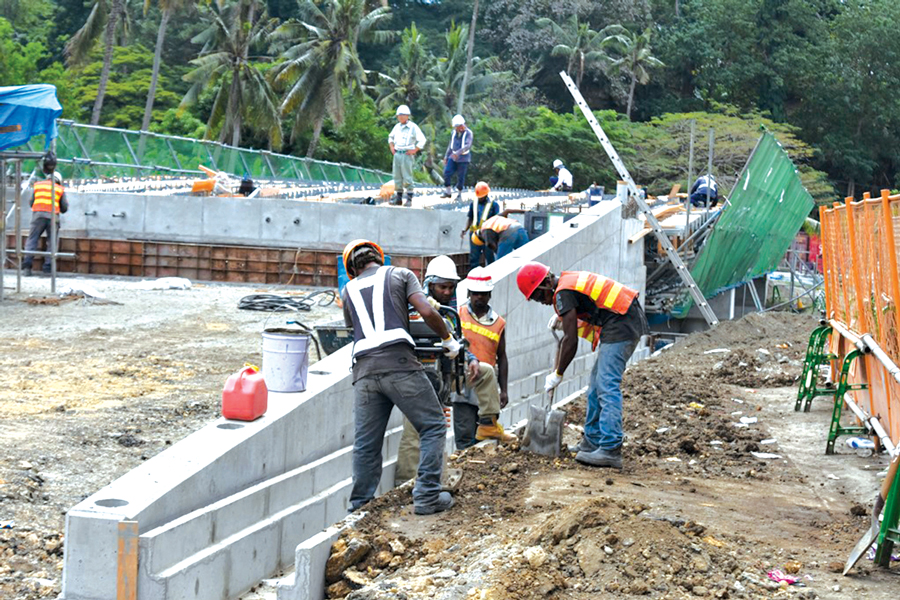
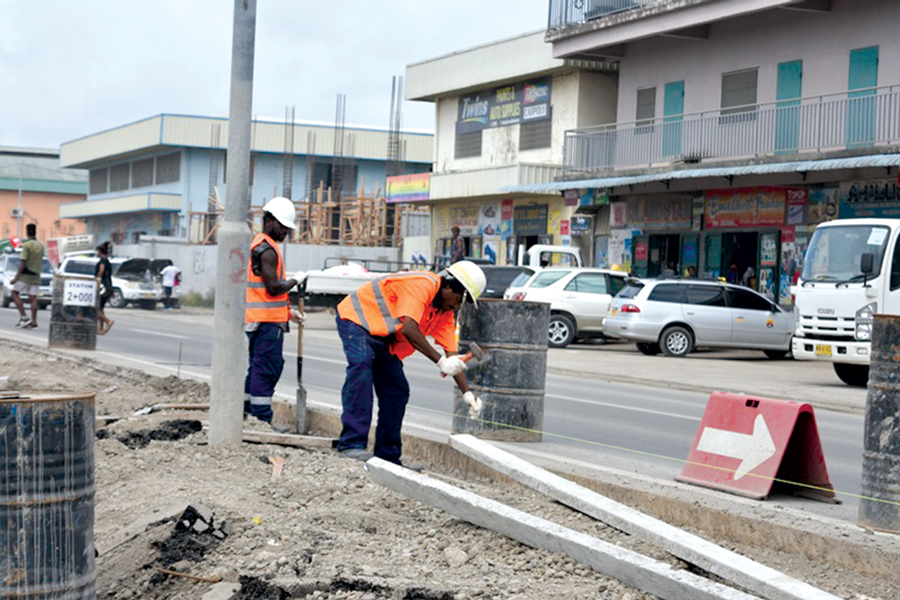
WORK on the Kukum Highway project is progressing with significant changes now seen in the prefecture where road work has reached.
Though expected to be fully sealed and paved in June, with adverse weather conditions, work continues to progress in a steady pace.
Currently the construction team are working on the U drains, side walk ways, cube stone, road works and also the old Mataniko Bridge.
Road works are expected to continue in the night mainly for road locations with base course, sub base course, asphalt or tar laying and drawing of road lines.
The Kukum Highway project was launched in 2016 and once complete should give a new outlook to Honiara.
Kitano construction workers at China Town bridge.Kitano constrution workers at the Kukum highway.Kitano Construction at China Town.Road work ahead at Bahai.Road work ahead at Kolaridge.Saint Nicholas students enjoying the walkway.
DEAR EDITOR, on Tuesday, the Island Sun newspaper featured a brief article I had submitted on the benefits of growing vegetables by hydroponics.
The Editor of the newspaper also uploaded a photograph I had sent which clearly illustrated lettuces being successfully grown in a length of plastic pipe clear of any contamination from the ground.
I suggested that individuals or community groups in the Solomon Islands might wish to consider growing their vegetables by hydroponic methods and I also mentioned that the basic equipment needed to make a start was not necessarily expensive to acquire.
Following the publication of my article I was contacted by some Solomon Islanders expressing their interest in giving hydroponic cultivation a try.
If there is any real interest that develops further then it is quite possible that I could assist a potential farmer with off-cuts of non-perishable plastic piping without charge and maybe other plastic items in which vegetables could be cultivated in a rich nutrient solution mixed with clean water.
I can be contacted via the link on my website – www.solomonislandsinfocus.com by any interested party really keen to give hydroponic faming a try but maybe lacking the means of acquiring some of the basic items to make a start.
Congratulations to the Ministry of Commerce, Industry Labour and Immigration for taking the lead in cracking down on alleged illegal workers in this country. It is long overdue.
Many have been quick to condemn Bangladeshis who were the focus of the investigation. I have been informed that the investigation covers activities undertaken by all foreigners.
What has attracted government intervention is the fact that the Bangladeshis have overstepped the mark in terms of operating outside the parameters allowed in their business licence.
This is where other Asians are pretty smart when it comes to doing business. They stick to running businesses within the confines of the city boundary. Any activities outside the city boundary fall under the jurisdiction of the Guadalcanal Provincial government.
What is worrying is the question of whether the investigation now underway would produce any tangible outcomes. There were similar inquiries in the past with little or no results at all.
Take for example the investigation into the alleged misuse of FOPA money, which has resulted in many contractors still waiting to be paid. Or the investigation of RIPEL, which vanished into thin air.
These inquiries, small or large, are paid for by taxpayers. They demand result, not simply just the label.
Many are of the view that these inquiries go nowhere because they are seen as internal rather than an independent, free and fair investigation. They have a point. How can you expect the same person investigating himself to come up with information that one day could be used against oneself? It is next to impossible.
Don’t get me wrong. An inquiry into alleged illegal activities is a good thing. It is even better if it comes up with actionable recommendations, recommendations that would transform, rather than reform mistakes of the past.
Critical to the investigation is how these illegal aliens came into the country? Were they assisted? If so, by whom? These are the fundamental issues or questions that need to be put under the spot light.
True, we can blame officials in the government ministries responsible for allowing foreigners to enter our country but were these officials acting alone?
Solomon Islands suffers from the too accommodating syndrome. Religiously, we are beyond accommodation because of our compassion for other people, particularly foreigners.
A bad thing? Not at all.
Many local people treat our visitors as gods. And it is a good thing. You can see that, for example when a foreign evangelist visits our shores. More people would throng to the evangelist’s crusades or evening rallies than if the evangelist were a local person.
Unfortunately when it comes to officialdom, there is a red line. More often than not, it is Government ministers who cross this red line for reasons only they themselves would explain.
So the inquiry should be independent enough to shed some light on potential involvement by political leaders in facilitating entries of foreign nationals into our country..
As a result, much of what we are going through were created by politicians. So an independent investigation is very much warranted. It should not be just any investigation – it should be one that is fair, free from political interference and is independent.
Anything else would simply be hot air and a waste of money and time. Investigation should never be just investigation. Rather, it should be focused and outcome-oriented.
Otherwise, we will become just a laughing stock to the very people we are trying to investigate.
THE Ministry of Commerce (MCILI) has issued out a plea for citizens to report any issue relating to illegal business operations and price control
“Any issues relate to illegal business operation and price control should be report directly to the Ministry of Commerce, Industry, Labour and Immigration,” said Permanent Secretary Riley Mesepitu.
Mesepitu said this includes complaints on price control and consumer affairs.
He also urges public not to use media or social media platforms for reporting.
Mesepitu said this is because the ministry operates under government structure and policies, thus complaints need to be directed to the ministry.
Doing this will help Ministry responsible carry out investigation properly and compilation of report effectively, he adds.
Mesepitu was responding to complaints from public regarding the price control of goods and consumer affairs in Solomon Islands, an issue which has been debated in social media lately.
He says that the responsible ministry for price control and foreign investors is the MCILI.
“Sometimes complains are coming from public without fair understanding of the legislation for price control and consumer affairs.
“It is better for public to report issues of concern to responsible authorities but not in other social media platform.”
Director and Registrar of Foreign Investment Division, MCILI Mr Derick Aihari reiterated Mesepitu’s call encouraging public to report any activity or incidence relating to illegal or dubious business operations in residential areas.
He said they will deal with reported issues if locals provide detailed information about who runs the illegal business along with price control and consumer affairs.
Class of 78 member, Loretta Palmer hands over manuscript to Sun Printing General Manager, Oscar Vahimana with class member, Sam Alasia looking on
BY GEORGINA KEKEA
Class of 78 member, Loretta Palmer hands over manuscript to Sun Printing General Manager, Oscar Vahimana with class member, Sam Alasia looking on
A BOOK written, edited and published by Solomon Islanders will also be printed locally in the country. Yesterday team members of the King George Sixth School class of 78’ handed over the manuscript of the book to General Manager of Sun Printing, Oscar Vahimana, who will be responsible for the printing of the book.
Titled, ‘Leadership, Scholarship and Friendship, our Journey Post-Independence Solomon Islands’ this book has gone down in the history of Solomon Islands to be wholly local.
“Not only is it written, edited and published by Solomon Islanders, it will also be printed in Solomon Islands,” a jubilant Sam Alasia has told Island Sun in their last meeting.
Alasia says often, we have partners from overseas assisting us in such projects but for this book only Solomon Islanders are involved which indicates an improvement by Solomon Islanders.
The book is a publication of the Solomon Islands National University (SINU) the first publication for the university as well.
Also speaking to Island Sun, Oscar Vahimana, General Manager of Sun Printing says he is much honored to be entrusted with this crucial job of printing. Though they have covered a lot of printing work, this book will also be the first of its kind for Sun Printing.
“I am confident that we will be able to print the number of copies needed for the launch in time and I am most happy to be selected to be a part of this project,” Vahimana said.
The book will be launched on the 5th of July at the SINU’s Panatina Pavilion. The book in particular are life stories of former KG students who were doing form six in 1978 when the country gained its Independence 40 years ago.