Home Blog Page 1298

Premier Gina proposes key sector reforms in West

0
David Gina

BY ALFRED PAGEPITU
GIZO

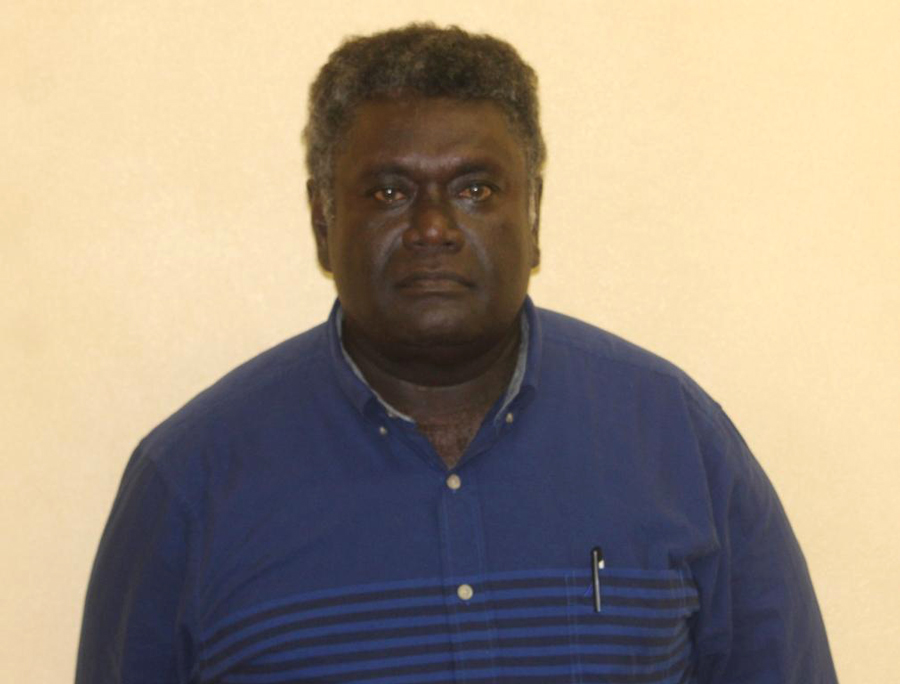
Newly elected premier David Gina

THE newly elected Premier of the Western province, David Gina, has proposed a number of reforms especially in the revenue sector.

Mr Gina outlined a number of drastic measures to be undertaken which he explained will be part of an overall reform and restructure of existing revenue sources in the province.

“This includes the logging sector, general revenue collection through substation, business flow, as well as the Province’s business arm.”

He said his policy outline proposed to be announced at the first full Executive next week is to give due prominence on these key revenue source as they form the fabric of the Province’s economy.

He said the Western province should be a self enriched province but often the processes and regulations are undermined by previous governments purely on self interest.

Gina explained that the province should be a leader in terms of revenue.

Among the priorities the new Government is focusing on the Western Province Investment Corporation first.

It plans to investigate how the province’s financial arm has been managed.

On the logging industry, Gina proposes to grant fewer licences unlike before two to three licence holder all vying for one single logging concession.

The Premier said his executive like to introduce new control as a way to manage the Province’s level on revenue collection.

He said the businesses sector such retail and whole sale activity should involve a lot more by locals.

“We cannot afford to see the business sector is control by foreign merchant. He it is important local businesses will be assisted.”

Gina said the new Executive intends to impose new measure such as introducing new ordinance as way to run the province as a service deliverer but at the same time it should be able to live to the capacity of getting revenue and deliver services in the rural sector.

He pointed out that a major task which is expected under the proposed new reforms is to increase the delivery capacity of substation across the Western Province.

The Executive likes to see that sub stations undertake a fair amount of tasks and responsibility to stop the flow on centralized services.

“We should Administrators and also revenue clerks back in sub stations to help the rural sector livelier.”

He said that the Western Province is quite capable doing timely delivery of service but over the years this seemed to have dysfunctional that the new Executive intends to introduce changes as part of overall reform across key sectors.

MPGIS lauds Temotu province’s 2008-2018 PCDF results on project delivery

0

BY LORETTA BRIGIDIA MANELE

WHAT is more important and fascinating here is the ability of the province to plan, procure and deliver such solid projects that facilitate service delivering in the province.

The above was expressed by the Ministry of Provincial Government and Institutional Strengthening’s (MPGIS) report outlining Temotu province’s results on the delivery of projects delivered under the Provincial Governance Strengthening Programme (PGSP) through the Provincial Capacity Development Fund (PCDF) for a 10 year period since the introduction of PGSP in 2008.

As stated in the report, Temotu province’s ability to perform such a task has been made possible because of the ministry’s efforts in ensuring continuous capacity building through its Provincial Governance Strengthening Programme (PGSP), now fully funded by the Solomon Islands government.

Moreover, outlined is a record of the province’s projects which include sectors namely; Administration, Youth and Sports, Education, Rural & Urban Transport, Income Generating Activities, Health, Fisheries and Marine Resources, Waste Management, Women Development and Water Supply.

The report also shows variation among the sectors in terms of which sector employed the highest number of people, which had a greater number of projects and which was the most costly.

In this case, MPGIS highlighted that the administration sector employed 97 people which the report proved to be the highest number of people employed and was also the most costly at SBD $2,426,789.

Meanwhile, fisheries and marine resources, health and women development sectors were allocated one project each with the fisheries and marine sector’s project amounting to be the overall least costly project at SBD$104, 500.

The sector with the highest number of projects is Water Supply sector with 33 projects.

Further stated is that the administration and education sector have ongoing projects where the administration’s only project still progressing is a provincial assembly chamber Temotu province sees to house assembly meetings and offices for the Speaker as well as offices for officers in the assembly division.

Need for more awareness on corruption practices

0

BY BARNABAS MANEBONA

MORE awareness programs to educate them on the processes of how to report corruption practices is needed according to locals of Northwest Choiseul.

Speaking to Island Sun, Varisi Lavata’s Ward 12 Member for Provincial Assembly (MPA) Hon Nerio Ulemiki said they need the Leadership Code Commission, Ombudsman’s Office, police, Transparency Solomon Islands and other bodies who are dealing with corruption practises to go down to their grassroots level and assist them.

“In order to uproot corruptions being in all levels of society in Solomon Islands, everyone needs each other’s assistance,” said Hon Ulemiki.

He said trainings they seek for should also include educating them in knowing which bodies are dealing with specific issues of corruptions.

Solomon Islands is currently one of the countries in the world that is experiencing high rise of reports over corruption practises.

Building capacity for central banking work

0
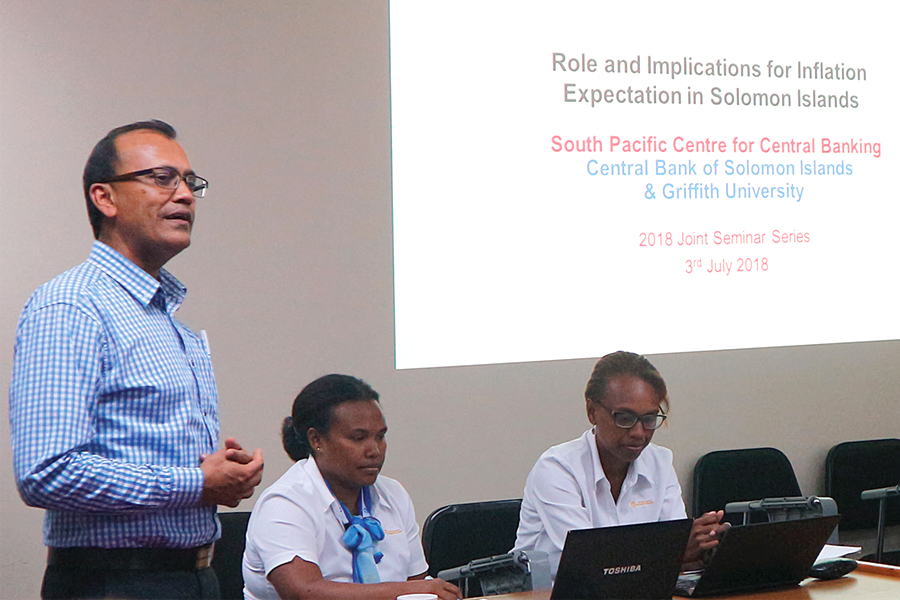
Head of Griffith Asia Institute’s South Pacific Studies group, Dr Parmendra Sharma from Griffith University speaking to CBSI staff.

THE Central Bank of Solomon Islands (CBSI) in collaboration with Griffith University’s South Pacific Centre for Central Banking recently conducted an internal joint seminar series on July 3 at the CBSI training room.

According to CBSI, the joint seminar is part of the process to improve research capacity for the bank and including other Central Banks from around the region in countries such as Fiji, Vanuatu and Papua New Guinea.

The two proposed research topics presented at the seminar last week focused particularly on the “Role and implications of inflation expectation in Solomon Islands” and “Financial Development in a small island economy – the case of Solomon Islands”.

The presentations were conducted by co-authors from within CBSI’s Economics Research Department (ERSD) and Financial Market and Supervision Department (FMSD).

CBSI staff were able to learn about the research methods used, the data information collected and their results, and engaged with the presenters in short Q&A sessions.

CBSI Governor Denton Rarawa highlighted in his opening remarks to the seminar that staff are encouraged to build their research capacity and gain new knowledge.

Mr Rarawa stated that through such collaborative work, the skills gained could be shared with other groups and institutions in the country and further assist in evidence-based policy formulation.

He added that the seminar is conducted as part of the process to formally train regional Central Banks in research skills and to enhance professional development.

The two main convener’s of the seminar last week included the Head of Griffith Asia Institute’s South Pacific Studies group, Dr Parmendra Sharma from Griffith University and the CBSI Advisor to Governor, Dr Luke Forau.

–CBSI PRESS

Temotu creates more education opportunities through PCDF

0

BY LORETTA BRIGIDIA MANELE

ACCORDING to the Ministry of Provincial Government and Institutional Strengthening’s (MPGIS) Provincial Governance Strengthening Programme (PGSP), Temotu province through the Provincial Capacity Development Fund (PCDF) projects is making immediate impacts on the lives of its people.

Since the establishment of PGSP back in 2008, the province has embarked and achieved progress with an array of projects.

PGSP points out that Temotu province’s projects under its education sector have given students not only access to higher education but an opportunity to access higher education without having to travel far to Honiara to attain it.

In 2010, Temotu province provided decent dormitory for 120 male students and completed the construction of a two sixth form classroom block which saw more than 500 students passing sixth form education with some making it into various universities.

PGPS also expressed that Temotu province has from 2008 to 2018, achieved 5 projects under its education sector which are the construction of ; three Luesalemba staff houses, one Luesalemba boys dormitory and one Luesalemba form six two classroom block.

In addition, the total cost of these projects was SBD $1,315,000 and 43 people were employed to implement the projects.

The province saw changes after this endeavor which were; increased accommodation facilities for LPSS teaching staff, increased accommodation facilities for LPSS students and access to form six education for hundreds of students in Temotu.

On top of that, Temotu has so far made a total contribution of SBD $501,161 towards the construction of Education Ministry headquarter in Lata, one of the ongoing projects under the education sector.

“Of the total estimated cost of SBD $1,500, 000 of Education Headquarter, the TPG is expected to contribute about 40% of the cost with the objective of promoting education service delivery in Temotu”, said PGSP.

Temotu believes that providing the stadium wing for USP is facilitating access to higher education to people who would have otherwise found it impossible to enroll in those courses away from Lata.

Furthermore, the other project that is still under the scope of ongoing work is the development of a provincial library projected to provide access to those attending USP centre and for the public.

SIPA to hold workshop on effective workplace partnership

0

BY BARNABAS MANEBONA

SOLOMON Islands Ports Authority (SIPA) is organizing a two days’ workshop starting today at the Heritage Park Hotel purposely to educate its workforce on the various aspects that are related to their employment.

The workshop which is understood to be mainly for SIPA’s shop stewards, supervisors and managers will give opportunities for employees to listen, discuss and interact in full on the various aspects of the working relationship between the management and the employees.

It will also give the employees knowledge about the roles of the Union and the roles by various government agencies in dealing with industrial relations.

SIPA invite people from various government departments such as the Labour Division, Trade Dispute Panel and Inland Revenue to talk about the Tax system to the workers.

According to Mr James Gerea the Staff Training/Development and Policy Manager |Corporate Service of SIPA, the various topics that will be discussed include the role of SIPA, role of Union, Labour Act, role of Trade Dispute Panel and disputes resolutions, taxation system, workers’ rights, employer rights, the role of workers in the organization, building an effective workplace partnership and others.

“We hope that at the end of the workshop, employees and management will have a clear understanding of their roles and responsibilities, understanding of mechanisms for dispute resolutions, Labour Laws and mechanisms/procedures and union roles, etc.,” said Gerea.

“This will help to build an effective team and environment for working together to achieve our common interest as well as a productive port operation & quality services to customers.”

It is understood that this is the first time in SIPA history to have this workshop as they plan to also organize a similar programme at Noro Port for their workers.

The theme of the workshop starting today 9am and finishing tomorrow is: Building an Effective Workplace Partnership.

Concerns GPPOL plains roads deteriorating

0

BY BARNABAS MANEBONA

ROADS along north Guadalcanal plains are said to be deteriorating badly, forcing Guadalcanal Plains Palm Oil Limited (GPPOL) landowners to call on to the responsible authority for maintenance.

GPPOL landowners speaking to Island Sun express having the feeling that their roads are being neglected seeing it to be quite a while now for no maintenance to be carried out on them.

They stated from another view that the government is only giving more focus to the roads within Honiara.

“We are calling on the Ministry of Infrastructure and Development (MID) to do maintenance on the northern plains roads and other joining ones making up the GPPOL Plains which are now in very bad states,” said local GPPOL landowners.

“GPPOL plains adding having other industries being set up within its surroundings provide good contribution to the economy of Solomon Islands. For that, we think that our roads on this side of Guadalcanal Province should also be a priority for the government to maintain as well.”

The GPPOL landowners stand on the initiative as to why the roads were developed in the first place and that is to support the industries within that surrounding area.

Island Sun had been trying to get a response from MID since last week over this concern but have not received a response.

Access to clean drinking water, an important achievement for Temotu: MPGIS

0

BY LORETTA BRIGIDIA MANELE

TEMOTU province’s most important achievement of all efforts it has made through Provincial Capacity Development Fund (PCDF) is providing its people access to clean drinking water.

As expressed in a Ministry of Provincial Government and Institutional Strengthening report detailing the performance more or so, results of the province’s service delivery under PCDF through the Provincial Governance Strengthening Programme (PGSP) spanning a ten year period from 2008 to date, the province was able to deliver water supply to its people.

The ministry’s report shows that the province worked on a total of 33 water supply projects, the highest number of projects in contrast to other sector projects.

Temotu province’s water projects totaled to a cost of SBD $1,352,696 and created 64 jobs with 191 females and 158 males as the number of people who benefited from this sector.

With the sector having provided water supply/genset installation, 1 Nembo Water Pump Building, 30 Lata water tanks and1 Tikopia Ravenga water supply, the report furthered that that this has brought about reliable water supply resulting from the completion of the Nembo water pump infrastructure, increased access to water and improved access to good quality water supply by the Tikopia community.

Is cheap and faster internet the answer to our social and economic ills?

0

BY the time you are reading this, our Prime Minister Hon Ricky Houenipwela, would have well and truly settled down in his hotel suite in Brisbane, He is there to sign the agreement linking Papua New Guinea and Solomon Islands with Australia via the fibre optic undersea cable.

As one official put it, the project was “shoved down our throat” by and at the highest political level in Canberra. One doubts it is in our interest.

What makes this project so special that only Prime Ministers are privy to its contents and intention?

Politicians come and go. There is no guarantee it would be honored in perpetuity.

I have particular problems with many aspects of the undersea cable project and its overall intended impact in Solomon Islands and its 650, 000 souls.

My estimate is that only about 12 per cent of the population would have access to this global superhighway.

Take it down to the wire and you will find a large slice of the 12 per cent of the population will have access to this “cheap and faster” internet. They will do so to do nothing but the unmentionables.

This in itself will create further social ills for a nation that is already bursting on its seams with a plethora of crimes that our weak law enforcement regime is unable to adequately deal with.

There are rumours in the diplomatic circles that even the justice system in this country is at the point of collapsing.

Put all these together – a weak police force, a collapsing justice system and the low level of the number of people who will be using this new internet service – and you have on your hands a potential time bomb capable of blowing the nation apart.

And that is one my difficulties with the project. Is it going to improve the lot for the ordinary people who need a job to survive this harsh world of the cash economy?

There are even more serious questions. For example, is it the intention of the proponents and in deed the funder of the project that they are only interested in supporting just 12 per cent of the Solomon Islands’ population?

As it is, the ingredients for the social time bomb I have referred to are already gathering momentum. Take for example, our National Referral Hospital.

It is the nation’s first line of defence against diseases, and yet it does not have even the basic drugs to treat people.

The hospital has the finest trained workmen and women in the field and yet even the present government appears to have completely ignored the demise of this life-saving institution.

Prime Minister Ricky Houenipwela was asked about the sorry state of affairs at the NRH this very question during a recent business breakfast. His response could have come from a Grade six kid.

He reportedly blamed the way the budget was framed. Excuse me, the budget? The budget is framed by a group of people with a leader – that leader is none other than the Prime Minister himself.

It is the question of priority, Sir

It brings me to question the true benefits the so-called cheap and faster internet project would bring the non-working people of Solomon Islands.

As it stands, the project has zero benefits in terms of job creation and even the potential spin-off benefits are rather remote.

What is of urgent consideration is the fact we need to create jobs, not through cheap solar panels that even the World Bank has bought into.

Holy moley, how long are we going to allow foreigners to pull the wool over our eyes?

Job creation can only be done by engaging with those who have the resources to create new trade and investment opportunities in this country.

It is the only way to unleash the reservoir of the skilled, semi-skilled and unskilled individuals locked away in rural Solomon Islands.


Alfred Sasako

Objectivity important, lest we forget

0

THE intrusion of social media into our society has certainly caused an upheaval in how we do things. Everyone wants to be somebody, journalists become advocators and children become adults.

In journalism to remain objective is to present the facts whether or not one like or agree with those facts.

Objective reporting is meant to portray issues and events in a neutral and unbiased manner regardless of the writer’s opinion or personal beliefs.

Sad to say, with citizen journalism on the rise, the essence of objectivity is now missing and we have more disgruntled, misinformed citizens ever than before.

We have become a bunch of followers to one-sided stories with more assumptions and questions then facts and answers.

On top of that, those who were supposed to present the story in an unbiased manner are also carried away with the current trend and are the ones presenting their opinions the loudest.

How are we to present our story to the public with the intention to educate, inform and entertain when we do not report with objectivity? The use of social media tools especially Facebook has paved the way for macho behaviour, some hiding behind pen names and making unbecoming comments, threats and calls with journalists also joining in this platform to sing their song the loudest. Media is known as the fourth estate.

But what good is the fourth estate if it is bias, assumptive and irresponsible? Seditious comments made by citizen journalists on social media have tainted the image of the media industry as a whole.

Whilst the mainstream media at all times strive to uphold its code of ethics and conduct the unbecoming behaviour of journalists also wanting to be activists has made it difficult for the media to maintain its neutrality.

In these difficult times, it is important we go back to the basics of journalism and strive to deliver credible, evidence-based and engaging reporting as opposed by citizen journalism.

As journalists our role is to watch from the sidelines, witness the drama unfolding, but at a safe distance and report the information, tidbits and insights to the public. We need to be independent and not driven by any agenda.

Our job is to seek the truth and be a champion of core values of journalism. Lest we forget.