THERE is growing pressure on ports and shipping to slash emissions in the Pacific region.
Reaction to this, the South Pacific commission (SPC) and the Secretariat of the South Pacific Regional Environmental Protection (SPREP), implanting fund under the green pacific ports pilot projects.
Solomon Islands as one of the pacific countries along with Tonga to boost an initiative to promote balance environmental challenges with economic demands in ports, by (SPREP) and (SPC).
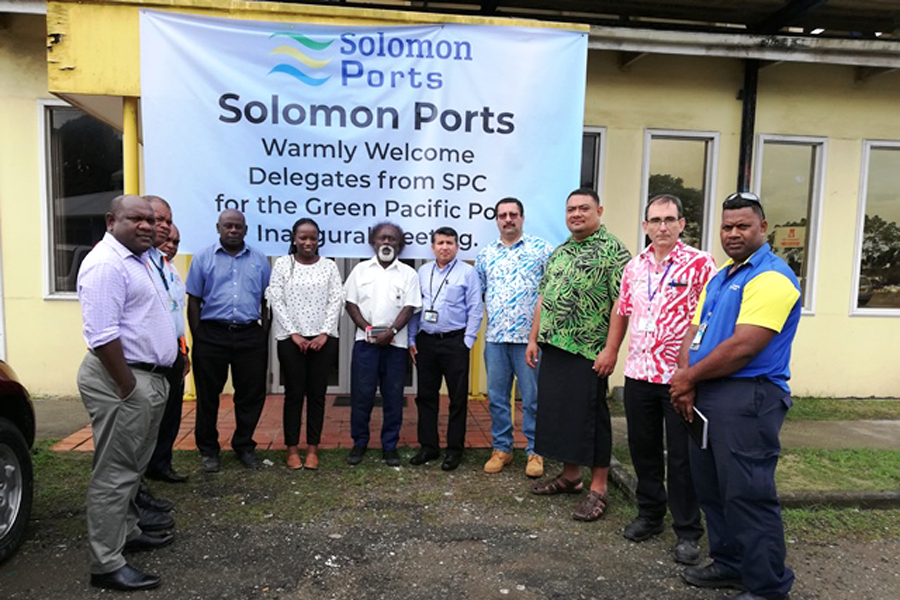
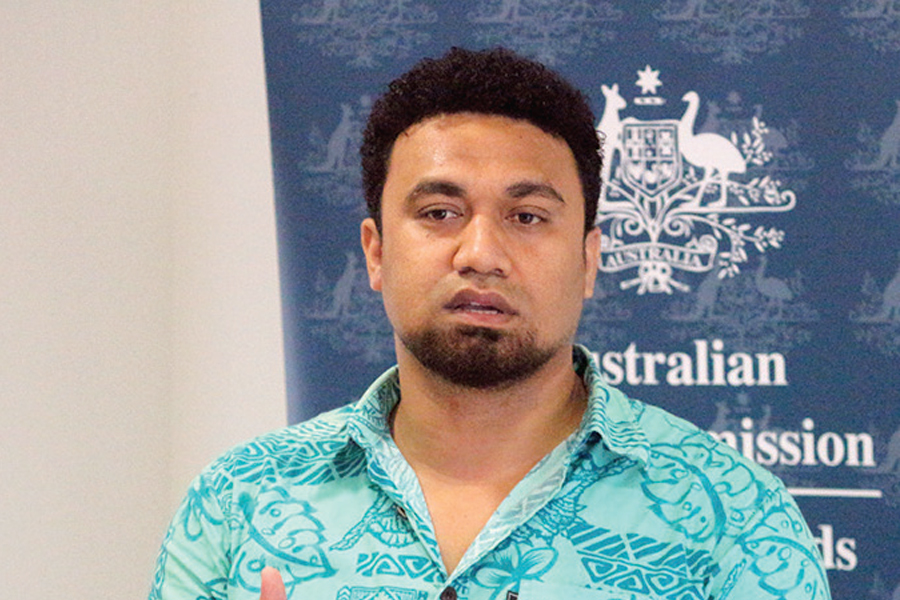
A green pacific ports project manager and a maritime port advisor Mr Sitalingi Payne told Island Sun that, the green pacific port is a 1 year pilot project implemented to improve environment with in the ports area.
He added that, the project will also focus on development of strategic, legal and quality legal framework to meet a proficiency and sustainability of ports operation.
The project will also dealing with the energy efficiency and carbon footprint, implementing climate changes and disaster risk management.
This initiative project will also change ports to green and low carbon pacific maritime industry, he added.
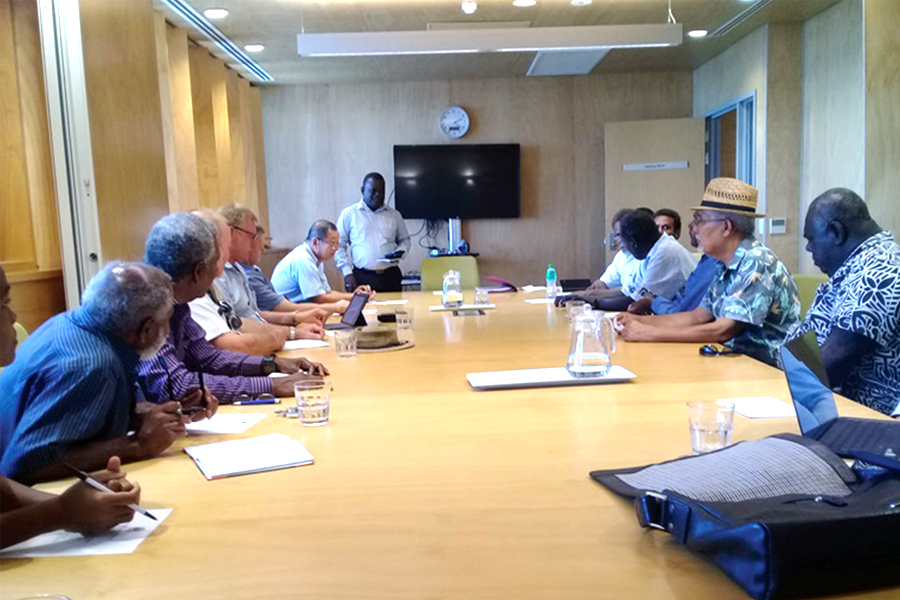
Green pacific ports this year is their first visit. After 1 year of working, the team will be back to monitor the progress of the projects.
In terms of policy, Mr Yoli Tom’taravala a Policy and Legal advisor stated that, he is working on the policy to support the environmental laws, marine pollution and handling of waste in the ports area. This will guide ports authority when dealing with the environmental issue within the ports boundary, he added.
With response to energy resources, an Energy consultant Mr Bruce Rowse, stated that, reducing use of energy is significant. Last year, average of 8% of carbon been emitted, which approximately to 15 tonnes of greenhouse gases.
Changes of staff, reduce of use of energy can contributes in reduction of greenhouse gases he added.
Mr Sitalingi Payne also said that, The Solomon Islands ports Authority (SIPA) are very cooperative in supporting this project with the same concept which is also a significant sights the country a currently addressing locally.
IN the SIG 2018 Budget, government has anticipated to implement the provision of SBD14 million for State Owned Enterprises (SOE’s).
This has been reduced from $25 million from the 2017 budget for Community Service Obligation (CSO) payments.
Initially in the government’s 2018 budget allocation, the 2018 CSO allocations are based on their 2017 CSO proposal.
Solomon Airlines Limited $6m, Solomon Islands Broadcasting Corporation $2.5m, Solomon Water Authority $1.5m, Solomon Electricity Authority $1m, Solomon Islands Postal Corporation $2m and Commodity Export Marketing Authority $1m.
These CSO provisions are to ensure key essential services such as electricity, water, transportation, and communication services are provided in the provincial areas.
The 2018 CSO provision reflects positive progress of financial and service delivery of the SOEs.
The implementation of the CSO framework has benefited SOEs in terms of funding their non-commercial activities.
The CSO payment subsidise mostly operational cost of SOEs to keep essential services operational.
In the past, governments have provided fiscal transfers to SOEs to address losses from poor financial and business performance.
The SOE Borrowing Policy is an important recent development in the fiscal relationship between SOEs and the shareholder.
This policy provides limits to SOEs borrowing provision and enhances government to make viable decision on lending.
It also protects the government from excess debt arears.
Owing to the poor debt history of Solomon Islands SOEs, SOEs come within the scope of the Government’s Debt Management Framework.
Yesterday six of the SOEs are said to sign a contract agreement with the Ministry of Finance and Treasury.
EMPLOYEES of the Solomon Islands Government have been issued with empty cheques for their holiday lately.
A number of public servants had their cheques returned by shipping companies because there simply is no money in the Government coffers.
The problem encountered is, their cheque holds the bulk of money for travelling expenses were bounce back says the seafarer when checked at the domestic wharf.
A person who requested anonymity said they should go for a holiday now but they were stopped by ship workers because their cheque has no money inside and the government did not pay their sea and air ticket.
The person also adds they encountered problem since June to date and never been address despite its continuous checking at the Finance and Treasury.
“We are not happy about such payment, and we are curious about what is happening with the current government, are we alright?” the person asks.
It said this is the first time such have happen to them this year unlike last year or years before everything flow as soon you receive holiday permit.
The payment includes shipment and air fare and travelling expenses such as trucks and boats.
THE Bank of the South Pacific has been questioned whether they plan to extend their agents to substations in Malaita province.
A teacher from East Malaita made the query following the need for banking services in the rural areas of the province.
He said at the moment only BSP Auki is serving the whole of the province; this is a source of inconvenience for many who live far away.
“For us teachers especially, we have to travel to Auki or Honiara for the service. And how costly it was to get for the service is always our concern.
“Also there were people in rural areas need to benefit from the service, but with the limit services BSP provided in the province it doesn’t allow them to be part of it.
“So what always remains our priority on the service is for BSP to establish their banking service at the substations in Malaita, so that people in those various regions will easily get there for the service,” the teacher said.
Meanwhile, he encourages other commercial banks to expand to Malaita province.
Teacher said currently only BSP is serving the province and having two or more bank services will sort out some of the issues people face with the service in the province.
DEAR EDITOR, according to the most recent news from Radio New Zealand the New Zealand Government has increased its Overseas Development Assistance budget by $US488 million, lifting the total to $US1.5 billion over the current four year funding cycle.
“The ministry’s deputy secretary of Pacific and development, Jonathan Kings, said $US124 million would be dedicated to a strategic development investment fund for the big issues in the region, including climate change resilience and a land reclamation project in Kiribati.
“But as well as that we are re-orienting the aid programme to reflect this government’s priorities and some of the resources will go to address the challenges that this government has identified that they want to see addressed in the Pacific,” Mr Kings said.
“For example, health and education. gender issues and women’s empowerment issues,” Mr King was claimed to have added.
Commenting on the new development assistance, a research academic at the Australian National University reportedly said using aid to foster a stronger and more prosperous neighbourhood benefited the entire region.
It is understood that Papua New Guinea, Solomon Islands and Timor L’Este are considered by New Zealand as most in need of aid funding. Source – Radio New Zealand
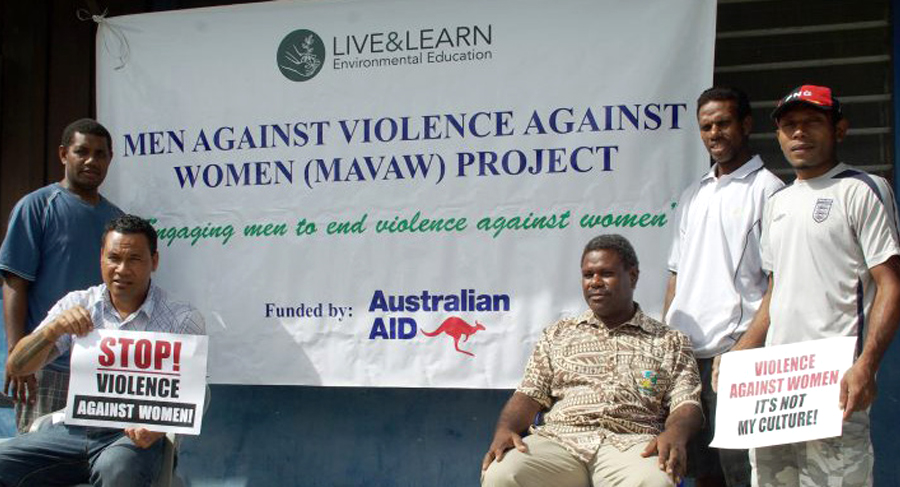
Staff from the Men Against Violence Against Women project in Solomon Islands. Photo by Irene Scott/DFAT/Flickr/CC BY 2.0
Staff from the Men Against Violence Against Women project in Solomon Islands. Photo by Irene Scott/DFAT/Flickr/CC BY 2.0
IT is often assumed that women are empowered when they are able to earn an income and that this puts them in a stronger position to negotiate with their partners.
However, this is not always correct. Neither is the view that earning an income reduces men’s violence against their wives.
In fact, those trying to promote gender equality through economic empowerment initiatives face the vexing issue that their efforts may have unintended negative consequences, improving one dimension of women’s lives but undermining others.
The ‘Do no harm’ (DNH) research, carried out between 2014 and 2018, addressed the question of how to improve women’s economic agency and the security of their livelihoods without compromising their safety.
To grasp the actualities women face in trying to improve their economic situation, the research gathered detailed verbal accounts from women about their work and home lives.
Field research in Solomon Islands and Papua New Guinea produced 485 interviews – 238 with women and 135 in-depth interviews with well-informed local leaders, both female and male.
The women who participated in this study valued the opportunity to earn an income and spoke positively about its benefits.
But, as they told us, income generation also has negative impacts, including the burden of extra work, difficulties finding childcare, problems accessing markets, and increased demand from husbands and relatives for money.
Overall, we found that partners rarely agree about household expenditure and that womens’ income generation often contributes to marital conflict and violence.
Much of the conflict and violence associated with money concerns men demanding or seizing money from their wives. Some conflicts occur because the husband expects full control of all the income that his spouse generates, even when he has not contributed to earning it.
Other conflicts about money occur over spending priorities for pooled income, wives usually prioritising family needs and men prioritising their own desires.
Some husbands require their wife to ask his permission for any expenditure of pooled income, but do not seek agreement for their own expenditure. If a wife challenges this demand, conflict is likely to follow.
Also, some men become angry if their wife is unable to complete domestic tasks as expected.
Men rarely assist their wives with household work, such as cleaning, cooking, subsistence gardening and child care, even when the wife is working hard to earn income for the household.
The research also showed that many men often reduce their own contributions to the household, or to contribute nothing at all, if their wife begins to earn an income.
At all field sites, women often bear total responsibility for the financial support of the household, even when their spouse has an income. Instead of increasing the pool of resources available to the household, women’s economic gains often result in men using all their own earnings for their own discretionary expenditure.
The impact of men’s resource-depleting behaviour on women’s workload and household well-being is a source of discontent and often results in domestic conflict.
Conflict often occurs when women exercise agency by refusing requests for money or by questioning their husband’s wasteful expenditure.
Many women reported that their partner’s alcohol consumption — particularly in the form of binge drinking — was central to marital discord.
They consistently reported that refusing requests for money for alcohol or questioning expenditure on alcohol was a trigger for violence.
Men resented being reproached by their wives for wasting money on themselves and depriving the family, and this was a frequent cause of men’s violence towards their partners.
The importance of making the potential for violence integral to the design of women’s economic empowerment interventions has been highlighted in recent international literature.
A recent DFID Guidance Note argues that programs to improve women’s business performance or increase women’s income are threatened or diluted by the impact of violence.
To defuse the risk and to optimise benefits of economic development, the authors stress that it is essential for such programs to address violence against women.
The DNH research provides insights into the gendered power dynamics at play in marital relationships, the specific factors that hamper women’s income-generating activities and the risk factors for violence in the Solomon Islands and Papua New Guinea.
Given the importance placed on women’s economic empowerment by donors, NGOs and governments, there is a critical need to recognise that women’s economic empowerment sometimes entails risks for women that development programming must counteract, something which is canvassed in the three detailed reports from the research (on PNG – including on Bougainville – and on the Solomon Islands).
The research was a collaboration between the Australian National University’s Department of Pacific Affairs (formerly State, Society and Governance in Melanesia Program) and the International Women’s Development Agency (IWDA) and funded by the Australian Government through the Department of Foreign Affairs and Trade’s Pacific Women Shaping Pacific Development program. The research is also summaried in these two DPA in briefs.
Richard Eves is an Associate Professor at the ANU Department of Pacific Affairs.
Drainage at the Kukum market packed with plastic waste and betel-nut husk believed to provide a harmful environment to the surrounding communities.
BY LYNTON AARON FILIA
Drainage at the Kukum market packed with plastic waste and betel-nut husk believed to provide a harmful environment to the surrounding communities.
WALK past the Kukum betel-nut market in Honiara and one could literally feel despair at the huge amount of plastic waste there.
Residents and market vendors tell Island Sun that the plastic pollution is growing, worse still, left untouched by authorities.
The drainage along the road leading to the Kukum market is loaded with plastic garbage, and is a breeding ground for mosquitoes, germs, and odour.
The Honiara City Council has made several attempts to remove the litter but has failed.
One main reason behind HCC’s failure to get rid of the plastic dump there is the continuous careless behaviour of public in disposing rubbish at the drain.
The plastic mountain blocks any means of drainage, leading to flooding of the road during times of rain.
HCC’s Chief Inspector, Environment Division, Mr George Titiulu said council from time to time has removed the mixture of rubbish there, but the issue there is about the consistency of littering on that drainage.
Titiulu urged everyone residing and operating businesses there to cooperate with HCC; one of the reasons too is that the drain also lies within their 7-metre area, which means it is their responsibility to clean it up.
He explained according to the seven metre by-law under the litter ordinance, the shops there already commits an offence and such kind of bulky waste, people can fine with $10,000.
But the challenge is weather these littering is coming from the shops, market vendors, users or residence, he adds.
“More plastic waste accumulate is an indicator of people are not mindful of how they throw rubbish, people are not well inform of the dangers of the rubbish accumulation,” Titiulu said.
In terms of people’s health, the accumulation of plastic waste and blockage of drainage Titiulu said it will implicate negative impacts to people.
This is because of the place will become breading site for mosquitos, rats, and other harmful insects and produces foul smells and it comes to people’s health, he adds.
However, Titiulu said council will continue to remove that mess at Kukum area and people need to be part of controlling plastic waste as well for a safe environment and keep the Honiara Clean.
AS the drugs shortage crisis deepens, the Ministry of Health and Medical Services has provided further details on the steps it has taken to address the situation.
Permanent Secretary Tenneth Dalipada yesterday provided the table below which gives an overview and status of drugs replenishment between now and 2019.
In response to questions put to him by Island Sun, Dr Dalipada said some emergency drugs have already arrived in Honiara and are being cleared over the next two days
The status of replenishments of our drugs and supplies with effect of today, Sunday 15 July 2018 are as follows:
Date Contract Awarded to Supplier
Description
Delivery ETA
Status
Comments
April 2018
Interim Order
10 months drugs and supplies.
4 suppliers
Supplies being
sent progressively since end of June
Some supplies will arrive by end of July
Total 10 months supplies will be in the country by August / September.
Once in the country, the supply will cater for the period up to June 2019.
The 2019 supplies are anticipated to be in the country by April / May 2019.
7 May 2018
Critical drugs, dressings and consumables
3 suppliers.
To cover shortfalls in the period leading up to receipt of Interim Oder (‘10 months’ supply)
All supplies
airfreighted and now in the
Country. The final stocks will be cleared from the wharf in the next two days.
This supply mostly addresses NRH’s needs.
We still require an emergency stock up for the country
31 May
2018
Essential drugs, dressings and consumables
4 Suppliers
All these drugs and supplies will arrive in August.
These supplies do not duplicate other orders and are on schedule.
4 June 2018
Emergency Drugs, dressings and consumables
6 Suppliers
Orders have
already been
sent to each of the 6 suppliers.
Airfreight products will be ready for
shipment within 2 weeks.
Sea-freight will be within 2-3 months.
This is the most urgent to address. There are two
components – the airfreight and the sea freight which can come later.
The airfreight component needs to come in from within 2 weeks.
Government to advise Solomon Islands to prioritise Airfreight Drugs and Supplies ahead of other cargo in the next month.
Dr Dalipada said the most urgent action needed now is to bring in the emergency drugs which are shown in a separate attachment.
“If we can obtain emergency airfreight within the next 2 weeks, then together with the critical drugs (already in the country) and the essential drugs ((arriving in August) will tie the country over to when the interim order arrives in August/September.
Financing for the procurement
He also explained arrangement for financing the procurement.
“Existing arrangement with all our prequalified supplier is that will supply to order, and payment is made following receipt of products and validation of their quality. Basically, the only money we need to provide upfront is for the airfreight to the airlines,” he said..
Dr Dalipada said the Solomon Islands Government would be taking over the financing of drugs for the hospital from hereon. This, he said, would be lessened by the fact that SIG would be taking on the total financing of the country’s drugs and supplies.
Meanwhile Dr Dalipada has provided further details on Emergency Drugs and Dressing for airfreighting.
Below is the airfreight part which is being airfreight as well with estimated time of arrival (ETA) and deliveries after two weeks. Part of this list which is very critical, its ETA will be within the next two weeks.
A tribal leader who is a victim of the current drug shortage that hits the National Referral Hospital (NRH) says the next time drugs runs out at the hospital more people will die.
Chief Alo Sangatango told Island Sun he was referred from his Bellona home to the NRH only to find out that there are no drugs.
Sangatango said it was a fearful experience for him and for other patients.
He directed his anger on the government.
Sangatango said to act only when something wrong happen does not say well about a government that cares for its people.
“The government should look ahead before something like this happen. We are suffering when the government acted only when something wrong happens,” Sangatango said.
He revealed when told that there are no drugs he went to the private doctor where he used up the money that was purposely to sustain him while in town.
Chief Sangatango said the government should ensure drug supply is replenished every time and enough drugs are stored in our hospitals and clinics for times like this.
“Be funding or procurement issues that cause this drug shortage, we simply want enough drugs to be stored here- ready for critical times,” Sangatango said.
He said the shortage of drugs experienced is a real frustration for sick patients.
Sangatango said the next time the government failed to see what’s coming- more people will die.
THE Solomon Islands Chamber of Commerce and Industry (SICCI) has expressed grave concerns over the medication shortage the country is facing that have reportedly led to mix up of medication as nurses and doctors work their best to substitute commonly used drugs for patient treatment.
SICCI urges the Government and the Ministry of Health and Medical Services (MHMS) to effectively address this distressing situation of medication shortage at the National Referral Hospital in Honiara as a matter of urgency.
Chief Executive Officer (CEO), Dennis Meone agrees that this is a national issue that requires urgent action and calls on all relevant stakeholders to work collectively with the Government and the Ministry to address it for the sake of our people.
Mr Meone said drug shortages present a challenge for health care providers, but more importantly ordinary Solomon Islanders especially those that are ill and most vulnerable.
“When shortages occur, health systems must act quickly to identify and obtain alternative products to prevent disruptions in patient care, because the health of our people both in Honiara and the Provinces must not be compromised.
“Imagine a situation where lives are lost simply because of communication breakdown.
“I think we owe it to our people to ensure we deliver the best medical services we can afford and provide.
“Let’s work together to rectify the problem,” says Meone.
Prime Minister Rick Hou has called for an emergency briefing with the Permanent Secretary of the Ministry of Health and Medical Services on Sunday who confirmed the country had experienced shortages of some essential drugs and supplies.
The shortage was due to a delay in the procurement process for our drugs for 2018.
Meanwhile, Meone commended the Ministry of Health and Medical Services for commencing the 2019 drug procurement process as of June to ensure we do not have a similar problem in 2019.
The order is anticipated to be awarded in September 2018, and supplies are expected to be in country by April 2019.
Special orders for Anaesthetic drugs and supplies are also expected to be air-freighted into the country over the next week.
Meone has also commended the Solomon Airlines for assurance that the airline will accord priority to transport emergency medical supplies as and when they are ready to be transferred to Honiara.