Home Blog Page 1156

GPPOL taking lead for battling CRB

Destroying of the CRB at the GPPOL plantation.

BY LYNTON AARON FILIA

THE Guadalcanal Plains Palm Oil Ltd (GPPOL) has been stepping up to fight against the invasive Coconut Rhino Beetle (CRB).

On Tuesday 9 October, Island Sun joined other media organizations in the country for a field visit to get firsthand information about the status of CRB attacks towards palm trees.

At the moment, GPPOL has been taking initiative to kill and burn the CRB. They also employ people to concentrate only on fighting CRB.

An activity conducted includes chemicals, cleaning up and destroying of the breeding sites by excavator; the beetles love piles of rotten vegetation especially dead, decaying, palms.
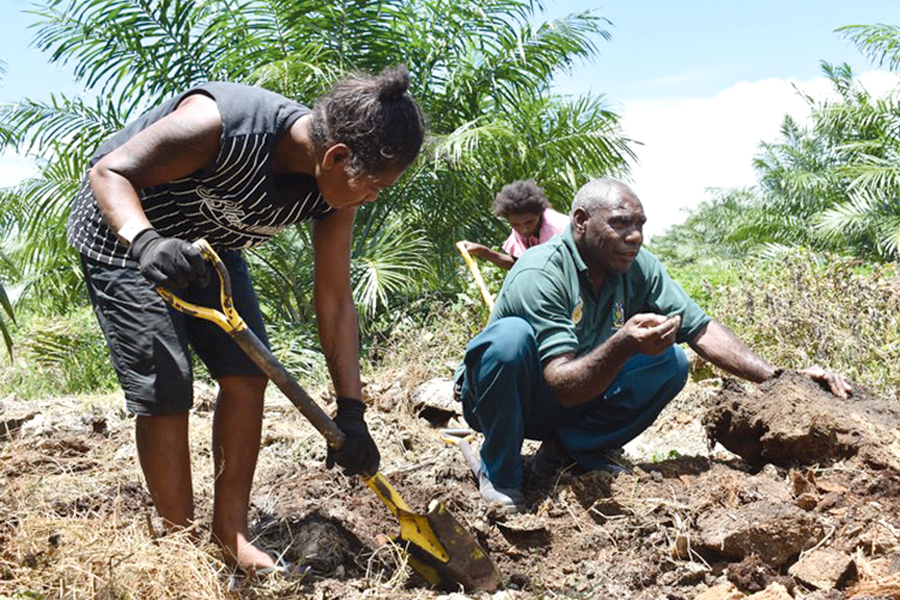
Officer from the Solomon Islands Biosecurity assisting a female employee from GPPOL collecting the CRB. PHOTOS BY LYNTON AARON FILIA

Currently GPPOL 2800 palm trees had been chopped down because they were infested with the CRB. 3800 palms will be chopped down soon. This covers about 325 hectares.

Following that, 14 hectares was already replanted with another 3,800 palm ready for replanting.

GPPOL’s Manager for Technical Service Department Alfred Pokana said their challenge for controlling CRB is people turns to spoil its traps.

He said they have been installing one trap per two hectares in the fields but people will always spoiled it which is difficult for to catch beetle.

Pokana said their goal is to reduce the population of CRB.

“This is the first time GPPOL has experienced such a situation. One thing about this pest, we did not have any experience to deal with, so it takes us by surprise,” he said.
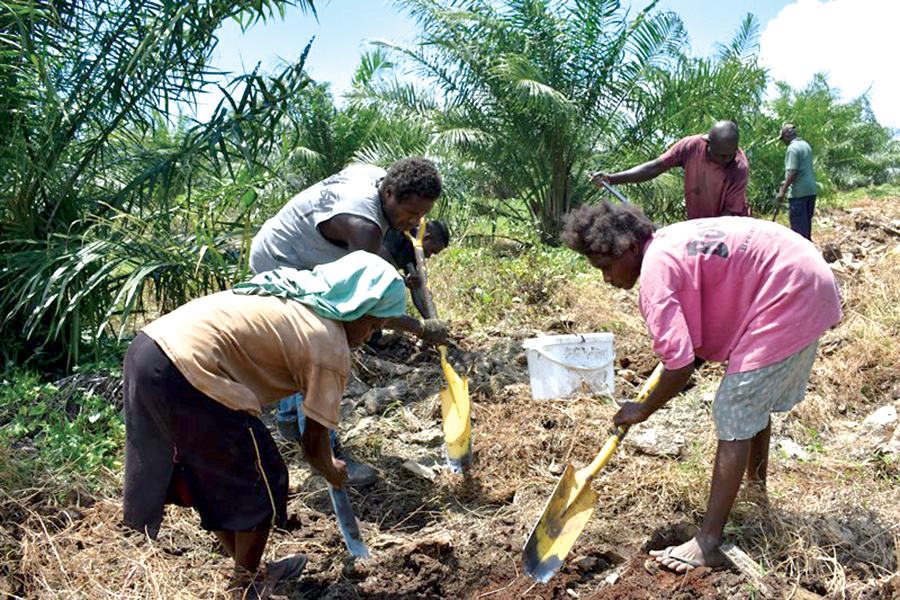
Destroying of the CRB at the GPPOL plantation.

Besides, Pokana explained that currently their activities for reducing CRB’s population is mainly on sanitation and it is really effective.

“Our activities are mainly on sanitation in trying to damage their breeding sites, going through the rubbish and looking for larvae and adult beetle,” he said.

GPPOL Operating Manager Mohamad Azahar Saat adds that dealing with CRB is relatively new for them but there has been good sign of recoveries of their palm trees.

He said their challenge is that they are not scientist but planters. He said the way forward is to look at alternatives such as chemicals, virus and destroying breeding sites.

However, Saat said there should be a wider awareness carried out to coconut plantation farmers as well.

“So as treatment is taken, beetle flee outside the boundary and feed from the coconuts then will return that is why we need to work with farmers, government and other stakeholders in the country,” he said.

Meanwhile, the media team also visited the Biosecurity lab at the Henderson Airport, and discovered Solomon Islands Biosecurity has been testing for virus in the CRB.
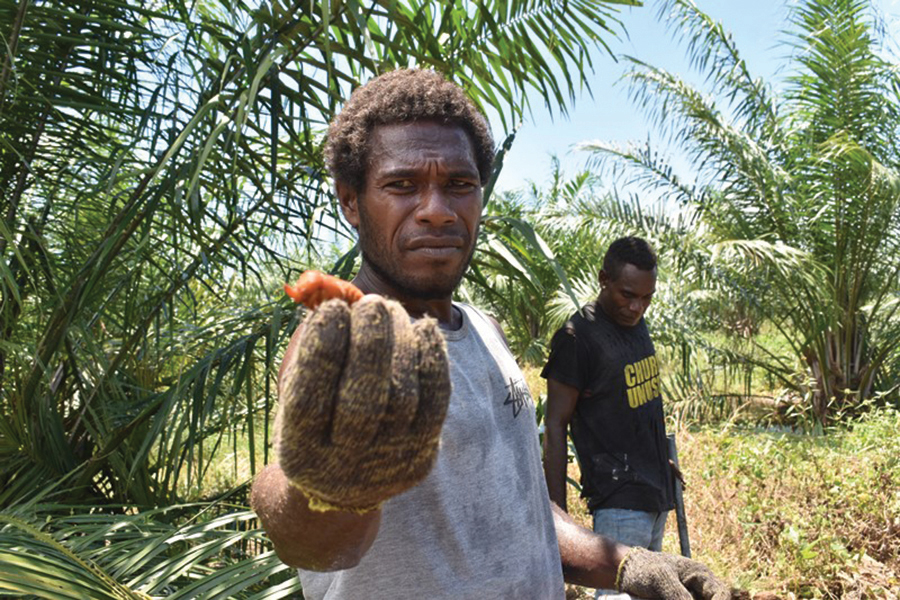
A employee from the GPPOL showing a larvae beetle while destroying their breeding sites.
CRB was discovered while employees destroying its breeding sites.

Cataract remains leading cause of blindness in Solomon Islands

0
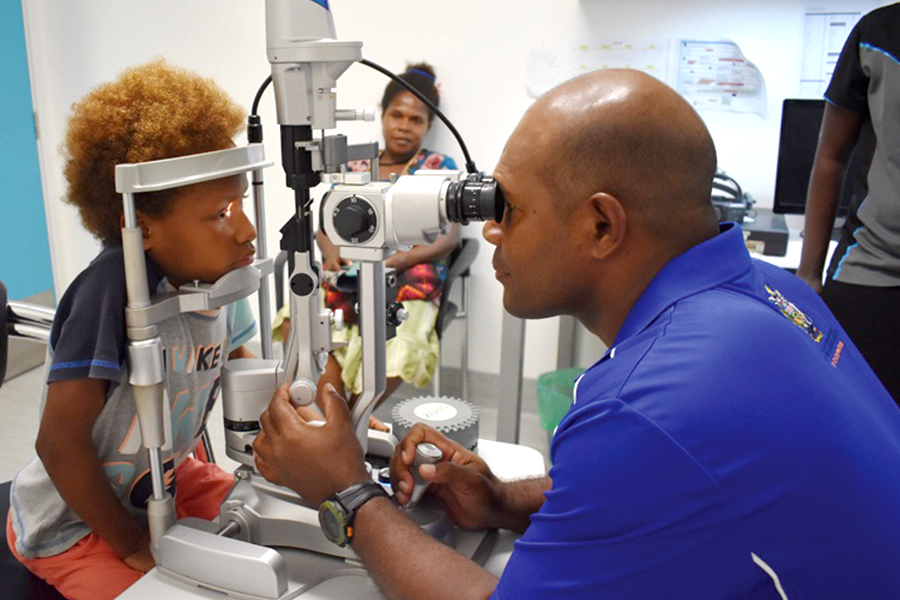
Members of the public come for the eye test

BY LYNTON AARON FILIA

Members of the public come for the eye test

CATARACT remains the leading cause of visual impairment in Solomon Islands. This is despite progress made in surgical techniques at the Regional Eye Centre.

The National Referral Hospital Medical Superintendent Dr John Hue said, the country’s top causes for blindness and visual impairment is cataracts.

He said, “The top causes of blindness and visual impairment in the Solomon Islands in the age group of 40 years and above are cataracts meaning clouding of the natural lens in the eye.

Hue also adds, “Another leading causes are refractive errors means need of glasses and diabetes which cause blood vessels to leak and bleed in the eye causing.”

He said as a result it will cause poor vision and blindness and eye infection and injuries also cause visual loss but such are largely treatable.

Meanwhile, the key message for preventing blindness and visual impairment are;

  • If you are having visual difficulties please visit an eye clinic near you
  • If you 40 years of age and above, have an eye check to see if you need reading glasses
  • All people living with diabetes must have yearly eye checks
  • Keep your eyes clean
  • Do not apply custom medicine to your eyes
  • Have regular eye checks at your nearest eye clinic

According to the World Health Organization, people who at risk for blindness begins at aged 50 and above.

WHO also stated that 81 percent of all people who are blind or have moderate to severe vision impairment are aged 50 years and above.

With an increasing population of older people, WHO stated that more people will be at risk of vision impairment due to chronic eye diseases.

Meanwhile, as part WHO’s Action Plan 2014—2019, number of regional workshops were conducted to enable member states shared lessons learned and monitor progress against the action plan.

In addition, WHO is currently developing a World report on vision, which is expected to be launched towards the end of 2018.

Other priority areas of work include the prevention and management of diabetic retinopathy and the building of human resource capacities for eye care.

Blindness and visual impairment high in Solomon Islands

0
Benardetta Dickson who has scar in the eye from an accident at home in Malaita is assess by a nurse from the Regional Eye Centre Chillion Evan during the World Sight day yesterday. PHOTO BY BENZ NEWMAN.

BY LYNTON AARON FILIA

Dr. John Hue presenting his speech during the World sight day.

IT is estimated that 6,000 Solomon Islanders are blind or visually impaired.

This was revealed by the National Referral Hospital Medical Superintendent Dr John Hue during the World Sight Day celebrated yesterday.

Hue said that an estimated 1 percent of the country’s population has blindness or are visually impaired.

“This means 6,000 people are blind or have visual impairment, and for some people this may all change with a pair of glasses”, Hue said.

On a global scale Hue said 36 million people are blind with 217 million have moderate or severe distance vision impairment with 55 percent of moderate or severely vision impaired people are women.

Within the figure, Hue said Solomon Islands are among the 89 percent who are visually impaired people living in low and middle income countries.

He said more than 75 percent of all blindness and visual impairment is avoidable.

“All it might need is a pair of glasses or a cataract surgery to restore vision and thus independence and an improved quality of life, but this is only detected if eye care services are available and sough after,” Dr Hue said.

Meanwhile, annually nations celebrated World Sight Day on October 11.

Benardetta Dickson who has scar in the eye from an accident at home in Malaita is assess by a nurse from the Regional Eye Centre Chillion Evan during the World Sight day yesterday. PHOTO BY BENZ NEWMAN.

Such a platform is initiated to encourage governments, corporations, institution and individuals to actively support global blindness prevention efforts.

Yesterday, the Regional Eye Centre in Solomon Islands celebrated World Sight Day under the theme: “Universal Eye Health” in-line with WHO’s Action Plan 2014—2019.

The call for action for this year is ‘Eye Care Everywhere’.

With this, the World Sight Day is calling on government, provincial hospitals, organizations, eye care workers and individuals to take steps towards the goal of having eye care accessible everywhere in Solomon Islands.

“The right to sight of each Solomon Islander is a priority that we cannot neglect,” Dr Hue said.

The World Sight Day is coordinated by the International Agency for Prevention of Blindness (IAPB).

It is a focal advocacy event for IAPB and its members and partners which comprises of NGOs globally, professional bodies for ophthalmology and optometry, and teaching hospitals.

WW II sites as an important piece to destinational marketing in SI

0
Former PM Hou pays tribute to the war heroes of WWII at Bloody Ridge last year.

BY ELLISON.T.VAHI

BATTLEFIELDS from World War II forms an important part of Solomon Islands history so do the heritage, which forms an important component of the Solomon Islands tourism products.

WWII heritage though small, standalone special interest market, focussing on the relatives of WWII veterans and historians from USA, Australia and Japan, but also appealing to a broader market interested in recent history.

WWII heritage also provides a key point of differentiation for other markets such as diving, surfing and those seeking off the beaten track experiences.

According to the Solomon Islands National Tourism Development Strategy (SINTDS) 2015 – 2019, has noted that, the WWII product in the Solomon Islands has the potential to be stronger than either in PNG or Vanuatu due to the historical importance of the engagements, the high number of sites and equipment and broad geographical coverage across the country.

There are many sites around Honiara and on Guadalcanal including the American War Memorial, Thin Red Line and Bloody Ridge. Iron Bottom Sound, Tulagi and Western Province also contain significant sites from WWII.

In the meanwhile, most sites however are poorly presented, poorly maintained and in many instances have limited information and documentation associated with them.

Unlike PNG (Kokoda Track) or Vanuatu (SS President Coolidge) there has been no combined effort to support the development of an iconic WWII site into a major tourism attraction, hence, the development of a WWII icon in the Solomon’s would increase the appeal of the destination to this vocation market.

PLMAM calls for expansion of seasonal workers schemes

0
Joseph Ma’ahanua Trade Commissioner under the Ministry of Foreign Affairs and the external Trade.

BY MAVIS NISHIMURA PODOKOLO

Joseph Ma’ahanua Trade Commissioner under the Ministry of Foreign Affairs and the external Trade.

PACIFIC nations have agreed to increase their focus on visa issues, information sharing and superannuation at a regional labour mobility meeting in Honiara.

The Pacific Labour Mobility Annual Meeting (PLMAM) wrapped up its two-day meeting yesterday which was attended by delegates from across the Pacific, Australia and New Zealand.

Trade Commissioner, Joseph Ma’ahanua from the Ministry of Foreign Affairs and External Trade told the Island Sun that the meeting had been productive.

Commissioner Ma’ahanua said the soon to be released statement of outcomes from the second annual PLMAM looked at enhancing seasonal workers schemes in Australia and New Zealand.

“The outcome statement is centred around issues on improving access in areas of visa, areas relating to how superannuation could be fitted into the schemes, areas relating to information sharing and so forth,” he said.

Ma’ahanua said the key issue for the region was offering more opportunities for people from Pacific islands to increase their income and return home with skills.

Ma’ahanua said he hoped the discussions at the meeting would be taken on board by regional countries and serve as a launch pad for an expansion of labour mobility schemes.

The PLMAM is held as part of the PACER Plus regional trade agreement but the outcomes of the meeting are not binding on regional countries.

West Gizo celebrates culture and history with environmental theme

0

BY ALFRED PAGEPITU

GIZO

THE annual Ijo-Maringi Festival will be held in West Gizo commencing today October 12 – 14, at Saeragi Village.

The festival celebration aimed at raising consciousness among the community on the environment, livelihood and development.

With the theme ‘Conserved Culture Conserves Environment’, this festival will bring together communities from Gizo and surrounding islands to celebrate this event.

Ijo Maringi festival is a pride for the community as it celebrates their Culture and History.

Chief William Giroi said the highlights of the Ijo-Maringi festival will be a group parade, women cultural performances, sea games, sporting activities, men cultural performances; environment awareness program that includes environment events, information dissemination, and reef cleaning up program.

“Ijo-Maringi festival has grown so far since its introduction back in 2016.”

“It has been described as one of the successful event being organized till today which attracts a lot of participants, tourists and visitors around the globe,” said Giroi.

The festival will conclude with a combined ecumenical fellowship on Sunday 14th October.

Australia supports safer city approach for girls in Honiara

0
Participants doing group discussions

BY ELLISON.T.VAHI

WITH its full support to produce a safer city for girls in Honiara, the Australian Government through Plan International have funded the International Girl Child Day on Safe Cities Dialogue that was held at the SIDT office.

Based on researches conducted by Plan, adolescent girls infrequently feel safe in cities, as they experience physical and sexual violence as well they are often excluded from decision making processes that impact their safety.

It also shows that there is a major gap in programming and research pertaining to adolescent girl’s safety and inclusion in cities, as many urban safety and crime targets young men, and many women’s safety initiatives focus only on adult women.

Honiara City Clerk (2nd right) with Plan Internationals and HOD for YSW Rolland Pauku.

With raising levels of gender-based violence and urban insecurity around the world, the programme is being implemented at a vital time.

The approach focuses on Safety and access to public spaces, increasing girl’s active and meaningful participation as well Safe and autonomous mobility. It also places emphasis to Influence Governments and Policy Makers to make laws and city services more approachable and broad to girl’s safety, Influence families and communities to promote a supportive social environment that promotes girls safety and inclusion in cities and Engage adolescent girls to be active citizens and agents of change by building capacities strengthening assets, and creating opportunities for meaningful participation.

Participants doing group discussions

Girls often face sexual harassment, exploitation, and insecurity as they navigate the urban environment, while on the other hand they are more likely to be educated and politically active and less likely to be married at an early stage.

Working in partnership to address these issues, is the Honiara City Council, Young Women Christian Association and MWYCFA & Other Stakeholders.

The HCC Youth Division and YWCA will function as the implementing lead parties with the support of PIASI and stakeholders. HCC and YWCA will work together with stakeholders to implement Safer Cities for girl’s activities in supervising sessional instructors and volunteers for the Safer Cities for Girls (SC4G) activities as well providing a capacity assessment for HCC and YWCA, a Partaking Approach.

Ace Fourth Taxi Service Owner Mr Rolland Wale

In the meantime, they, together with the stakeholders are putting on plans to Function as the lead object in contract management and negotiations, Responsible for reporting to donor and contract oversight, Engage and financially responsible for sessional instructors in program operations during day to day activities and programs, Responsible for project cost, this includes project items, activity and human resources as well Providing induction into SC4G tools that HCC/YWCA can use in their implementation of project activities.

Documenting and sharing of sexual materials on social media

0

DEAR Editor

The rapid increase in people documenting and sharing their sexual activities on social media is quite alarming, especially among young people and children. Though Solomon Islands do not have an independent mechanism, such as a legislation that prohibits the documenting of sexual Activities by any person on social media, there are other Legislations that prohibit sharing and importing.

It is very important that young people must know the consequences of their actions, some are very aware of the implications it might have, but tend to ignore the facts. It is high time that not only the government to impose hefty penalties and dictate a reasonable age of consent, but it is time; parents take responsibility to intervene and control what their children are doing on social media.

Other Countries Such as Australia, New Zealand and Fiji have Legislations that control and regulate issues of online sexting, documentation of sexual activities and other online materials, Solomon Islands, is in dire need of such, taking into account the growing number of social medial users and other online websites.

Social media is a growing problem especially among young people and children, it not only affects their social skills to communicate properly, it affects their education, their mental health and also can lead to suicide or social issues.

Therefore, it is time the government of Solomon Islands, responsible Ministries, stakeholders and non government organizations, religious groups and especially families, to take heed and tries to find a proper solution.

George Stanley

Proper database missing in labour mobility

0

BY GEORGINA KEKEA

LABOUR mobility has been occurring in the Pacific since the 19th and 20th century. Except that time, Pacific Islanders were tricked or stolen to work in plantations in Australia, Fiji, New Zealand, New Caledonia, Samoa and Peru as slaves.

This time however, times have changed. The current labour mobility scheme is no way near the black birding days. Pacific island countries together with Australia and New Zealand including other countries that have labour mobility programs with the pacific are collaborating more in how they can address the regional labour priorities together.

This week the third annual labour mobility meeting brings together employers, workers, government officials and stakeholders to discuss these issues together.

As part of their participation in this meeting, both New Zealand and Australia are bringing to the table issues of concern from all parties involved.

For New Zealand, while they share the same optimism as Solomon Islands and other pacific countries in providing employment, they are also wary in how this program is being carried out.

From 5000 in 2007, slowly the number has increased over the past decade. To date, there are 11,000 pacific seasonal workers in the scheme. Of this number 682 are Solomon Islanders. In comparison to Vanuatu’s more than 4000 workers, this number is very small.

Prime Minister, Rick Hou says, this number reflects the country’s inability to meet the standard expected.

“Why we have not been able to send more workers under the labour mobility scheme is that we are very dis-organized. I think a lesson everyone should learn is, don’t be disorganized”, Hou said.

He admitted that the government has to be on top of the labour mobility scheme. He said Solomon Islands lack the information needed to better the program. Hou said government should work on having a good database system so to help understand the human resources and the set of skills they have.

He said Solomon Islands population is growing at an alarming rate and he is concerned.

“I am looking at big numbers. I want within the next 10 years, I want 10,000 young people of Solomon Islands going out of the country to work”, Hou said.

At the same time, this annual meeting held in Honiara is looking at ways in which this labour mobility scheme can enhance the existing scheme and be a win-win situation for all.

Matt Hoskin from New Zealand Ministry of Business, Innovation and Employment and New Zealand Government and Industry Panel said, “For argument sake, if you got 40 really good carpenters in the Solomon Islands and we came and took them to New Zealand. You are trying to rebuild your country. What will happen then?”

In a press conference Hoskin says they would like to see a better data of the labour market. This will help New Zealand understand the market better when they do recruitment. He admits this will be a big challenge for all the Pacific countries.

He said New Zealand prefer quality over quantity thus the recruitment process is an important component of the program. They currently recruit seasonal workers from Fiji, Kiribati, Nauru, PNG, Samoa, Solomon Islands, Tonga, Tuvalu and Vanuatu.

PM welcomes Cuba’s proposal for new medical lab

PRIME Minister Hon. Rick Houenipwela has welcomed proposals for the country to address the chronic problem of amputation and to establish a laboratory to produce plant based medicine in the country.

This was revealed during his meeting with two experts from Cuba, Dr José Montequin and Consultant Luis Silvagni and led by Solomon Islands Ambassador to Cuba, His Excellency Simeon Bouro early this week.

The treatment, Heberprot-P is a first class product developed by scientists at the Centre for Genetic Engineering and Biotechnology in Havana, Cuba which contained human recombinant epidermal growth factor in an injectable formulation.

The injectable formulation is administered through intralesional infiltration directly into the wound for the treatment of diabetic foot ulcer, to accelerate healing of deep and complex ulcers, either neuropathic or ischemic.

About twenty-seven countries have already registered Heberprot-P.

The Prime Minister said with the high rate of Non- Communicable Diseases in the country, this technology can save a lot of patients from amputation.

The Prime Minister after his meetings in Nauru recently, has expressed his desire for Solomon Islands to introduce this technology.

The meeting this week with the team from Cuba has confirmed and fulfilled his vision to have this technology available in the country.

Dr José Montequin, a specialist who started with the technology in its initial stages of development of the product, Heberprot-P, and has travelled to many countries establishing clinics and also lectures in universities in Havana.

He has also written articles in the International Medical Journals.

The second project is to establish a laboratory to produce plant based medicine in the country.

His Excellency Simeon Bouro stated, “Cuba has done extensive work in the area of plant based medicine and I believe that Solomon Islands with the wealth of knowledge of herbal medicine, and extensive range of plants already found in-country, will be able to produce medicine that can be readily available to the populace.”

Further, the Technical Institute of Malaita has shown interest in developing a close collaboration with Cuba to venture in the production of plant-based medicine.

The Ministry of Commerce is also eager to assist with this project.

The Malaita Province has also identified sites where this project can be based on.

According to findings, seventy percent of the plants used to produce medicine in Cuba can be found in the country.

The Director of the Technical Institute of Malaita, Mr Bernard Bakote’e, has been conducting research into herbal treatments that have already delivered encouraging results and is very willing and happy that he can be linked to the Cuban counterparts to develop this project further.

“The benefits from this project is huge considering that it will stimulate the agricultural sector in the rural areas in the country”.

The meeting was also attended by senior officials from the Office of the Prime Minister and Cabinet.

–PM PRESS SECRETARIAT