Home Blog Page 937

SI shares initiatives to fight GBV with Pacific women

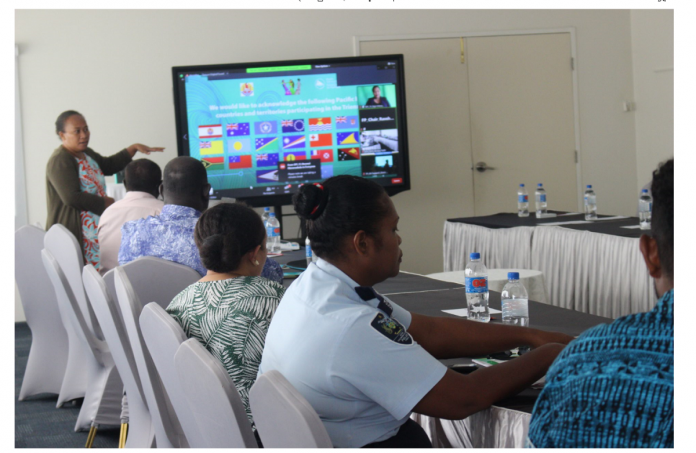
Solomon Islands women attending the online 14th Triennial conference.

BY MAVIS N PODOKOLO

Government through the Ministry of Women this week in the 14th Triennial conference shared home-grown initiatives to address Gender Based Violence.

Director for Women Development Division, Vaela Ngai speaking in one of the plenary sessions at the conference for Pacific Women said Solomon Islands uses two of its home-grown initiatives to address Gender Based Violence.

Ngai said the two home-grown initiatives are SafeNet referral network and domestic violence counselling guideline.

“These initiatives are particularly there roll out to the provincial areas for us is still very much in the early days and still very much focused on the setting up and strengthening of the governing structures including the development of coordination and reporting tools for each of the provinces that we are rolling out to,” she said.

Ngai said SafeNet referral network consists of government ministries and agencies, CSOs and NGOs.

She said over the past years they have progressively worked to ensure the availability and accessibility of quality and essential services ranging from safe accommodation, legal advice, medical services, protection and counselling.

Ngai said for years SafeNet has been mainly established at the national level around the capital, Honiara until more recently beginning in 2018 they began rolling out to the nine provinces.  

“We have rolled out SafeNet to four of the nine provinces and will continue to the remining five provinces this year. The SafeNet roll out process to the provinces has been one of great learning for us in the Solomons.

“So, while there are standard and principals that governs our SafeNet work regardless whether it is at the National or Provincial level we have to tailor the safe net model to fit the context of four provinces,” she said.

Ngai said for domestic violence counselling guideline was developed as a requirement under The Family Protection Act 2014.

She said this act aims to provide protection for the public and particularly GBV victims and survivors by establishing a registry of domestic violence counsellors in all 10 provinces of Solomon Islands including Honiara.

Ngai stressed the guideline outline process and procedures to identify domestic violence councilors who are competent and trustworthy through meeting registration criteria, signing up to code of Ethics and minimum practice standard, governance system including a complaint mechanism, monitoring standards and also processes for de-registration if practice standards are not met.

“We are currently in its prepatory phase. Prior to its roll out to nine provinces and in Honiara and we have just completed one key activity as of last week where we had pre-tested our GBV counselling training manual,” said Ngai.

ANTI-CORRUPTION COMMISSION ROLLS OUT RECRUITMENT PLAN

THE newly established Solomon Islands Independent Commission Against Corruption (SIICAC) office is now rolling out its recruitment Plan.

The recruitment exercise is part of the activities taken after the appointment of the Director General of SIICAC at the end of October 2020.

The first phase of the recruitment involves officers in the Corporate and Support Services Division.

The rationale for recruiting officers for its Corporate and Support Services division is to set up the administrative cadre of the office in preparation for the second phase of recruitment for the Corruption Prevention, Legal/Prosecution, and Investigation divisions.

According to Director General, John Hugani Kouni, if everything goes according to plan, we should be able to fill up all the vacant positions within the Corporate and Support Services division by the end of the second quarter of this year.

Mr Kouni added that, after recruitment of the officers in the Corporate and Support Services division, the next recruitment exercise would focus on the Heads of Divisions (HODs) positions for the other divisions, which include corruption Prevention, Legal/Prosecution and Investigation Divisions.

Mr Kouni is also taking the opportunity to express his appreciation to the commitment and support by the National Government for allowing SIICAC to undertake its recruitment exercise despite the recruitment freeze.

This shows the seriousness of our Government to address corruption and its effects in our country. He added that, the recruitment would ensure that SIICAC has the necessary work force and capacity to enable it to properly discharge is functions as mandated by the Anti-Corruption Act 2018.

“As the Director General, I really appreciate the Democratic Coalition for Change Government (DCCG) for its commitment and political will to ensure that the SIICAC is becoming fully operational to carry out its statutory functions,” Kouni stated.

It is understood that since taking up the role as Director General, one of Mr Kouni’s priority task, among others, was to carry out the needs assessment analysis and work of the 2021 Annual Work Plan. Working on the Strategic Plan is also another priority area. The recruitment exercise that is progressing now is part of implementation of the 2021 Annual Work Plan.

While carrying out the recruitment exercise, SIICAC will continue to carry out its corruption prevention roles and anti-corruption awareness programmes using the existing avenues. That includes participating in in organised training programs like the Public Service IPAM training and through the SIBC Justice Sector programme.

More recently and with the support and facilitation by the SIG – UNDP Transparency Accountability Project and the United Nations Pacific Regional Anti-Corruption Project, SIICAC is progressing on to forge new relationships in its efforts to cooperate and collaborate through sharing of information, among others, with other sister Anti-Corruption bodies within and outside of the region.

GOVERNMENT COMMUNICATION UNIT

More than 4000 vaccinated so far: PM

0
AstraZeneca vaccine. Photo by NDTV.

A total of 4289 persons have been vaccinated in Honiara.

Prime Minister Manasseh Sogavare said this in his nationwide address Monday this week.

The Prime Minister said this represents 61 percent of the total doses allocated for Honiara.

Prime Minister Sogavare said the people vaccinated in Honiara so far include:

  • front-liners,
  • persons above 40 years of age
  • persons 18 years and above with underlying health condition
  • public figures including church leaders,
  • members of the diplomatic core and staff,
  • sporting groups who are scheduled for international games.

“I call on people in Honiara that come under the above categories to turn up this week for your vaccination at the Central Field Hospital,” he said.

The Prime Minister said the Honiara vaccination rollout will close this Friday.

He said all remaining doses of vaccines will be added to the allocation for the border zone.

Meanwhile, Prime Minister Sogavare said more than 400 people aged 18 years and over had been vaccinated in Malaita Outer Islands in the past week.

He said the vaccination team had arrived back in Honiara and data analysis to provide coverage percentage has started.

“Let me thank community chiefs, elders, church leaders and members of the Malaita Outer Island communities that supported the vaccination drive and came out to be vaccinated,” he said.

Sogavare said for those that have missed out, another visit will be made when the second tranche of AstraZeneca vaccines arrive in the coming months.

–OPMC PRESS

SI average growth rate at 2.7: Census

By EDDIE OSIFELO

THE Solomon Islands 2019 national census showed average annual population growth since 2009 at 2.7 percent.

This is one of the fastest rates in the Pacific.

Honiara, the capital, grew by 5.8 percent, taking population density to 5,950 people per square kilometer, higher than any other urban area in the Pacific.

Asian Development Bank’s Solomon Islands Country Office Unit Head Elmar Elbling stated this when he presented the Asian Development Outlook (ADB) 2021 at Heritage Park Hotel yesterday.

Elbling said rapid population growth and urbanization have brought myriad social and economic challenges such as unplanned settlements, heavy traffic, and inadequate infrastructure and public services.

He said combined with habits such as sharing betel nut, urban congestion can speed the transmission of disease.

“Risk from COVID-19 prompted the authorities to try to ease decongestion in Honiara in the early months of the pandemic by encouraging people to return to their provinces.

“Urban agglomerations can catalyze growth and innovation, creating synergies across sectors, industries, and social groups,” he said.

Elbling said with proper planning, they facilitate economies of scale, in the delivery of public services.

He said achieving this requires human capital development, especially through education and health care, and expansion of infrastructure to support mobility and delivery of food, energy, and water supply and sanitation services.

“These issues are partly addressed in the 2018 Greater Honiara Urban Development Strategy and Action Plan.

“With support from development partners, large infrastructure projects are under way, though delayed by the pandemic,” he said.

Elbling said tremendous challenges outside the main urban areas through improved agricultural productivity.

He said higher investments in transport and communications are also needed.

“However, real impact and benefits to people will depend on fiscal strengthening, budget prioritization, and enhancing implementation capacity,” he said.

EDITORIAL- A new city in the making

0

THE Mamara New City project west of Honiara will be officially unveiled this morning.

Prime Minister Manasseh Sogavare will be the guest of honour at the ground-breaking ceremony.

Details of the project and what it entails will be outlined at the event.

But in a nutshell, we are talking about a new city here.

Called the Mamara Spring Villas project, this new development will be undertaken by a company called Metropolis Mamara Development Ltd.

This is a foreign company comprised of a number of investors across Asia.

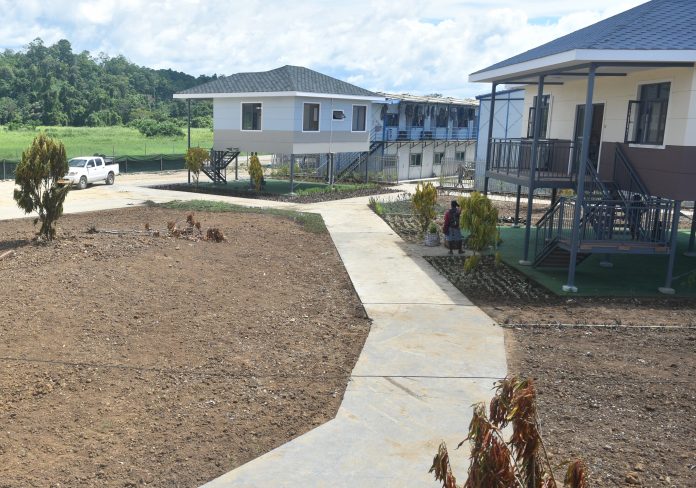
Metropolis says it will build residential houses, shops, warehouses, school, sport facilities and tourism facilities.

Already, 15 houses have been constructed to date and are 80% complete. The company intends to build more than 1,000 houses before 2023.

And it promises to employ up to 800 locals – both skilled and unskilled.

Under the Mamara-Tasivarongo-Mavo Development Agreement Act 1997, the company Metropolis has been allocated approximately 100 hectares of alienated land, more than enough to cater for its proposed city.

This development will be overseen by a Council established under the Act.

This is a huge project that is much needed at this time to create job opportunities and generate income for the country.

But while it is a welcomed development, the Government must ensure the developer operates according to our laws and within the ambit of the Mamara-Tasivarongo-Mavo Development Agreement Act 1997.

This is important to ensure it brings benefits to our people and country.

Furthermore, while the development will take place on alienated land, surrounding landowning groups must be kept informed of every stage of the process.

In fact, a mass awareness should be carried out within the surrounding communities ahead of the construction stage.

This is vital to avoid misunderstanding that may lead to hostility and lawlessness.

MAL conducts coconut rhinoceros beetle awareness at St Martins

Freda Mudu Research Officer (left) and Norman field Technician (right) demonstrating the release of fungal pathogen in the artificial breeding site at St Martin RTC.

The Ministry of Agriculture and Livestock (MAL) through its Research Department has successfully delivered a one-day awareness on the management control of Coconut Rhinoceros Beetle (CRB) for St Martins Rural Training Centre (RTC) Agriculture students at Tenaru in Guadalcanal Province.

Held on April 20, the awareness was conducted upon request by the centre’s Principal Valeriano Kwany with the aim for the Agriculture students to learn about the long term management control option of the pest (CRB) using fungal pathogen, a biological agent to control the pest population.

“CRB is now here to stay with us and MAL is now looking at long term management control options,” Director of MAL Research Department, Mrs Helen Tsatsia said.

“MAL Research plays an important role in the long term management options for pests and diseases through its plant protection team. Support in terms of finance, more qualified officers and other resources is critical for the implementation of long management control strategies,” Tsatsia said.


Research Officers Freda Mudu (left) and Joe Keniratoa (right) giving awareness talk to St Martin RTC Agriculture Students in the Classroom.

Tsatsia said long term management options include the combination of more than one control method called Integrated Pest Management (IPM) and she said IPM strategies to manage the population of CRB are Sanitation, Chemical and Biological Control.

“All the methods require the support of farmers and other relevant stakeholders.”

The Director explained that biological control of CRB can be done using virus called Oryctes Nudivirus and a fungus species, Mertarhizium anisopliae.

“It is commonly known as green muscardine fungus (GMF).The biological agents have to be imported from overseas.

“Commercial GMF is very expensive and MAL Research has gone into producing its own supply of the fungal spores locally,” she said.

The coconut rhinoceros beetle (CRB), Oryctes rhinoceros, was discovered in Honiara in January 2015.


Signs of recovery of palms in the area where the fungal pathogen was released in the past at St. Martin RTC.

The ministry (MAL) has carried out active campaigns to eradicate and contain it within outbreak area but was not able to do so.

To date it is now confirmed that the CRB has spread to some parts of the provinces except for Choiseul province and the worst infected provinces are Malaita, Guadalcanal, Makira (mostly Ulawa), Central Province especially Russell Islands and Ngella and Rennell and Bellona and Malaita Outer Islands (MOI).

Coconut industry and other palms are vulnerable to the invasive pest attack.

–MAL PRESS

NO POLITICS IN PARADISE

China has no part in Mamara project: Ling

BY PETER ZOLEVEKE II

The Metropolis Mamara Development Limited has no link with the Chinese government and is a ‘private company’, says General Manager William Ling this week.

Ling was responding to criticisms raised especially through the social media that the company was funded by the Chinese government.

“Our company here is locally registered. From outside, a lot of people said the project is China funded which is not true! I want to clarify here that we are a private company,” Ling reiterated.

He revealed that there are five investors funding the groundbreaking project.

“The investors for this project funding are from various countries and are private investors not affiliated to any government or politically influenced. We are purely private.

“The owners of MMDL are from Indonesia, Singapore, Malaysia, Hong Kong and China. We have five investors from these countries,” he said.

“Only the workers are from China. Why we get workers from China is because of the technology and materials they are bringing in. Only Chinese people know how to use such materials for the project.”

Ling also highlighted that as the project develops through various stages more locals will get direct employment.

“Not only are we bringing in people from China, currently working on the project are 66 expatriates consisting those from China, Malaysia and also the Philippines.

“But on the ground, we employed more than 110 locals and the numbers are increasing.”

“So, the manpower for this project is to get 180 expatriates together with 800 locals, this is the whole idea.”

The MTMD project was a long-established agreement 25 years ago with the national government.

“The company developing this area is under the company’s agreement with the Solomon Islands government, namely the Mamara- Tasivarongo- Mavo Development (MTMD) Act signed by the government in 1995.

“The question is why in the past years we did not do any development, because during then we hardly got interest and genuine investors,” Ling admitted.

“Because of the land issue and luck of support from the past government for water and power supply the project was delayed.

“This time we are different. We have our partners and investors coming on board and as of today the government is supportive towards the development.

“We are now in the first phase of development where we are going to build 1,184 houses mainly for government’s public servants. Also we will open up to the general public for interested buyers. We will build three different types of houses

There are three different designs of residential building planned for the project; 368 units of Type A, each unit covers an approximate land area of 255 square meter. 310 units of Type, each unit covers an approximate land area of 202.5 square meter and 506 units of Type C, each unit covers an approximate land area of 150 square meters.

Ling also revealed that 15 Type B houses have reached its completion and will double the number in the next phase.

Meanwhile, the ground-breaking ceremony of the Mamara City project is scheduled for Friday April 29  to be attended by Prime Minister Manasseh Sogavare as the guest of honour.

Airlines airbus sold for $20M

1

By EDDIE OSIFELO

SOLOMON Airlines Limited has sold its old Airbus aircraft for $20 million (USD$2.5 million) to an American buyer on 10th March 2020.

Initially, the aircraft costs around $40 million (USD$5 million).

Chief Executive Officer, Brett Gebers revealed this to the media through a zoom interview from Australia on Tuesday.

He said the reason for the sale was because of the damage to the engines and the Board saw what was going to happen with COVID-19.

“We signed all the paper works and aircraft was transferred to the new owner on 10th March.

“On 11 March, USA closed its borders to international travels. And the moment that happens, all the old airplanes in the world were grounded.

“The moment they were grounded, there was no more demands for the old engines or the old parts,” he said.

Gebers said the result of that was they lost USD$2.5 million on the sale of the aircraft.

“However, we managed to walk away from the problem that we would have to manage for a long time to come.

“I saw the new purchaser a couple of months ago and he told me that to date they managed to sell USD$500,000 worth of parts and they are stalled with USD$2.5 million for the engines that they cannot sell,” he said.

Gebers said and they are hoping in due course the COVID-19 pandemic will come to an end eventually get their money back.

He said the loss of USD$2.5 million was reflected in 2019 accounts.

Prior to the sale, Gebers said they reached an agreement with an organisation in England to buy the aircraft but they wanted it immediately, and this was towards the end of 2019

“We could not find any aircraft that were available to cover our services between Brisbane and Honiara and Fiji etc.

“So, we elected to keep the aircraft and to take another offer for the aircraft on a lower prize,” he said.

Lever’s Russell Islands FTE forfeited

By EDDIE OSIFELO

THE Fixed Term Estates title held by Lever Solomons Limited over the Russell Islands in Central Islands Province was legally ‘forfeited’.

This was confirmed by Sevev Land Trust Board (Incorporated) in a notice issued to Island Sun yesterday.

The forfeiture follows an accumulation of annual rentals due to the trust board and two legal notices being served to the company on January 2015 and 16th October 2020.

Alex Bartlett, Secretary to Sevev Land Trust Board (Incorporated) said on 16th November, 2020, the Sevev Land Trust Board (Incorporated) issued a Notice of Forfeiture to Lever Solomons Limited, to pay Annual Rent due to them.

He said Lever Solomons failed to lodge a response.

Furthermore, Bartlett said on 7th December, 2020, Sevev Land TrustBoard (Incorporated) issued a Notice of Re-Entry to Lever Solomons Limited, for having failed to comply with the terms of the Notice Before Forfeiture dated 16th November, 2020, made pursuant to Section 100 Sub-section I of part VII of the Lands and Titles Act (Cap133).

He said by Instrument dated 24th March, 2021, the Registrar of Titles issued a Notice of Registration of Sevev Land Trust Board (Incorporated) Re-Entry of all of Lever Solomons Limited Properties forfeiting all Fixed-Term-Estates previously owned by Lever Solomons Limited.

“On 26th April, 2021, being 30 days after the issuance of the Registrar’s Notice, Lever Solomons Limited failed to lodge an appeal.

“By virtue of the above legal executions, the Fixed-Term-Estates previously owned by Lever Solomons Limited in the Russell Islands had been forfeited forth with,” he said.

“Consequently, by operation of law, Sevev Land Trust Board (Incorporated) had Re-Entered and taken possession and gained ownership of all of Russell Islands,” Bartlett said.

However, when the issue came to light in 2018, Russell Islands Plantation Estates Ltd (RIPEL) Chairman, Patrick Wong denied that FTEs in the Russell Islands were surrendered in 2011.

“…these FTE titles remain in the name of Lever Solomons Limited,” he said in an email.

“The documents you have located, looks like the surrender document, formed as an attachment to the Sale Agreement, which the Company had with SIG in 2011.

“This Sale Agreement was executed by the then Prime Minister, Danny Philip, and this was witnessed by about 50 people in the Cabinet room plus this signing ceremony was also witnessed by 50 people and recorded on One TV.

“If you look closer at page one, the words written and signed by a Notary Public, was signed by Dennis McGuire of Sol-Law,” Wong said.

“Why are the FTE still with LSL? – simple … because SIG never paid the Purchase Price. The Originals would still be with Sol-Law and were never ever released to SIG; to be filed with the Commissioner of Lands – Registrar of Titles.

“Therefore, any call or notation that LSL has already surrendered the FTE back in 2011 is only a dream,” Wong said.

Commissioner of Lands, Allan McNeil said he was not aware of this issue.

CAASI allows Over-aged pilot to fly

0

By EDDIE OSIFELO

CIVIL Aviation Authority of Solomon Islands (CAASI) has allowed the Solomon Airlines chief pilot who is over 65 years old to fly, but not as chief command.

This fact was revealed after a heated debate on social media over the decision by the Airlines management and Board to allow the Chief Pilot to fly the aircraft despite his age.

Chief Executive Officer of SAL, Brett Gebers speaking to the media on Tuesday from Australia said he has approached the International Air Transport Association (IATA) to demonstrate to the satisfaction of CAASI and IATA that this guy was medically fit and able to do the job.

He said this was all done correctly, as at the same time CAASI was supposed to file a difference with International Civil Aviation Organization (ICAO) basically stating that “we, Solomon Islands and our people can fly over the age of 65.”

“It wasn’t done for whatever reasons,” he said.

Gebers said in Australia you cannot fire people for being over the age of 65 and Qantas is in trouble at the moment as they tried to fire a pilot over the age of 65, and who is taking them to court and in this he seems to have won.

He said Civil Aviation Authority of Australia (CASA) basically told them that “because CAASI has not filed a difference, they would not allow the manager of a flight operation to fly as a crew member in and out of Australia”.

“So, we just put another pilot on.

“But the manager of flight operations has indicated to me earlier this year that he wanted to retire in June anyway,” he said.

Gebers said it is not a problem as they are in the process of replacing him.