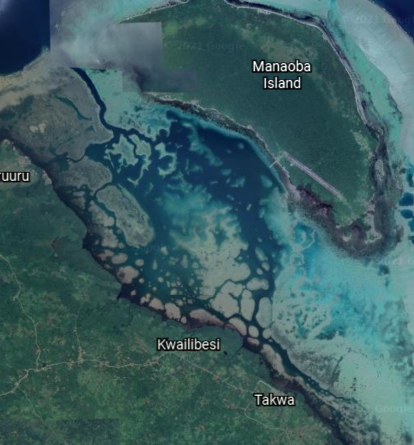
A landowner is calling on Steven Dila and his parties to follow legal process and iron out the ownership issues over the Kwalebesi land in North Malaita.
This after Dila continued to put three legal notices on newspapers in 2018, March and August 2021 despite the High Court striking out the case in 2020.
Ambrose Oiofa Dolofera of Kao tribe questioned why they continued to put notice when the issue was dealt with by the High Court already.
Dolofera said this is an abuse of court process.
“We want to test the ownership of the land in court.
“Three notices are waste of time and money and delaying time to come to conclusion of the issue,” he said.
Seventh Day Adventist Church has a 85 years lease over the land since 1932.
However, the lease has expired in 2017.
SDA has built a school, clinic and church on the land.
There was an airstrip established on the land but was shut down due to its uneconomical route for flights.
Dolofera said the ownership of the land needs to be sorted out because SDA wants to renew the lease.
He said it is important for right people to benefit from the rental of the land in future.
ATTORNEY General John Muria Junior has defended the $15,000 fine impose a penalty for people breaching the lockdown starting tonight and ending 6am Tuesday.
Speaking to the media, Muria Junior said the fine is a maximum penalty and up to the court to determine.
He said the court will mitigate the factors.
“Last time someone was fined only $1000.
“If you are a serial offender, then court will say you can’t learn so would give $15,000 and put the person in jail. But this at its extreme,” he said.
Muria Junior said to a first offender, court will mitigate.
“What the executive will do is to set the maximum but can’t go over the maximum,” he added.
Furthermore, the Attorney General said in some places, the seriousness of breach is high because it is a matter of public security and safety.
“Personally, I think it is still small for life of another if you are going out or if that breach causes an outbreak.
“$15,000 is small for price to pay for,” he added.
However, Muria Junior said when it is a lockdown, it is a serious thing and about life and death.
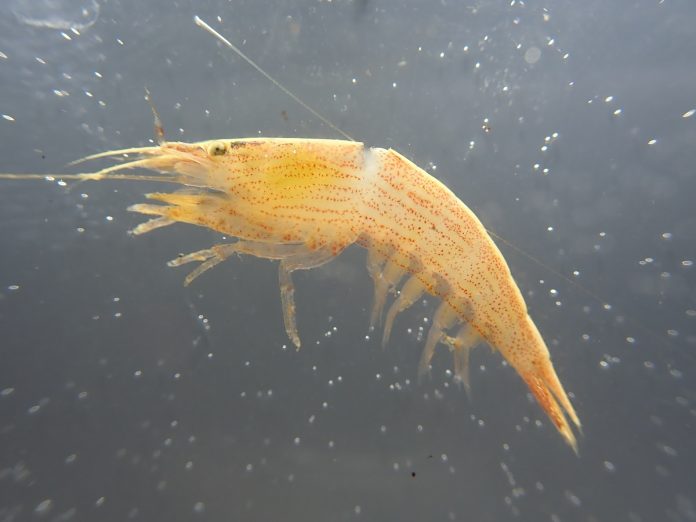
A new Atyidae prawn as reported bv the expedition team
BY PRIESTLEY HABRU
A log carrier vessel anchors few kilometres offshore on Rakata River mouth on Isabel Province in the Solomon Islands in April 2021.
Upstream an expedition by a group of French and local biologists had discovered at least two new freshwater shrimps in 2019 which was new to science.
Rakata River, in the north-western end of Santa Isabel Island is infested with freshwater water crocodiles. In fact, a young soccer player was attacked and swallowed by a crocodile just a few kilometres upstream from the Rakata river mouth.
The new shrimps were found further upstream away from the crocodile infested brownish water.
Apart from the crocodiles, Rakata River has been disturbed by logging activities. A bridge made of logs is visible when I made the trip upstream on an outboard motor-powered canoe, passing the location where 13-year-old Kitchner Damutalau was attacked by a huge crocodile in October 2020.
Entrance to the crocodile infested river
The trip was to get a sense of the natural habitats where the freshwater shrimps were discovered. Sadly enough, it didn’t take me long to discover the dangers these freshwater shrimps and fish face on Rakata River, especially from the impacts of logging.
“Trees upstream have all been logged and now the loggers have crossed the river to the western side,” Kingsley Tugumana, my tour guide told me.
He said Mas Pacific International Company is currently logging the upper Rakata River and toward the western end of the river.
In fact, logging first entered Isabel Province within the vicinity of Rakata River, just few kilometres east of the river, where the Suavanao airstrip is now located.
Bridge made of logs across the Rakata River
“I came with the Eastern Development Logging Company when it first entered Isabel Province from the Western Province in 1994,” said Tugumana.
He had accompanied the scientists who discovered the freshwater shrimps in 2019 and is a resident of nearby Baolo village.
Discovery
One of the scientists on the expedition Valentin de Mazancourt said an undescribed species of Macrobrachium (large freshwater shrimp) was collected in the Rakata River, but all the other shrimps belonged to species already known.
Local biologist David Boseto from Ecological Solutions Solomon Islands (ESSI), who was also part of the expedition to Rakata River, said there were only two new species of shrimps Caridina intermedia and Caridina barakoma that were found in the river.
The two shrimps are among 11 which are new to science described from the Solomon Islands out of 24 species reported in total.
Caridina barakoma is a new species named after a village on Vella Lavella Island where it was first discovered in 2016 in Vala Kadju River. It is endemic to Solomon Islands and was found elsewhere in Choiseul, Kolombangara, Vella Lavella, Isabel and Guadalcanal.
The second shrimp discovered on Rakata River Caridina intermedia had also been found on Choiseul, Kolombangara, Vella Lavella, Isabel and New Britain in Papua New Guinea.
In an academic journal ‘Solomon’s Gold Mine: Description or redescription of 24 species of Caridina (Crustacea: Decapoda: Atyidae) freshwater shrimps from the Solomon Islands, including 11 new species’, co-author Valentin de Mazancourt stated the shrimps were found on six islands namely Choiseul, Isabel, Malaita, Vella Lavella, Ranongga and Kolombangara.
“The shrimps live in virtually all the rivers on the six islands,” he added.
Out of the 11 new shrimps found, six are endemic to Solomon Islands namely Caridina barakoma, Caridina choiseul, Caridina turipi, Caridina piokerai, Caridina nona and Caridina sikipozo.
Caridina choiseul, a new species described in our paper
“Indeed, among our 24 species of the Solomon Islands, 12 are shared with Indonesia, 10 with Vanuatu and 6 with Papua New Guinea. On the other hand, only 4 species are shared with Australia and 3 with New Caledonia,” de Mazancourt said.
The regional diversity of freshwater shrimps or Caridina according to the authors of ‘Solomons Gold Mine’ exists in the Indo-Pacific.
Authors of the journal stated that when focusing on endemic species of Caridina, the maximum diversity occurs around the Coral Triangle between the Philippines, Indonesia, and Papua-New Guinea.
“According to our study, the Solomon Archipelago belongs to this maximum diversity area.”
This makes Solomon Islands a hotspot for a diversity of freshwater shrimps which ‘remains poorly known’ according to the ‘Solomons Gold Mine’ journal.
Deputy Director of Conservation in the Solomon Islands Ministry of Environment, Climate Change, Disaster Management and Meteorology (MECDM) Mr. Josef Hurutarau said this was an important finding which will contribute to the understanding and increase knowledge of local biodiversity especially life under freshwater in Solomon Islands.
Wilson Eta, Isabel Provincial Environment and Climate Change Officer said the discovery of the shrimps on Rakata River shows the island has an abundance of freshwater organisms.
Shrimps and the Environment
De Mazancourt from French Ichthyological Society (SFI), based at the Muséum National d’Histoire Naturelle (MNHN), Paris, France, explained that shrimps are the cleaners of the rivers by sweeping the substrate.
“They limit the accumulation of organic matter and allow it to circulate in the food web when they are being eaten by predators such as fish or birds.
He said shrimps play a significant role to the freshwater ecology and the environment in general.
“As without them, the rivers would have an excess of organic matter that could lead to eutrophication, with proliferation of algae that often asphyxiate the environment and cause the disposition of many animals, fish in particular but also their predators.
De Mazancourt said the main threats to these shrimps are actually threats to their environment. And there are many for example, deforestation caused by mining or logging increases the soil erosion, which causes deposits of mud in the rivers and covers the biofilms that the shrimps eat and clog their gills.
“Deforestation can also cause droughts because of changes in the local climate, and these shrimps cannot survive without water in the river. Since these shrimps migrate between the sea and the rivers, the construction of dams or bridges can also be a threat if it doesn’t leave a way for them to circumvent it and colonize the upstream of the river.”
De Mazancourt explained that all native freshwater species in Solomon are migratory species, and they spend a part of their life in the Pacific Ocean.
He said as the temperature will change, the direction of ocean currents will be modified and this will modify the distribution of all species in the Pacific islands.
“In rivers the increase of the temperature will change the distribution inside it and several species, living only in cool water, in altitude for example, will disappear.”
The eventual harsh habitat of the shrimps on rivers like Rakata and given the rate of logging in Solomon Islands is unsustainable, if continues will cause deforestation.
According to Global Witness, Solomon Islands is one of the poorest nations in the Pacific region which is heavily dependent on the forestry sector and yet the country’s forests continue to disappear faster.
Solomon Islands exported more than 3 million cubic metres of logs in 2017, more than 19 times a conservative estimate of the annual sustainable harvest, according to Global Witness.
A recent report commissioned by the Solomon Islands’ Ministry of Finance suggested that if logging activities continue at their current pace, natural forests will be exhausted by 2036.
Satellite images by Global Witness show that logging roads in the Solomon Islands are twice as long as the Yangtze River in China who imports 82% of the logs the Solomon Islands exports.
On Isabel itself, the vicinity of Rakata River has been heavily logged which could easily destroys the habitat of shrimps and other freshwater fish on the river.
Benefits to custodians of rivers
Custodians of our rivers and streams often opted for logging than see the long-term benefit of our freshwater supply and the shrimps and fish that thrives on them.
There may not be direct economic benefits from protecting rivers and its inhabitants but shrimps endemic to Solomon Islands could be of some commercial values to the locality or people behind their discoveries.
Shrimps endemic to Solomon Islands are Caridina barakoma, Caridina choiseul, Caridina turipi, Caridina piokerai, Caridina nona and Caridina sikipozo.
“This provides visibility to the inhabitants of the area the shrimps were first discovered,” de Mazancourt said.
The list of endemic freshwater shrimps is not exhaustive and de Mazancourt noted that every fieldtrip allowed revealing at least one new species even when visiting the same island multiple times.
My guides David Bero, left, and Kingsley, right.
“Given that there are many different habitats, it is very likely that new species will be discovered in the future.”
He said the most important thing to protect these shrimps is to communicate about them.
“If people learn about their diversity and their importance to the environment, they will understand the importance of protecting them and their habitats.”
Furthermore, Deputy Director of Conservation Mr. Hurutarau said the discovery of the new shrimps add to Solomon Islands record of its rich biodiversity.
“I think this will bring prospect of more researches coming to Solomon Islands and investments for biodiversity conservation.”
Hurutarau said the Solomons Gold Mine report on the shrimps and freshwater fish must be made available to resources owners and communities who have consented to these studies.
He noted that shrimps are also source of food to other animals in their hierarchy and it would be interesting to understand if these can be easily breed as a source of protein and food security.
Protecting freshwater habitats
Deputy Director of Conservation Mr. Hurutarau said much as he would like to convince custodians of their areas hosting important habitats for certain unique species, the Solomon Islands Government and partners need to support them against threats like pollution from logging, overharvesting or disturbance from agriculture or irrigation.
“The Ministry can assist to facilitate those sites or land areas protected under the Protected Areas Act 2010,” Hurutarau added.
Although there are no specific activities targeting shrimp conservation at the moment, he said the ministry will continue to raise awareness on these new discoveries and ascertain their conservation status which will be helpful to allocate resources.
“We are aware that there are communities who are doing water resources conservation which can also assist toward shrimp conservation.
Kingsley Tugumana depicting how to catch shrimps on the Rakata River
“Or even forest conservation programmes which cover aquatic sites (rivers and streams) can actually contribute to the whole other species conservation which exists within those sites.”
Isabel Provincial Environment and Climate Change Officer Mr. Eta said the usual practice in the province has been community-based conservations.
“We do not initiate them, but it is up to each landowning group or community to request our involvement, before we start to engage with them.
This ensures that it is community initiated and driven; and has a high chance of sustained commitment by the community.
He added that such scientific findings open up opportunities to work with resource owners to conserve their areas.
Eta said logging and other extractive developments will always be a challenge to conservation of resources in Solomon Islands where landowners opt for a more direct financial benefit than a long-term one.
“It takes lots of convincing and negotiation to strike a balance, otherwise those who support logging always wins. But we can always try,” he added.
What’s next?
The scientific research which led to the discovery of the shrimps is important and is needed to increase our knowledge of the existence and abundance of the many ecosystems in the archipelago says Isabel Provincial Environment and Climate Change Officer Mr. Eta.
“But it should not stop there; it should not be just academic; it should be able to be translated into meaningful outcomes.
“Researches like these should able to impact change; sadly, it is all academic and only raises the profile and status of those involved in that research in the academic science community.”
Eta said even the community of Kolopakisa, the nearest village to Rakata River does not even have an interest on the two shrimps being discovered in the river.
“That is what I meant that such researches need to have meaningful outcomes derived from it. What can we do with the academic knowledge?”
Eta said his office and The Nature Conservancy (TNC) has been involved with members of the Kolopakisa community in various undertakings including conservation activities.
The expedition team at Suavanao Airstrip from left to right, Clara Lord, Ralph Raymond, David Boseto, Michael Vaghi, Davis Pesala. In the back are Philippe Keith and Romain Causse
He said his office is always open to interests from community and resource owners and he would welcome an interest by the community of Kolopakisa to conserve that freshwater environment of Rakata River.
“If it is initiated by the community then we will help them to achieve their interest for conservation.”
Eta said Rakata area was a Japanese army base during the Second World War in the Pacific so it has a historical and cultural significance. The cultural aspect of the river he referred to are the crocodiles which are revered with ancestral connections to the custodians of the river.
The significance of Rakata River historically and culturally is reason enough to push for its protection and conservation.
“But the initiative and desire for conservation has to come from the communities themselves,” Eta added.
As my skipper James Sau manoeuvred the 40 horse-powered boat to exit the crocodile-infested Rakata river mouth out to the deep ocean, images of how the late Kitchner was specifically targeted by the reptile as he and his two friends crossed the river on that fateful October, kept replaying on my head.
It was as if the log carrier vessel anchoring offshore was waiting hungrily to snatch the remaining logs from the forests that are protecting Rakata River and its freshwater shrimps upstream.
This story was supported through an ABC International Development’s Climate Change Story Grant
Wale calls for postponement of COVID-19 mock exercise
By EDDIE OSIFELO
OPPOSITION leader Matthew Wale calls on the Prime Minister to postpone the 36-hour mock lockdown set to start Sunday 6pm.
Wale made the call yesterday.
He said the public notice forewarning the public that persons acting in breach will be arrested, prosecuted and fined may be unconstitutional.
Wale added views expressed by former judge and Governor General Sir Frank Kabui suggesting, in the absence of Covid 19 in Honiara posing a real threat to the public, the arrest or prosecution of any person caught acting in breach of an order under the Emergency Regulations will lack jurisdiction in law.
Sir Kabui relied on facts arising out of the previous lock-down exercise in supporting his views.
“This is a serious legal issue of public interest,” Wale said.
“It is not a question of whether the order for a lock-down is lawful but rather, whether giving effect to the order by actually arresting and prosecuting people found to be acting in breach in a simulated exercise is reasonably justifiable given the limited scope of section 16 of the Constitution,” he added.
“It is important to prepare our people for the worst-case scenario through practice however, it cannot come at the expense of openly violating our people’s fundamental rights under the Constitution.
“I therefore call on the Prime Minister and the Oversight Committee to call off the planned lock down and to take the matter to court for an independent ruling on all legal questions arising.
“This is too important to be brushed under the carpet.”
Meanwhile, Attorney General John Muria Junior has defended the $15,000 fine to be imposed a penalty for people breaching the lockdown.
Muria said the fine is a maximum penalty and it’s up to the courts to determine, taking into considerations mitigating factors.
“Last time someone was fined only $1,000.
“If you are a serial offender, then court will say you can’t learn so would impose $15,000 and put the person in jail. But this at its extreme,” he said.
Muria said for first offenders, the court normally considers mitigator factors when determining the amount of fine.
“What the executive did is set the maximum so the courts can’t go over the maximum,” he added.
Furthermore, the Attorney General said in some places, the seriousness of breach is high because it is a matter of public security and safety.
“Personally, I think it is still small for life of another one if you are going out or breach that causes an outbreak.
“$15,000 is small for price to pay for.
“When it is a lockdown, it is a serious thing and about life and death.”
THE Market Manager of Gizo Market has warned vendors that discrimination is not allowed at the market.
He made the call following his administration’s decision to allow vendors to sell cooked food at the market last week.
Moffat Maeta said vendors must share the services to earn money to help their needs.
“We welcomed those who are not properly trained on food catering to sell their products and I call on those who are trained not to discriminate others at the market.
“It has come to our attention in the previous years that some women are abused by other women forcing the victims to stop selling their products at the market.
“This call is to make sure vendors come together and sell their products freely or without discrimination,” he said.
Maeta also calls on vendors to be responsible in working after the Market’s facilities and properties so that services will continue to be provided.
“If they pay for chairs or other things that belongs to the market, please return them to where they should be stored before leaving the market so that you can use the resources the next day.
“Our market provides us the opportunity to earn money as such we need to work together,” he said.
Food will be available for families who need food during lockdown.
The ministry of agriculture (MAL) has been assigned to make sure this service is available during the 36-hour lockdown which starts 6pm this Sunday.
However, due to the limited resources, MAL says it will only respond to people who genuinely need food during the lockdown.
MAL therefore appeals to public to stock up before lockdown, and for public to be honest with themselves and to call only if they “really need food” during lockdown.
MAL says this food service was also available to public during the country’s first lockdown exercises.
Chairman of the Livelihood Sector Committee Michael Ho’ota revealed during a joint press conference yesterday that his committee will be preparing food for people who cannot afford to stock up for the lockdown.
He said from the previous lockdown experience, they started receiving calls of food stress after 24 hours of lockdown.
“So, we will be monitoring that hour but the committee call on the public to stock-up food for 36 hours, because we only have very limited resources.
“But in the event people really need food they can contact us on phone 28116,” Ho’ota said.
He said they will be making food packages that will fit around five people each.
Ho’ota also confirmed that the number will be activated as the lockdown hour started and will monitor calls, as some people will encounter food stress within 24 hours.
Ho’ota said they want people to be true to themselves when making calls for food because they will only respond to people who really need food during those hours.
Meanwhile Permanent Secretary for Ministry of Environment (MECDM) Melchior Mataki said that the Livelihood committee also has an operational centre which will be in operation as soon as lockdown hour starts.
“There is also the National Emergency Operation Centre and the number people can call is a toll-free number 955.”
Mr Mataki confirmed that the Livelihood budget is also part of the $1.8million budget, and will also cover allowances, logistics and other needs each of the six sector committees need during lockdown.
He also explained that the $1.8million is the total budget for the 36-hour lockdown provided by the six sector committees under the National Disaster Managements Operational Committee that is chaired by the Director of the National Disaster Management Office (NDMO).
There will 10 police check-points within the emergency zone from Poha to Alligator Creek during the 36-hour lockdown.
Assistant Commissioner Simpson Pogeava revealed during a joint press conference yesterday that public within the declared emergency zone must stay home, movements are restricted.
“However, when emergency issues arise, like people who are sick during the lockdown can call the ambulance or if they have private vehicle, they can use that and explain to police officers at the check-points.”
Pogeava said police officers are supporting the leading agencies and the Ministry of Health during the lock down, and their role is to maintain security.
“Police will enforce order should there be any breach during the lockdown therefore the public residing inside the declared emergency zone must abide by the regulation,” Pogeava said.
He said the emergency area from Poha to Alligator Creek has been zoned in six zones and inside the six zones, there will be 10 check-points.
Pogeava explained that zone 1 is from Poha to Rove Police Headquarters, Zone 2, Rove PHQ to HCC roundabout, Zone 3 HCC roundabout to fishing village roundabout, Zone 4 Fishing village roundabout to Ranadi roundabout, Zone 5, Ranadi roundabout to Lungga bridge and zone 6 Lungga bridge to Alligator creek.
Meanwhile, Permanent Secretary of the Ministry of Environment (MECDM) Melchior Mataki reiterates that movements are restricted during the lockdown, and inside the zones people should not move around but stay within their own residence.
He said the zones were created for security purposes, because during the lockdown security must be maintained.
Minister Seleso hands over the key of the building to the acting premier of Malaita province, Hon Nelson Lenty.
BY SAMIE WAIKORI
AUKI
Government has announced there will be an increase to the Provincial Capacity Development Fund (PCDF) for provinces by 2022.
This means there will be more projects to be implemented in the provinces under the PCDF programme, which has so far proven itself through benefits for rural communities.
Minister for Provincial Government (MPGIS), Rolland Seleso relayed the announcement from Prime Minister Manasseh Sogavare during his address to handover a SIG-funded six-block classroom to Faiako school yesterday.
“You may be aware that the prime minister has announced good intentions of increasing the PCDF starting from 2022 budget.
“This is resulting from the tangible impact he has seen as he went round the entire country to attend the second appointed day celebrations of the respective provinces,” he said.
Seleso said his ministry will press on behind the intention to ensure it happens.
“On my return to Honiara, I will be submitting a cabinet paper on the policy proposal made by the prime minister for the cabinet endorsement.
“My ministry is also available for any technical support that Malaita may require to improve its human capacity to support its service delivery objectives,” he said.
On that note, the minister congratulated Malaita province for meeting nine minimum conditions in the recent assessment of the PCDF that has qualified the province to receive $5.6 million for its capital budget 2021/2022.
“I must inform you that 60 percent of this money has already been transferred by the SIG into Malaita provincial government’s account for its projects,” he said.
Seleso said since the inception of PCDF in 2008, Malaita provincial government has so far delivered 190 projects across the province at a total cost of about $60m.
He said most of these projects have gone a long way in improving the living conditions of the people who are benefiting from them.
Seleso commended the Malaita provincial government for the efforts they had rendered to improve the living conditions of its people in Malaita.
Special Secretary to the Prime Minister Albert Kabui. Photo supplied
By EDDIE OSIFELO
GOVERNMENT has no role to order businesses to change their policies.
This explanation came after some businesses houses made rules to accept customers who have been vaccinated only.
Special Secretary to Prime Minister, Albert Kabui said business policies belong to businesses and Government can’t tell them to change their policies.
“In terms of them denying certain services to customers, that is their decision,” Kabui said.
“But if customers feel they override their rights, they can go to court,” he added.
Kabui said Government has no part to play in such circumstance.
Furthermore, he said the Government has signed a Memorandum of Understanding with Solomon Islands Chambers of Commerce and Industry (SICCI) for private sectors to take vaccination.
According to SICCI, it is urging members, their employees and eligible members of the general public to be vaccinated to protect them from the COVID-19 virus as soon as possible.
SICCI, as the peak body representing private sector in the country, acknowledges that vaccination is the most effective and efficient means in which we can protect ourselves and our country against the deadly virus as waiting for a community transmission will already be too late.
“As a Chamber, we commend Government through the Ministry of Health and Medical Services for rolling out the country’s vaccination program in Honiara, Guadalcanal, Choiseul and Western Provinces including Malaita Outer Islands,” Chief Executive Officer (CEO), Ms Natalina Hong, said.
“However, we share the same concern on the slow uptake of COVID-19 vaccination in the country to a level that would protect our population from COVID-19 in the event the virus breaches our borders and reach our communities,” she added.
THE Prime Minister’s Office says the front page headline by Island Sun newspaper ‘GOVT BOWS TO MALAITA’ is outright misleading and way off the mark.
Special Secretary to Prime Minister Albert Kabui urges media outlets to report facts and not creating agenda plucked out of thin air.
Kabui reiterated that issues in the petition by Honiara based Malaitans is now being dealt with by the relevant ministries.
“In fact, some of the issues raised was already being dealt with and is progressively worked on by the Government,” Kabui said in a statement issued yesterday.
“The Government will, like always, engage with the Malaita Provincial Government who is the mandated authority,” he added.
Kabui explained that national government is not coerced by any groups or entities to engage with MPG, the proposed dialogue with MPG is a normal practise provided for by the Provincial Government Act.
“Ministry of Provincial Government and Institutional Strengthening as the rightful ministry will provide update to MPG as and when appropriate,” Kabui stated.
The SSPM reiterated the call for media to exercise responsibility and provide accurate information so as not to mislead people.