Home Blog Page 505

Judgement for cliff murder in Russell on October 14

0

BY ROMINAH FAKA

Judgment into the case of a man accused of murdering another man and throwing his body off a cliff in Russell islands, Central province last year is set to be delivered on October 14.

Yesterday defence closed its case with the accused choosing to remain silent.

Jonathan Felega is charged with murder. He pleaded not guilty and the trial ensued at the High Court before Judge John Keniapisia.

Court adjourned for October 14 for judgment.

Prosecution called two witnesses, doctor Roy Maraka and Felega’s nephew, a 12-year-old boy (juvenile) who at the time of the incident had accompanied Felega.

Court heard that on August 11, 2023 Felega and his nephew went to Sagelua village to buy betel nut.

When they reached Sagelua village the accused drank some beers with other boys.

After that Felega told his nephew for them to go back to their village Minisi.

On their way to Minisi village, they encountered the deceased.

The accused confronted the deceased, saying, “iu na killm mi ba [weren’t you the one who had assaulted me the other time?].”

He got hold of a stick and struck the deceased on the back of the neck and on his right cheek which caused the deceased to fall to the ground.

Felega lifted the deceased and carried him to the edge of the cliff and threw the body down the cliff.

After that, they both went down the cliff to where the deceased lay and the juvenile told the court that he saw blood came out of the deceased nose and his neck was twisted and broken.

Felega then carried the deceased and laid him near the base of a tree.

After that they went to the deceased’s brother’s house and Felega told them about the deceased having fallen off a cliff.

Director of Public Prosecution Andrew Kelesi acts for the crown and Ben Alasia acts for the defence.

MHMS scandal case returns to court today

0

BY ROMINAH FAKA

Trial into the case of Ministry of Health and Medical Service (MHMS) million-dollar scandal started on Wednesday this week and was adjourned for today for continuation.

Prosecution charged Robert Manu with four counts of Official Corruption contrary to section 91 (a) of the Penal Code Cap 26.

He pleaded not guilty to all charges.

Prosecution’s first witness was called on Wednesday this week which is the auditor of the Ministry of Health and Medical Service during the time the offence occurred. His testimonies base on the insights into the audit findings and the fraudulent nature of the payments.

The second witness will testify today about their interactions with Mr Manu and the exchange of money.

Crown also tendered to court the internal audit reports which illustrate how irregularities were identified in the payments processed by the accused Manu.

The second evidence tended is the bank records which will show the deposits into the accused personal account align directly with the payments made to Eroba Shipping.

Prosecution alleged between 2012 and 2013, the Ministry of Health and Medical Service (MHMS) has suffered from a 10-million -dollar conducted by officers within the ministry.

Within that same scheme between November 2012 and August 2013, MHMS also made 15 payments totaling 4 7,301,453.40 to two shipping companies, Eroba Shipping Services (Eroba) and Joke Shipping (Joke). Both companies were managed by John Biliki and Wesley Poloso.

An internal audit by MHMS in August 2013 uncovered significant irregularities with these payments. The audit found all 15 payments to be fraudulent and suspected collusion between MHMS officials, as well as shipping agents, to defraud the Solomon Islands Government by bypassing application for project proposals. Notably, the accused Robert Manu, who was a Procurement Officer at MHMS, was involved in raising 12 of these 15 payments. Specifically, there are allegations that Manu corruptly received money in relation to four of these payments made to Eroba.

This case concern allegations of Official Corruption involving the accused Robert Manu who charged with corruptly receiving money between November 2012 and March 2013 while processing four payments for Eroba Shipping.

As a Procurement Officer, Manu duties included evaluating suppliers, approving products, and handing payment vouchers for MHMS- approved projects. However, during the period in question, he failed to adhere to these procedures. He facilitated payments for Eroba Shipping without the necessary approvals and documentations, thus bypassing the standard procurement controls designed to prevent fraud and ensure transparency.

Crown also alleges that Manu processed and approved four payments to Eroba Shipping for transporting materials to MHMS projects.

It is alleged that Manu also received payments into his personal bank account in exchange for facilitating these transactions.

Therefore, the crux of the crown case is that Manu used his position to expedite and authorize payments to Eroba Shipping by bypassing the proper procurement procedures, and in exchange, received large sums of money into his personal bank account.

Vernon Taupongi appears for Crown and Jim Seuika for the accused Manu.

USP Linguistics’ seminar on Pacific language and education shows thriving sector amid challenges

    0

    BY IRWIN ANGIKI

    Education systems across the Pacific are thriving amid a sea of challenges to embed vernaculars into the mainstream curricula.

    An all-female panel of education experts presented the overall success story of indigenous languages playing a vital role in children’s learning in Wednesday’s Language and Education seminar.

    The seminar is the second in the new monthly ‘Language Matters in the Pacific’ series facilitated by the University of the South Pacific’s (USP) Linguistics department of the School of Pacific Arts, Communication and Education (SPACE).

    It expanded on the priority outcome of the 2023 meeting of the Council of Pacific Education Ministers, which is that ‘indigenous knowledge, culture and language should be embedded in curriculum development, teacher training programmes and delivery’.

    And, by telling what this ambition means on the ground, the panellists shared the nitty gritty of incorporating language in their country’s education policies and curriculum.

    The renowned panellists include:

    Elaine Lameta – Director of Education, Tokelau

    Lanelle Tanangada – Former Minister of Education, Solomon Islands

    Helen Tamtam – Literacy Advisor, Curriculum Development Unit, Vanuatu

    Ariteti Botibara – English Curriculum Officer, Curriculum Unit, Kiribati

    Ainslie Chu Ling-So’o – Former Language Specialist for the Ministry of Education, Samoa

    Success

    Pacific education systems are living their vernaculars along with English and French.

    Indigenous language is invested heavily in the early years of schooling, with English incorporated slightly later, slowly and picking up at senior levels, preparing students for university. The same for French in Vanuatu, in which both global languages are spoken.

    Tamtam shares their successful rollout of the ‘Late Exit Model’ which uses indigenous language to help teach students on English and French in subjects in Vanuatu.

    Vanuatu aims at sustaining its richly multilingual society, and Tamtam shares that since implementation educators are finding students learning concepts easier when their vernaculars are used to teach the subjects, and in later years get a good grasp of English and French.

    Similarly, in the Solomons, Tanangada shares of two successful pilot projects which offered high benefits for the students’ learning.

    In bilingual Samoa a five-year policy beginning this year is being rolled out, says Chu Ling-So’o.

    The programme emphasises heavy use of the Samoan language to teach in the early stage, with the eventual inclusion and increase of English along the years.

    This begins with using Samoan to teach in year-one, 90 percent Samoan and 10 percent English in year-two, and 50-50 by year-six.

    Tokelau places value in both its languages, the Tokelauan language and English, says Lameta.

    By year-seven teaching is in both the Tokelauan language and English.

    Botibara shares although emphasis is on English as the language of teaching, the iKiribati language is used to help aid in child’s learning. English becomes prominent in senior levels.

    Similarly, Tonga introduces English in the later part of year-three.

    Besides keeping our new generations vernacular literate, cultural and traditional knowledge is being preserved by the Pacific education sector.

    Botibara proudly shares ‘culture is not a problem’ in Kiribati because cultural and traditional etiquettes, characters, events and stories are used in all learning materials.

    Tokelau also shares this, with Lameta expressing the Tokelau language as ‘the heart of our nation’ which along with their culture and values, defines them and gives them their identity.

    Field trips, extra-curricula activities and cultural days help teach and remind students in Samoa of their culture. “Can never separate language from culture,” Chu Ling-So’o said.

    Tanangada says same as Kiribati, Solomons use cultural knowledge in all learning materials.

    In Vanuatu, Tamtam said positive changes have been observed in students confluent with language and culture learning.

    Challenges

    Policy and legislation is one key challenge shared throughout.

    Former education minister Lanelle, who is hailed for championing the push for Solomon Islands to achieve its historic Education Act 2023, gives a glimpse of challenges faced on the political front, which involves a cocktail of priorities, will and support by donors and stakeholders.

    Tokelau is operating on an 18-year-old policy, which Tamela believes needs a bit of fine tuning to adjust with the changes.

    Teachers are key players with their own challenges, and along with limited resources, these challenges are in turn a challenge to the vernacular goal.

    Employment of non-Tokelauan primary and secondary teachers to fill in the gap of low manpower is an incidental example, says Tamela.

    Intimidation from parents who hold the stereotype that their kids are being sent to school to learn English lead some teachers in Samoa to relent, Chu Ling So’o adds.

    And, being the elephant in the room for Solomons and Vanuatu, the proud heritage of having 70 and 108 living languages respectively is problematic.

    This is an influential factor impeding the roll-out of a language-education programme successfully piloted in two communities in the Solomon Islands.

    What next?

    The loud message is to continue the good work, all is not lost as the benefits that are being seen with the current incorporating of vernacular in education systems is encouraging.

    Tamtam said continue striving forward in this endeavour ‘to achieve the best possible education for our children’.

    More engagement with media as partners is needed, added Chu Ling So’o.

    More work needed to bridge the gap between the classroom and community, says participant Dr Kerryn Galokale, a leading Solomon Islands linguist.

    She adds, work closely with tertiary education providers to train student teachers, bring in parents who want to help, be part of the vernacular project.

    While being critical of the bureaucracy, USP Linguistics lecturer Rajendra Prasad said more awareness and consultation are needed.

    The seminar was held on Wednesday, September 4.

    It is understood next session will focus on language and culture.

    Journalists at Pacific Islands Forum call for enhanced media freedom

    0
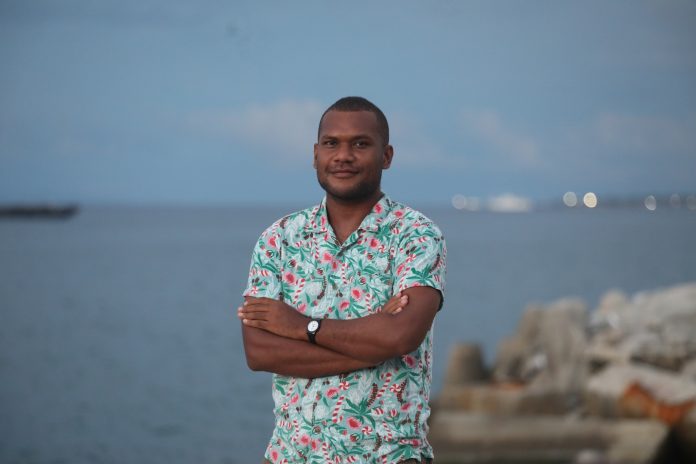
    Jeremy Gwao. Photo supplied.

    BY MORRIS NAFU

    At the Pacific Islands Forum (PIF) in Tonga this week, Jeremy Gwao of Tavuli News, representing the Pacific Anti-Corruption Journalist Network (PACJN) and Pacific Media, highlighted significant challenges facing journalists in the region.

    Gwao emphasised that journalists in the Pacific face substantial barriers to freedom of information due to cultural and political influences, which hinder the media’s ability to report effectively on issues of integrity and corruption.

    Gwao outlined several key priority areas, urging Pacific journalists to align their focus with the Teieniwa Vision’s implementation plans.

    He advocated for stronger partnerships with governments to facilitate access to information and to enhance the media’s role in reporting on integrity and corruption.

    He called for improved transparency in public administration, emphasizing the need for better organizational, functional, and decision-making processes to ensure secure access to information.

    Gwao also pushed for initiatives to increase public awareness of integrity values and anti-corruption efforts, particularly targeting youth engagement.

    Additionally, Gwao proposed effective memorandums of understanding (MOUs) with organizations like the PACJN, Pacific Islands News Association, and national media associations such as the Media Association of Solomon Islands (MASI).

    He stressed the importance of government support for journalists’ rights to maintain accountability and uphold a transparent, democratic society.

    “Strengthening inter-sectoral and inter-generational advocacy on the right to information, including policy dialogue and youth involvement, is essential,” Gwao stated. He also highlighted the need for a robust whistleblower protection regime and the use of digital tools to support the right to information.

    Gwao underscored the importance of involving journalists in developing Right to Information and Freedom of Information legislation, noting the Palau Media Association’s role in reviewing the United Nations Convention against Corruption.

    “Journalists cannot fight corruption alone; it requires a collaborative approach,” Gwao expressed. “I urge leaders to take this issue seriously and to recognize the critical role of journalists in ensuring media freedom and transparency,” he concluded.

    Call for support for Pacific youth council

    0

    BY INDY MAEALASIA

    There is a call for increased support to strengthen the Pacific Youth Council (PYC) to enhance its role as a central resource hub for regional youth development.

    Solomon Islands National Youth Congress General Secretary Josie-Anne Ashley emphasized this need at the Pacific Senior Youth Officials Meeting in Nadi, Fiji last month.

    “We believe that empowering the Pacific Youth Council in this role will enhance its capacity to coordinate, support, and amplify youth initiatives across the region, ensuring that our collective efforts are more effective and inclusive,” she stated.

    Ashley emphasized that it is essential to support initiatives to ensure youths can raise their voices and be heard.

    The PCY, a regional organization representing youth voices from across the Pacific region with aims to promote youth empowerment, leadership, and advocacy for sustainable development is currently co-chairing the Pacific Youth Ministerial Meeting in Nadi, Fiji.

    The Ministerial meeting includes Government Youth Ministers and Youth Leaders from across the pacific region.

    Reflecting on the significance of the meeting, board member of the PYC and Vice Chairman of the National Youth Congress, Phillip Subu emphasized that the Ministerial meeting provides a platform “to championing youth-led action and voices”.

    The meeting is scheduled to conclude today.

    Gwaunafiu farming school aims to document taro species

    0
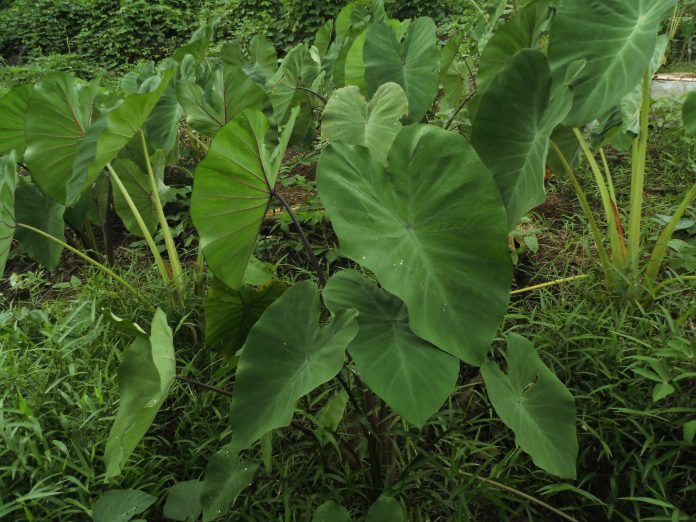
    Taro

    BY JOHN HOUANIHAU

    Plans to document original Taro species in central and east Kwaraa’e are ongoing at Gwaunafiu farming school in Malaita Province.

    Two weeks ago, Gwaunafiu Farmers School sent out one of its working teams, mostly youths to central and east Kwaraa’e aimed at collecting the original Kwaraa’e taro species.

    Lesly Sanga, Gwaunafiu Farmers School Farm coordinator said the activity is supported by SPC under the Kiwa PEBACC+ Project conducted through the Pacific Organic Learning Farm Network.

    “That is one of the activities going on at Gwaunafiu. The idea is to bulk or plant the taro species at one location. The reason why we are serious about collecting the species is to document the taros while we do the bulking since most of the original species start to lose,’’ said Sanga.

    He said that under the process, taro species are collected, transported to the school, and planted.

    “During the planting process farmer started to documentation, recording the dates the taro is planted, recording their names and other vital information as far as harvesting period is concerned,’’ said Sanga.

    “We are at the planting stage at the moment. So, their colors are recorded, and what soil type is favorable for the species. In that way it will ensure we keep track of its harvesting periods which can also help out in food security,’’ he said.

    He also mentions other activities under the project that the Gwaunafiu Farmers School is anticipating to undertake apart from taro species project documentation.

    “There are a lot of activities and we are looking at about seven of them to engage in. We prioritize taro because it is one of our traditional foods. Apart from taro we also engage in planting native food trees which is also inside of the plan.  This includes Ngalinut, breadfruit that can help in terms of food security,’’ he said.

    Mr. Sanga also appealed to local farmers around the country to stay focused on the cash crop they are engaging in instead of jumping from one crop to another.

    He said that most farmers are seasonal farmers who opt to move from one crop to another depending on the situation.

    “For example, in cocoa, when the price goes up, farmers put more effort and leave out other cash crops. I think the best option for farmers is to stay focused on whatever cash crops we have and maintain them instead of jumping from one to the other,’’ he said.

    “Because on the day of the day, those crops are our important cash crops. I believe in agriculture but we need to get to know these crops, what are their benefit, and how important they are given the fact that climate change is also one of the threats to agriculture.

    So, the important thing is for us to focus and understand these crops in the face of climate change crises. because as long as we understand these crops we know what to do,’’ said Sanga.

    PM Manele vows to pursue safe return of Siwainao sisters

    0
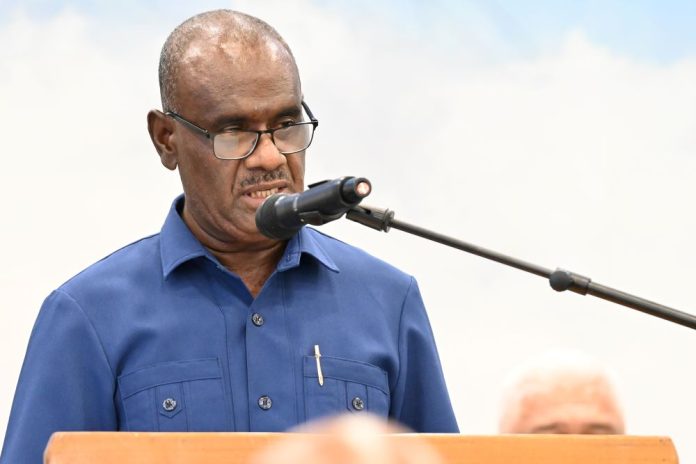
    PM Manele

    BY NED GAGAHE

    Prime Minister Jeremiah Manele said he raised the issue of the Siwainao sisters during his meeting with Papua New Guinea Prime Minister James Marape on the sidelines of the 53rd Pacific Islands Forum (PIF) Leaders Meeting in Tonga.

    Prime Minister Manele made this statement during a press conference upon his return from Tonga on Sunday.

    He emphasized the importance of the issue and stated he would “pursue that further” with Prime Minister Marape.

    “We are doing all we can to ensure that happens,” Manele said when asked if he believes the girls would soon be reunited with their father, Dr Jack Siwainao.

    “I did raise that with him (Marape). Our High Commissions in Moresby and Fiji are also involved. I will follow up with another call to Prime Minister Marape. Our Foreign Minister is attending an event in Port Moresby from 6 – 9, September 2024 and will also follow up on this matter. It is very important, and we are doing everything we can to ensure that it is resolved,” Manele added.

    Before the PIF meeting, Prime Minister Manele had assured Parliament he would address the issue with his PNG counterpart.

    This followed a request from MP for East Are’are Peter Kenilorea Jr., in Parliament who had urged Manele to raise the case of the two girls, Mercy Aninono Siwainao and Cinderella Aroahia Siwainao, with Prime Minister Marape.

    Mr Siwainao, father of the two girls, has been campaigning since 2022 for their safe return after the death of his Papua New Guinean wife. The girls were reportedly forced to unlawfully change their identities and are alleged to be in the custody of a senior government official in PNG.

    Siwainao had previously appealed via social media for the assistance of the prime ministers of both Solomon Islands and PNG to help bring his daughters back to Honiara. As of now, there has been no progress on this front.

    Govt willing to work with private sector: PM Manele

    0

    BY INDY MAEALASIA

    Prime Minister, Jeremiah Manele has expressed his government’s willingness to work with the private sector to drive development.

    At the 13th Australia Business Forum, Manele highlighted that building “public-private partnerships” is a “key mechanism” for advancing essential development in the country.

    “We are actively seeking to collaborate with the private sector on infrastructure projects, social services, and other areas with joint efforts that can yield significant benefits,” he said.

    Manele emphasized that such partnerships allow the government to utilize the private sector’s expertise and resources, while jointly managing the risks and rewards associated with growth.

    The Prime Minister also made an open invitation to the investors at the forum to explore opportunities for partnership in variable energy, infrastructure, fisheries, agriculture, and tourism.

    “Together we can achieve more than we could individually, creating lasting impacts for our economy and society,” he noted.

    With the Solomon Islands expected to graduate from the least developed country status in 2027, Manele stressed that maintaining this status and ensuring sustainable growth will depend on these partnerships.

    “We have the mission, the resources, and the determination to achieve this, and to ensure sustainable growth, but we cannot do it alone. We need your active engagement, the private sector, both locally and internationally to realize our goals” Manele added.

    Dragon pub murder case further adjourns

    0

    BY ROMINAH FAKA

    The case involving an off-duty police officer killed at the Dragon Pub in the Kukum area in May of this year has been further adjourned for September 10 for mention.

    Yesterday court made directions for co-accused James Solomon Kai’ lawyer to appear on September 10 with the prosecutor to set a date for hearing of the long form preliminary inquiry (PI) for Mr Kai.

    Paul Daoburi, 35, and his co-accused Kai, 21, were charged with murder.

    The allegation alleged that the deceased and his colleague, along with the colleague’s wife, went to the Dragon Pub on the night of May 16 for drinks.

    Some times between 12am and 1am an argument broke out between the deceased and a group of men, following an assault on his colleague wife in which a bottle was allegedly smashed against her head causing her to fell to the ground unconsciously.

    It was alleged that during the course of the argument the deceased took out and applied a pepper spray on the group of men he was arguing with at that time.

    The deceased was later dragged out of the Pub by an off-duty security accused Daoburi, where the deceased was attacked by a group of more than 10 men outside of the Pub.

    The allegation further stated Daoburi joined in the attack, using a snooker cue stick with which he used to beat the deceased’s head multiple times.

    The second accused Solomon Kai with nick name Solo allegedly attacked the deceased using a bottle.

    A policeman who arrived at the scene intervened and took the deceased laying bleeding on the floor into a taxi to National Referral Hospital (NRH) where he pronounced dead.

    ODPP appears for the crown and PSO for Daoburi and HOF Law Chambers for Kai.

    Hearing of strike-out application on MP Mahaga’s petition set for Sept 6

    0

    BY ROMINAH FAKA

    Court has adjourned the hearing of application to strike out the petition case against MP Trevor Mahaga for September 6.

    MP for Gao Bugotu, Mr Mahaga is facing a petition by former MP Samuel Manetoali.

    Mahaga’s legal team have applied for a strike-out on the petition.

    Hearing for the strike-out application was scheduled for Monday this week, however, the Attorney General’s chamber did not serve its submissions until Monday.

    The Attorney General’s chambers represents the second respondent – the electoral commission.

    Manetoali’s lawyer sought time from the court to respond to the second respondent’s submissions before proceeding to the hearing of the strike-out application.

    Manetoali filed two allegations against MP Mahaga – bribery and breaching the electoral act.

    Manetoali also filed six allegations against electoral officers.

    Mahaga’s legal team applied for the strike out to the petition. One of their reasons is that Manetoali’s petition does not specify which section of the electoral act Mahaga allegedly breached, therefore the petition is deemed frivolous and vexatious.

    Mahaga is also the Minister for Environment, Climate Change and Disaster Management and Meteorology.

    L& L Lawyers represents Manetoali and Rano and Company represents MP Mahaga and Attorney General represents Electoral Officers as second respondent.