Home Blog Page 467

Man on false info charge without lawyer

0

BY ROMINAH FAKA

A man accused of causing fear by spreading false information earlier this year during the peak of alleged attempted abductions is still without a lawyer.

Junior Harry Gereniu is charged with one count of spreading false information likely to cause fear and panic in the community contrary to section 63 of the Penal Code.

Yesterday the matter was mentioned before Principal Magistrate Dalcy Belapitu Oligari where court asked Gereniu if he had a lawyer to represent him.

The defendant told court that he had gone to the Public Solicitors Office (PSO) on Thursday last week and talked with one lawyer who said he would call Gereniu, but has not.

Court therefore moved the matter to December 16 to give time for the defendant to seek a legal representative.

It was alleged on October 19 at 9.15pm, a viral facebook post on Facebook alleged that a White Toyota Rav 4 without a plate number attempted to abduct the defendant using a hook to steal a basket containing a passport and visa.

The RSIPF began investigating the alleged kidnapping on October 25 after public panic and temporary school closures.

The accused later admitted to fabricating the story based on exaggerated remorse.

Able Maelanga of office of Police Prosecution Department acts for the crown.

Misdiagnosis – a real and serious problem at the NRH Emergency

0

BY IRWIN ANGIKI

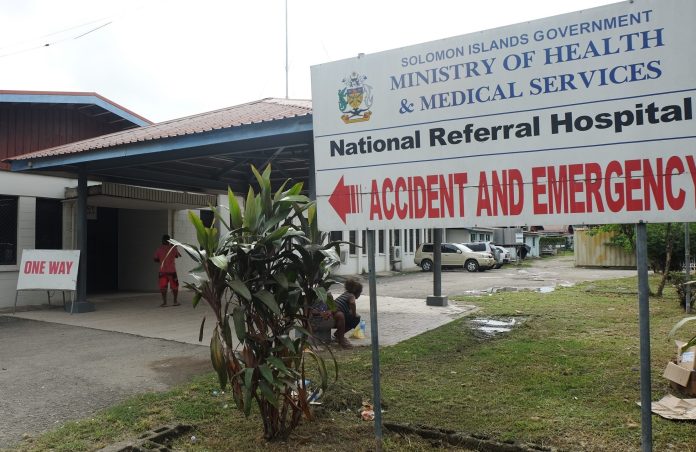
Misdiagnosis which is costing lives and causing much suffering is a real problem at the Emergency unit of the national referral hospital (NRH), an Island Sun investigation has shown.

The NRH has an Accidents and Emergency (AE) unit along with a general outpatient service which receives emergency cases and referrals, and give general medical attention.

But, just as drugs and accessories are a usual rogue for the hospital, making wrong diagnoses is apparently becoming all too common for comfort at the Emergency.

Reports are increasing of near-death experiences, prolonged suffering as doctors at the emergency unit struggle to diagnose what ills a patient, and death after being left too long at the unit awaiting right diagnosis and treatment, or after being sent home under a wrong diagnosis.

Island Sun’s two-month investigation has uncovered a cocktail behind this sub-standard service at the Emergency unit – ranging from hurdlesome internal protocols, poor communication system, internal competition, some incompetent ‘cowboy’ doctors and politics.

This has spited the hard work put in by few dedicated doctors who have given a lot towards improving the Emergency department over the years.

NRH authorities told Island Sun it was looking into allegations of misdiagnoses. Four NRH doctors spoke to Island Sun under condition of anonymity, and two former NRH doctors now running their own private practices gave insight, also under condition of anonymity.

Day at the Emergency

Wednesday October 9, Honiara businessman Craig Day was rushed to the NRH Emergency with severe abdominal pain at 4am. He waited 30 minutes before being given attention.

A blood test was taken. Results came back 24 hours later – only to be found that it had been the wrong blood test.

Ultrasound scan results said his appendix was alright, according to the Emergency doctors. Hindsight views from doctors say Mr Day should have undergone a CT scan.

By Thursday the pain had worsened – but Emergency doctors nevertheless began preparing papers to discharge Day.

Upon Day’s protest, doctors said he would get a surgical review at 10am the next day.

However, there was no surgical review by lunchtime Friday – and Day decided he was not going to wait to die.

He arranged for a med-evac to Brisbane, Australia, where Emergency doctors immediately diagnosed his appendicitis and removed his engorged appendix.

Day had a gangrenous ruptured appendix. He had had a brush with death.

Day’s experience not unique

One prominent member of parliament shared on social media his experience in 2018 when his child suffered for a week from appendicitis before x-ray results detected it since it had already calcified.

Ten other people shared with Island Sun similar experiences at the NRH Emergency under condition of anonymity.

Their stories outline three types of experiences at the NRH Emergency – premature discharge with doctors unable to diagnose, suffering while doctors apply trial-and-error to get at the right diagnosis, and death either at the hospital or after being sent home under wrong diagnosis.

A 60-year-old mother said her eldest daughter passed away in 2021 after being discharged prematurely from the Emergency ward when doctors said they could not find anything wrong with her.

“This was despite my daughter having a swollen belly, rash on her body and severe abdominal pain on her right side,” she said.

“Two days after being admitted at the emergency outpatient ward we were told to leave by the doctors saying they could not find anything wrong with her and gave us Panadol and antibiotics, telling us if it persisted after four days to return.

“We were discharged and two days later my daughter died,” the mother sobbed.

A 54-year-old mother said her son died while admitted at the Emergency last year after spending one night and day there, with the same symptoms.

“We arrived at night and spent hours sitting outside until admitted near dawn. Later that morning the doctor said my son would be x-rayed. We waited and waited, all the while my son was crying in pain. Later afternoon he passed away,” she said.

In September this year a young man was rushed into the AE with a ruptured stomach and his chest x-ray results clearly showed fluid levels consistent with ruptured bowels. He was misdiagnosed and went through seven days of suffering before doctors finally decided to operate.

On the operating table, the young man went to severe sepsis and could not withstand the exploratory laparotomy – he died on the operating table.

A man, 35, said his father had spent a month in 2022 admitted at the outpatient ward under Emergency doctors who could not find anything wrong with him and later sent him home. His father died a month later in their village.

A father, 50, said he brought his son in earlier this year and had his head x-rayed. “The young doctor at the Emergency said he’d read my son’s x-ray results. When he came out of the room he handed us my son’s medical book saying everything was clear. The doctor had not written anything on my son’s medical card, which was weird.”

His son has since been suffering from chronic migraine and nose bleeds, and they have been in and out of private doctors.

Former NRH doctors – ‘misdiagnosis at Emergency is real’

The two former NRH doctors who spoke with Island Sun said misdiagnosis is a common occurrence at the Emergency department.

They said misdiagnosis has been a bug at the Emergency department for decades, but has recently worsened with the influx of Cuba-trained doctors.

Two groups of doctors man the Emergency department – qualified, experienced PNG/Fiji-trained and underqualified, ill-experienced Cuba-trained, the two former NRH workers said.

Yet, misdiagnosis is committed by both sets of doctors, they add.

“Just recently, a very senior doctor at the Emergency sent home a girl with fluid in her lungs,” one of the two doctors said.

This coupled with lack of resources, ongoing internal politics and nepotism results in the sub-standard service at the NRH Emergency, they said.

Authorities within NRH and the MHMS are aware of this and deeply involved, they said.

NRH doctors – ‘best medical service Solomon Islands has to offer’

Enquiries sent to the Ministry of Health and CEO of NRH, Dr George Malefoasi, went unanswered.

NRH Medical Superintendent Dr Janella Solomon responded to enquiries saying they are investigating Mr Day’s case using a process she called ‘clinical audit’, which she adds is ‘a very technical audit’.

She said a result to their investigation could be made available in the last week of November.

The four NRH doctors who spoke to Island Sun on condition of anonymity said doctors at the Emergency are working hard against odds stacked against them such as poor resources, lack of drugs and accessories, unavailability of needed devices and equipment, and protocols which often slow down or deny access to resources.

“Let me be clear that this is the best medical service at the NRH Emergency that the Solomon Islands can offer given our situation,” one of the NRH doctors said.

“You cannot compare medical care in Australia which is a resourceful country to Solomon Islands, because we are developing and our doctors at the Emergency are trying their best.

“The aim is to identify life threats, manage and get them quickly to the next level of care. The AE doctors have all the knowledge needed but are without the needed equipment and resources,” the doctor said.

Reasons for Day’s nightmare

Another doctor said that with Mr Day’s case, the ultrasound images produced by the machine at the NRH are not of quality which could explain why doctors at AE did not spot his appendicitis.

“It is unfair to blame our AE doctors because the images produced by our ultrasound scan is of low quality which even the well-trained and experienced eye can miss such things as engorged or ruptured appendix.”

The four NRH doctors agree that Day should have received a CT scan, which would have picked up his appendicitis.

One doctor said NRH protocol had delayed Mr Day from getting a CT scan.

“There is protocol in place where radiologists established for consultant at the Emergency to discuss and justify why a CT scan must take place before the patient is scanned.

“So, Day needed a scan but did not get one because he was under the surgical team and there was no surgical consultant available because government had not sorted out the person’s contract,” the doctor said.

Blood tests at the NRH are done at the hospital laboratory.

At the Emergency ward Mr Day underwent a blood test, which took 24 hours before results came – and it turned out to be the wrong blood test.

One of the NRH doctors said the NRH lab is manned by highly experienced and qualified technicians, and they carry out the specific blood tests instructed by the doctors.

“Day’s blood sample came with the instructions to carry out renal function test, which our lab techs did. So, it is unfair to blame our lab techs. The wrong instructions were given,” the doctor said.

“This happens sometimes and it is wrong to say it was a mistake or misdiagnosis because the doctor on-call decides which blood test to run based on his/her observations and we follow their instructions,” the doctor adds.

‘We’re trying our best’ – despite growing complaints

Only two of the NRH doctors inclined when asked to comment on the testimonies of the 10 other people who shared their harrowing experiences at the AE.

“Although we try our best, mistakes do happen. Our main aim is to preserve the life of our patient. If it’s a straight-up injury we address it. If it’s an illness then we investigate using limited resources we have to identify the cause and treat it.

“And, yes, this involves trial and error because illnesses share a lot of common symptoms and often when we arrive at two possibilities we have to rule out one by treating for the most likely cause. If it results differently then we’ll know it is the other, and further treatment.

“And, it is sad that few patients die during the course of searching for their illness, but given our circumstances it cannot be avoided. However, our efforts minimise such deaths,” the doctor said.

The second doctor sympathises with the reports but encourages public to report their complaints to the NRH authorities.

“Unless there is an official report, we cannot address problems public face with our services, especially at the Emergency department.

“Public can report to the Medical and Dental Board (MDB), or the Medical Superintendent of NRH, or the CEO of NRH. Then we can investigate and address the complaints.

“If we at NRH do not address or respond to the complaint reports then public can go to the media,” the doctor said.

NRH complaint channel

Deputy Secretary Health Care Dr Gregory Loko Jilini, a member of MDB, explains to Island Sun the MDB’s function.

“The Medical and Dental Board only responds to complaints that are formally submitted to the Board in writing. When a complaint is received, the Board will then carry out its own independent investigation

“If a patient or relative feels that a doctor’s action is not right, inappropriate or unsafe then they must address their complaint to the Board.  The following information are important to include when making a complaint:

1. The name of the doctor about whom the complaint is made.

2. Describe in detail what happens, including the time, place, patient affected any other person that may be involved or who else witnessed the incident.

3. The name, address and contact details of the person who submits the complaint. The letter of complaint must be signed and dated.

“By law, the complaint must be submitted within three months of when the incident occurred, so it is important to submit complaints while they are fresh,” Mr Jilini said.


MHMS increases budget for medical lab supplies

0

BY INDY MAEALASIA

THE Ministry of Health and Medical Services (MHMS) has significantly boosted the National Referral Hospital (NRH) budget for medical laboratory supplies to $10 million for 2025.

Contributing to the debate on the 2025 Appropriation Bill 2024 in Parliament yesterday, MHMS Minister Dr Paul Bosawai highlighted that this increase, the first of its kind, will support the growing demand for screening and diagnostic tests.

The increase also aimed at addressing the gaps in disease detection and enhancing healthcare services in both urban and provincial areas.

This move comes after the Public Accounts Committee (PAC) recommended an increase in laboratory funding to support the expansion of specialised care.

The ministry’s new budget allocation is expected to improve the quality of diagnostic services, with the aim to detect high-risk contagious diseases, a capability that has been below standard.

Recent assessments revealed that NRH laboratories conducted over 219,000 tests in 2023, but only 345 of those tests were related to high-risk diseases.

The lack of adequate reagents has contributed to a decline in the lab’s quality, which has fallen below 50 percent, according to external evaluations.

With the increased budget, the Ministry plans to enhance testing frequency and improve overall lab standards.

Bosawai said this budget will assist newly established provincial laboratories, including those at Lata, Tara, Helena Goldie, and Good Samaritan Hospitals, ensuring that diagnostic support is available nationwide.

Additionally, as new specialized treatment services, including the comprehensive medical centre funded by the People’s Republic of China (PRC) are developed, the increased budget will help meet the growing need for advanced diagnostic capabilities.

Wale highlights soaring inflation, rising cost of living

0

BY NED GAGAHE

Opposition Leader Matthew Wale has sounded the alarm over escalating inflation and rising cost of living, saying government’s budget fails to adequately address these pressing issues.

During the second reading of the 2025 Appropriation Bill in Parliament yesterday, Wale pointed to troubling inflation figures and the increasing burden on ordinary Solomon Islanders.

“The latest data from the Central Bank of the Solomon Islands reveals that headline inflation accelerated to 4% in the September 2024 quarter, up from 3.2% in the same period last year.”

Wale explained that this surge in inflation, driven by both domestic and imported factors, has resulted in higher prices for basic goods and services, making daily life increasingly difficult for many citizens.

“Households are facing higher prices not only for fresh fruits and vegetables but also for electricity, fuel, transportation, and other necessities that underpin everyday survival,” Wale said.

He emphasised that while official inflation figures may seem low, they do not reflect the real-world experience of the majority of Solomon Islanders.

He further criticised the government for its failure to adequately address the cost-of-living crisis, noting that many families are now struggling to afford even basic essentials.

“$100 may only buy two items at the store now, and this is the reality for many families, especially in urban centres, but also increasingly in rural areas.

“The cost of living is simply too high for most Solomon Islanders.”

Wale also pointed out that the 2025 budget does little to tackle these cost-of-living issues, with previous budgets having failed to make a meaningful impact on inflation or the rising cost of essentials.

He called for urgent government intervention to ease the financial burden on households and provide real relief to struggling families.

“The rhetoric may be there, but the action is missing.”

RESIGNATIONS LOOMING

0

GNUT government on shaky grounds ahead of motion of no confidence

BY IRWIN ANGIKI

A good number of government MPs are reportedly ready to resign and support the motion of no confidence against PM Manele filed by MP for Central Honiara Gordon Darcy Lilo.

Sources close to the matter told Island Sun last night on condition of anonymity that the government MPs are reportedly not happy with a number of government undertakings that are not of national interest.

These include:

-Gross mismanagement of mineral sector, prioritising special interests over national interest.

-Level of tax exemptions given, which have put a big hole in the budget with no strategy to fill in the big deficit in the budget.

The government MPs planning to resign are the ones who have been concerned for sometime, the sources said.

But they recognise the importance of this budget being one for the people of the country, and will support its passage, the sources said.

The government MPs appeal to public to understand that the ones behind this move put the interest of the country first and the people they represent, the sources said.

“No hidden motives or agenda.”

Prime Minister Jeremiah Manele is facing a motion of no confidence which was filed by MP Darcy Lilo on Thursday last week, and will be ready for tabling this Friday.

An Opposition spokesperson told Island Sun over the weekend that reasons for the motion included:

-PM Manele’s lack of action over his finance minister’s exposed squandering of tax ex-emptions costing government hundreds of millions of dollars in revenue

-PM Manele’s lack of action to address the huge loss of revenue from the mining operation on Ren-nell island, Renbel province

-PM Manele’s lack of action regarding exposed offshore account linked to his finance minister and police minister

-The country’s dwindling economy under the leadership of PM Manele, an example highlighted be-ing the budget currently in parliament reportedly just being on paper with no revenue to back it.

PM Manele in an interview with Island Sun on Sunday had said his Government for National Unity and Transformation (GNUT) was rock solid and united, and welcomed the motion.

He said that they were instead focused on passing the budget.

Both PM Manele and Mr Darcy Lilo could not be reached for comment before the paper went to print last night.

Meanwhile, the mover of the motion, Mr Darcy Lilo is a former prime minister (2011-2014).

Raising awareness of human rights through Pacific films and talanoa 

0

“We are all connected, parents, babies, oceans and the earth. When we forget that, everything suffers”

As we celebrate Human Rights Day, it is timely to reflect on this message from the documentary Pacific Mother, which premiered at the opening of the 4th Pacific Human Rights Film Festival this year. 

The film explores notions of equality, rights, responsibilities and opportunities for people of all genders, and the importance of community and our indigenous knowledge. 

It is also a reminder of the power of storytelling, through films and other medium, to engage Pacific audiences on issues of human rights with an aim to educate and empower people for positive change.

Films have the power to ignite feelings and emotions.

They open people’s minds to new perspectives and have a profound impact on how people think.

The Festival also creates safe spaces for discussions around the important issues portrayed in the films which can sometimes be considered taboo in some Pacific cultures.

It is important for us as Pacific Islanders to recognise that although human rights are often viewed as a Western concept, the values and principles underpinning them – collective and individual wellbeing – are deeply rooted in Pacific cultures and traditions.

Concepts like fairness, equality, protecting the vulnerable, dignity, respect, and active participation have been embedded in our societies for generations, woven into the social fabric of our communities.

These values are evident, for example, in our spiritual beliefs and sacred relationships, which uphold the dignity and interconnectedness of all members of our communities.  

For instance, the value of respect is upheld across our Pacific cultures in concepts such as Veidokai and Veivakarokorokotaki in Fiji, Fa’aaloalo in Samoa, Faka’apa’apa in Tonga, Wahu in Pohnpei, Ahkfuhlact in Kosrae, Fairo (the way of life that is rooted in respect) in Chuuk, and Asirow in Yap, the Federated States of Micronesia, as well as Kautiej in the Marshall Islands.  

This year, 20 Pacific films were screened around the central theme of ‘Oceans and Land’ to over 2,500 people in Fiji, Hawaii, Kiribati, New Caledonia, Republic of the Marshall Islands, Samoa, Solomon Islands, and Tonga, during at the 4th Pacific Human Rights Film Festival which ran from 30 September to 27 October.

This demonstrates the extending reach of the Festival and its uniqueness as a free, educational and more truly regional initiative.

Audience members reflected that the range of topics covered by the films – from childbirth to the use of technology, to climate change, and the importance of preserving nature – revealed to them that human rights permeate, and can positively enrich, all aspects of our lives and communities.

Despite progress by Pacific Island countries to uphold commitments related to human rights, there still exist socio-economic, political and cultural inequalities and rights violations due to inadequate capacity, lack of human rights institutions, power imbalances, exclusion, and discriminatory norms, attitudes and practices. 

Our region has some of the highest rates of gender-based violence, the lowest rates globally of female parliamentarians and 15 percent of the populations have some form of disability, many of whom are marginalised and often excluded and unable to access essential services such as water and sanitation and health and education services. 

The films screened this year highlighted many of these long-standing issues and also explored emerging trends, such the worsening situation for persons of diverse sexual orientation, gender identity, gender expression, and sex characteristics (SOGIESC) in a year which has seen efforts at the government level to ban LGBTQ advocacy.

This is not only a threat to freedom of expression and our custom of telling stories but also suggests we are failing to heed the message from Pacific Mother – “we are all connected… when we forget that, everything suffers”.

The Pacific is built on a history of oration and storytelling. It helps us share our lived experiences and collectively decide how to chart the best paths for our future happiness and prosperity. It gives voice to those who might otherwise be marginalised.

Without creating space for dialogue and storytelling, we risk further marginalising large sections of our societies, sowing the seeds of division and inequality.

The continued challenges we face, as well as emerging trends, demonstrates the need now, more than ever, for us to draw on our storytelling heritage and the power of films to build a stronger, more resilient Pacific.

The growing talent of Pacific filmmakers to tell important stories that resonate with everyone is evident.

We look forward to next year’s Pacific Human Rights Film Festival reaching an even larger audience across the Pacific with brand new Pacific stories to continue breaking down human rights barriers. 

Let us harness the power of contextual storytelling and talanoa to drive positive action around human rights. 

*Human Rights Day 2024 Op-Ed

By Miles Young,

Director of the Human Rights and Social Development Division

Pacific Community (SPC)

Parametric insurance timely

0

By John Houanihau

The Solomon Islands Meteorological Services (SIMET) has pledged its support for the parametric insurance initiative, emphasizing its readiness to provide data essential for its implementation.

This commitment was highlighted during the SI National Education Workshop: Building Finance Resilience through Parametric Insurance and Disaster Risk Finance, hosted by the United Nations Capital Development Fund (UNCDF) and the Central Bank of Solomon Islands (CBSI) this month.

Speaking at the event, Max Sitai of SIMET affirmed the organization’s readiness to contribute to the initiative by disseminating data and supporting its objectives.

Parametric insurance is a novel solution that provides payouts based on predefined “trigger” events, such as cyclones or excessive rainfall, eliminating the need for lengthy loss assessments. It is part of climate and disaster risk finance and insurance (CDRFI) solutions designed to offer rapid financial responses, minimizing humanitarian and economic losses after disasters.

“SIMET is transitioning to what is called impact-based forecasting, which predicts the expected impacts of specific weather events. This type of information aligns well with the goals of parametric insurance,” Sitai said.

He explained that impact-based forecasting is a new approach being adopted in the Solomon Islands and other Pacific Island countries, providing a critical link between disaster risk reduction and parametric insurance.

Through this methodology, SIMET can utilize climate forecasting on various timescales. “For shorter timescales, we analyze triggers like 72-hour rainfall or wind speeds. On a broader climate scale, we examine early action rainfall outlooks, reviewing up to 12 months of data to inform decisions that could benefit vulnerable populations,” he explained.

The Solomon Islands’ extensive network of synoptic and manned stations collects key weather parameters, including rainfall, temperature, humidity, pressure, wind speed, and direction. This wealth of data is stored in SIMET’s database and is readily available to support parametric insurance programs.

Parametric insurance is also gaining traction in the region, with expansion into Papua New Guinea. A pilot program launched in December 2023 by UNCDF’s Pacific Insurance and Climate Adaptation Programme (PICAP), in collaboration with underwriter Pacific MMI Insurance Limited and Women’s Micro-Bank, highlights the growing importance of such solutions.

CBSI embarks on review of Insurance Act

0

BY JOHN HOUANIHAU

The Central Bank of Solomon Islands (CBSI) is undertaking a review of its Insurance Act to accommodate emerging insurance solutions such as parametric insurance and micro-insurance.

Speaking at the recent Parametric Insurance Workshop for Climate Resilience in Honiara, CBSI’s Steve Awao outlined the bank’s goals for the review. He explained that the initiative aims to clearly define critical components such as parametric triggers and payouts, ensuring these innovative insurance products are explicitly recognised within the legal framework.

“In support of this development, CBSI has also facilitated an exemption from stamp duty for all micro-insurance products, reaffirming our commitment to fostering growth in this sector,” Awao said.

He further highlighted CBSI’s establishment of a regulatory sandbox—a controlled environment where insurers can pilot new and cost-effective parametric products without being subject to full regulatory compliance during testing. This platform is designed to encourage innovation while carefully managing financial risks.

“While parametric insurance offers promising solutions, it also carries inherent risks. As the regulator, CBSI remains committed to ensuring a balance between innovation and risk mitigation. Insurers will be required to maintain strong capitalization, implement reinsurance programs, and provide transparency in policy details to protect consumer trust and confidence,” Awao added.

CBSI’s efforts are closely aligned with the National Financial Inclusion Strategy (NFIS) Three, particularly its fourth objective of enabling economic resilience. The National Financial Inclusion Unit (NFIU) plays a key role in promoting awareness and affordability of parametric insurance.

“The CBSI is working to educate stakeholders and the public to ensure that parametric insurance is accessible, affordable, and well-understood. This education is crucial to making these innovative solutions widely available, contributing to economic resilience across the Solomon Islands,” Awao said.

CBSI has also partnered with key stakeholders to strengthen cross-sector collaboration, emphasizing the importance of partnerships in driving financial inclusion and educating the public about these innovative insurance solutions.

Govt allocates more than $100m for infrastructure

0

By Loretta B Manele

More than $100 million is being allocated for infrastructure from the government budget.

This was said by finance and treasury minister, Manasseh Sogavare when he presented the 2025 Appropriation Bill 2024 on Wednesday last week in parliament.

Her stressed that having proper and quality infrastructure is key to nation-building and socio-economic development.

Sogavare told the honourable house that the government is therefore allocating more than $100 million to build key infrastructures in Honiara and other provinces, and this includes roads, walls, buildings and streetlights.

Sogavare said the government is investing in key infrastructures to improve connectivity within islands and inter-islands of our provinces to improve transportation of goods and services on a time limit.

Moreover, he stated that government is also allocating $45.2 million towards SIWA infrastructure.

“SIWA works are to be completed by March 2025, so the government expects a significant improvement in the overall infrastructure of the Solomon Islands Water Authority.”

He expressed that this is for better sanitation and hygiene for residents resulting in improved public health outcomes, enhanced water management efficiency and benefits for both the environment and local communities.

Sogavare said in government’s ongoing commitment to seal the service critical in our efforts to build our human capital, they are allocating $50 million to support the building of physical infrastructure, technological capacity and human resource capacity in order to create an enabling learning environment and to produce a skilled workforce.

“SINU is expected to increase access to modern facilities and produce a learning environment.

“The grant, provided should be used to fund a specific infrastructure project specified in the SINU 2025 Infrastructure Government Plan.”

To top this off, Sogavare said in support of school infrastructures, the government is allocating $16.7 million to support constructions of classrooms, science laboratories, and ablution blocks.

He stated that the government expects to improve access to quality basic education and plans to build 16 classrooms, two dining halls, five dormitories, one wash, two education provider offices, and four rehabilitation and maintenance projects.

Gov’t allocates $3.7m for second tuna processing plant

0

By Loretta B Manele

The government is allocating $3.7 million towards the ongoing effort to establish a second tuna processing plant in Solomon Islands.

Manasseh Sogavare, finance and treasury minister revealed this when he delivered the 2025 Appropriation Bill 2024 on to parliament on Wednesday, December 4.

He said the project will create more jobs and increase economic benefits for the country once concluded.

Sogavare said in support of freshwater fish hatchery, the government is allocating an additional $12 million to improve food security and income generation.

He also stated that in 2025, the government plans to complete the outstanding on-site infrastructure and equipment importation of the gift species into Solomon Islands and partial operations of the hatchery.

“The government is targeting tilapia farmers throughout the country to benefit from this project.”

Sogavare furthered that government is also allocating $14.7 million to support fisheries operation in provinces.

He mentioned that under this allocation, $1.5 million is to support Tataba fisheries operation $1.5 million is allocated to support Russell Island fisheries operation and $1.7 million is allocated to support Lata’s fisheries operation.

As noted, these allocations are geared towards improving income generations for the respective provincial governments.