Home Blog Page 398

My first journey to the most remote island Tikopia

0

After several years working with the Small Grants Programme funded by the Global Environment Facility (GEF) and administered by UNDP, I thought I had a good sense of what “remote” meant in the Solomon Islands. I’ve been to the Reef Islands in Temotu Province before, and coming from a community in the Western Province myself, I know what it’s like to live far from Honiara or any major urban center. But nothing prepared me for Tikopia.

Tikopia isn’t just remote. it’s another world

Tucked away in the southeastern corner of Solomon Islands, this tiny volcanic island—just 5 square kilometers—is a green jewel surrounded by endless blue. Home to around 1,200 people of Polynesian descent, Tikopia is steeped in tradition, culture, and community governance that has withstood the tests of time and climate.

When I first heard about the St Luke Community Faea Water Project, I was excited. After more than 20 years of hardship, five communities—four in the Faea District and one in Ravenga—were finally getting back access to clean, sustainable water through a network of dams and 31 standpipes. That’s 576 people now drinking, cooking, and washing with clean water, right at their doorsteps. It is a milestone achievement. And I have been eager to witness it. But getting there was no easy feat.

  • The journey: crossing into the unknown

The most common way to reach Tikopia is by ship. However, our team took the less common—and riskier—modality: by boat. As we left Lata, the provincial capital of Temotu Province, the feeling was quite different from any of my previous trips within Solomon Islands. It was as though we were traveling to a place beyond the edge of the known world, crossing vast stretches of ocean where we were just us, a compass, offline GPS maps, and a lot of trust in the sea.

Hours passed, and the ocean seemed endless. Even with my experience traveling across different provinces in Solomon Islands, this journey was something else entirely. It reminded me how isolated some parts of our country truly are, and how service delivery—something we take for granted on urban centers — is a challenge many communities live without for years, even decades.

  • Tradition first: a visit to the chiefs

Upon arrival, our first obligation was to observe traditional protocol. Tikopia is governed by four chiefs, and visiting each of them is not just a matter of respect—it’s a vital part of connecting with the community.

What struck me most was entering the chief’s thatched hut, designed with a tiny doorway that requires you to crawl on your knees. It’s humbling, purposeful, and symbolic—a physical reminder of the required humility in the presence of leadership. These structures aren’t just ceremonial. They’re built with a deep understanding of the local climate. Designed to withstand fierce cyclones, they are a perfect example of traditional knowledge shaping resilient living environments long before the term “climate adaptation” entered our vocabulary.

  • Water is life—and now, it’s within reach

The highlight of my visit was seeing firsthand the impact of the St Luke Community Faea Water Project. For years, families had relied on rainwater tanks and a decaying 1980s-era water system that had dwindled to a single, usually dry standpipe. During droughts, mothers and children walked long distances, sometimes carrying water in containers for hours.

Now, with two newly constructed dams and a network of standpipes throughout the five villages, water is at their fingertips.

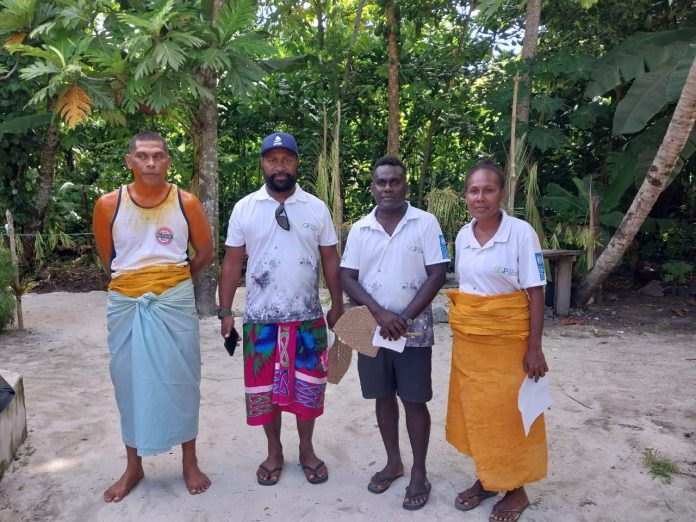
I spoke with Mr. Pae Seivaea, the Chairman of the St Luke Community, who told me, “This project has relieved one of our longest-standing burdens.” The joy and pride on his face said it all. For the first time in decades, the community no longer has to choose between collecting water or going hungry from time spent away from their gardens.

  • Masi and the spirit of resilience

But water is not the only challenge, Tikopia’s resilience runs deep, also in their food systems. Another fascinating aspect of Tikopia’s resilience is the traditional food preservation of a local delicacy known as masi. This fermented cassava pudding is stored in underground pits and is a critical food source, especially during times when the island’s food gardens are destroyed by cyclones or droughts.

This knowledge of food conservation is not merely a cultural practice but a food preservation method in an island where scaricity is common. In a place so isolated from the rest of the world, where the next shipment may not arrive for weeks or even months, these traditional methods of storing food ensure that the islanders can endure harsh times when their regular sources of sustenance are wiped out by natural disasters. This ability to plan and store food long-term, using natural methods, reflects generations of wisdom and survival instinct.

Reflecting on Resilience and Community

As I reflect on my journey, I am filled with awe and admiration for the Polynesian people of Tikopia, whose resilience is evident in every aspect of their lives. They have withstood cyclones, droughts, and the limitations of living in such isolation, adapting to the challenges they face with grace and ingenuity. Their ability to make the most of their resources, preserve their traditions, and live in harmony with nature is a powerful reminder of the strength of the human spirit.

The Tikopia people embody the essence of resilience. They have faced hardships that many of us can hardly imagine and have found ways not only to survive but to thrive in a world that offers few external resources. Their strength, unity, and resourcefulness are an inspiration, and I leave the island with a deep sense of respect and admiration for their way of life.

A hope for connection

As I bid farewell to Tikopia, I can’t help but wish for better connectivity for the island. While the isolation of Tikopia has preserved its unique culture and way of life, improved access to resources—such as regular shipping services and more reliable communication with the outside world—would help the islanders navigate the challenges they face more easily without erasing the beauty of their traditions. This project has shown what’s possible when communities lead and development partners listen and support. The people of Tikopia earned every drop of that clean water through their patience and resilience. It was the first time the Small Grants Project support an initiative in Tikopia. But hopefully it won´t be the last. Because in Tikopia´s quiet strength, I saw not just resilience—I saw hope.

*Article supplied by UNDP Communications

By Teiba Mamu

Small Grants Programme, Solomon Islands

‘Climate change places heavy burden on women of Marovo Lagoon’

0

BY INDY MAEALASIA

THE Impacts of sea-level rise on the local mangrove ecosystem surrounding Marovo Lagoon, Western Province has significantly affected women more than men, according to research conducted by Dr Mary Tahu, a researcher at the Solomon Islands National University (SINU).

The findings shed light on the disproportionate challenges faced by women in resource gathering and food security due to rising sea levels, prolonged tidal patterns, and changing coastal ecosystems.

“When there’s sea level rise, most of these youths and women tend to travel further to get food, and that’s why it becomes a burden and also it affects them more. It is a threat to food security,” she said.

Previously predictable low and high tide cycles have been replaced by prolonged tidal patterns, with high tides lasting up to three months and low tides stretching as long as seven months.

Tahu stressed that these changes have disrupted traditional shell harvesting practices, making it increasingly difficult for women to sustain their families.

“When there’s sea level rise for three months or so, it also causes women, it is hard for them to harvest most of these shells and food. And when they are especially responsible to provide for the family, this affects women more,” she said.

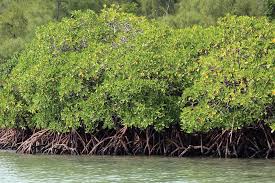
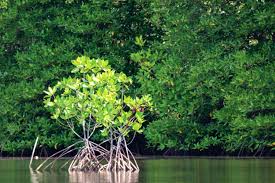
Despite these negative impacts, Tahu said the research also uncovered surprising benefits of climate change for mangroves. Rising sea levels have enabled mangrove seedlings to float and establish roots in new locations, increasing mangrove coverage in areas where they were previously absent.

For feedback, contact: [email protected]

East Honiara constituency aims to strengthen education

0

BY INDY MAEALASIA

East Honiara Constituency has reinforced its commitment to education through its latest support for Vura Community High School.

During a ceremony held this week to hand over material assistance to the school, Constituency Development Officer (CDO) Leslie Lamani highlighted the constituency’s dedication to advancing education.

“In our plans for East Honiara, education is a key area of investment, and we have extended similar support to several schools across the constituency,” Lamani said.

He expressed gratitude to the school principal and administration for proactively reaching out to the constituency office for assistance. “On behalf of the Member of Parliament (MP) Morris Toiraena we considered the school’s request and are pleased to provide support,” he added.

For feedback, contact: [email protected]

‘Not all goods under price control Act’

0

BY JOHN HOUANIHAU

Not all products sold in Honiara shops are subject to the Price Control Act.

Director of the Consumer Affairs and Price Control Division within the Ministry of Commerce, Industry, Labour & Immigration Geoffery Dan Hou’ua said in an interview with Island Sun.

Mr Hou’ua said this when he clarified the concerns raised by citizens regarding the rising prices of goods.

“When we conduct our assessments, we gather all relevant documentation, including records from the shipping companies, suppliers, customs, and our shipping agents. Therefore, we do not simply propose casual figures for businesses to set their prices,” he explained.

He said that the Price Control Act applies specifically to food items, household groceries, and fuel, including LPG, which are essential for consumers.

Hou’ua said the necessity of these items, stating, “For instance, food is a basic need that no one can forgo. Fuels are vital for transportation, and LPG is also important”.

He further said that the price control act also requires precise markup percentages for businesses.

“For instance, companies such as Wholesales, Super Power, Low Price, George Wu, and Sol Tuna etc are permitted a maximum markup of 10%, with a price increase limit of 6% and 13% for retail shop,” Hou’ua said.

He said that the Division changes prices twice a year, with one change typically published in the gazette around February or March and another around July or August.

“The most recent gazette was issued on Thursday, 20 March 2025. The delay was due to the procedural requirements involving the Attorney General’s chambers, the Minister, and the Prime Minister’s Office before publication,” Hou’ua explained.

Hou’ua also mentioned that numerous factors contribute to price inflation.

“This may include increases in prices of products overseas, shipping or transportation costs, among others,” he added.

For feedback, contact: [email protected]

King’s Commonwealth Fellowship opens

0

BY INDY MAEALASIA

SOLOMON Islanders aspiring to pursue a PhD are invited to apply for the King’s Commonwealth Fellowship Programme (KCFP).

Inspired by His Majesty King Charles III, the fellowship offers a unique opportunity for individuals from Small Island Developing States to undertake a PhD in their home country while continuing to work.

According to a statement from the UK High Commission, “The KCFP PhD Fellowships offer a unique and exciting opportunity for fellows from Small Island Developing States to undertake a PhD in their home country alongside working.”

The programme will support PhD research in areas such as climate and the environment, education, engineering, and health. These focus areas aim to address the pressing economic, social, and environmental challenges faced by Small Island Developing States.

Applications for the fellowship are open until April 25.

For feedback, contact: [email protected]

Women, youths engaged in conservation efforts in Marovo

0

BY INDY MAEALASIA

A research carried out in Marovo Lagoon, Western province has revealed that women and youths are significantly more involved in mangrove conservation efforts compared to men.

The findings, led by Dr Mary Tahu, a researcher and lecturer at the Solomon Islands National University (SINU), has underscored the critical role that these groups play in mangrove restoration initiatives.

 “According to our research, more women including youths respond higher to existing mangrove restoration and replanting initiatives compared to men,” she said.

Tahu said that this commitment aligns with the roles women often hold within their families and communities, stressing their involvement in safeguarding vital marine resources.

“We see that more women and youths support the idea of protecting and managing mangroves, which also comes back to the role of women in the family, in the community, and especially in trying to protect and manage mangroves,” she said.

The findings also revealed that women have also called for greater protection and sustainable management of mangroves,

“This call can be effective when there are existing laws or policies on managing mangrove ecosystem and also reserving certain mangrove zones for conservation,” she said.

Acknowledging this, Tahu emphasized the need for gender-inclusive climate action that integrates indigenous knowledge and supports equitable participation across all levels—local, national, and regional.

For feedback, contact:[email protected]

SI lacks policy framework for mangrove conservation

0

BY INDY MAEALASIA

DESPITE the critical role mangroves play in supporting livelihoods, the Solomon Islands still lack a formal policy framework for their conservation and sustainable management.

This gap was highlighted by Dr Mary Tahu, a lecturer at the Solomon Islands National University (SINU), during a presentation of her research last week at the FALAH research seminar.

“Currently, with the conclusion of my research on mangroves, there are no policies at the community or national level to guide conservation efforts,” Dr Tahu explained.

Her research, titled “Gender, Climate Change, and Indigenous Ecological Knowledge in the Solomon Islands Mangroves,” revealed the urgent need to protect mangroves to tackle the threats of climate change.  

However, strides are being made to address this issue. Tahu revealed that SINU, in collaboration with the government and other stakeholders last year, have worked on a proposed policy framework. Titled the “Integrated Coastal Zone Management and Mangrove Policy Framework,” this policy’s goal is to protect mangroves and support the social well-being of local communities.

“We are working to push this policy forward for it to be accepted by the cabinet,” Tahu added

For feedback, contact: [email protected]

MEHRD responds to rental expense comment by Opposition MP

0

BY JOHN HOUANIHAU

The Ministry of Education and Human Resources Development is not the only government ministry that hires office space in Honiara; several ministries and agencies do so due to a persistent shortage of government-owned office infrastructure.

MEHRD has stated that the ministry has been actively pursuing opportunities to construct its office building but has faced challenges in securing suitable land.

MEHRD made the statements in response to Member of Parliament for Temotu Nende, Stephen Kumi, over the significant amount of money spent on rent for the Education Ministry Headquarters in Honiara for nearly two decades instead of investing in a permanent building.

Speaking during a recent Parliamentary Expenditure Committee hearing, MP Kumi questioned why the ministry continues to rent office space when if the rental being paid for $300,000 per month since 2008 the total would have been around $56 million.

In response, the MERHD clarified that only a few ministries currently occupy purpose-built Government offices and Ministry lands, and despite multiple attempts, approval was not granted by the relevant authorities.

The MERHD said that efforts to acquire land were unsuccessful despite the Ministry identifying the land at the former Parliament Rest House site as a potential location, and efforts to acquire land occupied by the Institute of Public Administration and Management (IPAM) office building near the Ministry of Finance and Treasury.

The statement said that whilst suggestions to invest in permanent office infrastructure may appear straightforward, the reality is far more complex; however, MEHRD remains committed to achieving this long term through proper and transparent means.

The MERH adds that these difficulties are not unique to MEHRD, as many ministries encounter similar obstacles when attempting to acquire through clean and transparent processes in Honiara, as all government-owned land in the Capital Business District (CDB) in Honiara is limited.

The MERHD said that the decision to rent office space at the Tongs Building, Point Cruz, was made to ensure a central, safe, accessible, and functional working environment for MEHRD staff, students, teachers, and the public who rely on MEHRD services.

The statement further said that MEHRD’s rental payments to Tongs Ltd are a legitimate business transaction that secures a suitable office space while also benefiting the national economy.

According to MERHD, as a tax-paying entity, Tongs Ltd contributes to government revenue, which funds essential public services, including salaries for Members of Parliament, public servants, and teachers. Additionally, Tongs Ltd employs hundreds of Solomon Islanders.

It adds that the rental payments help sustain these jobs by enabling the company to pay wages, provide benefits, and support local economic activities.

The MERHD statement said that it is, therefore, misleading and unnecessary for the MP for Temotu Nende to question MEHRD’s rental arrangement with Tongs Ltd.

The issues statement adds that the media release is necessary to respond to unfounded accusations made against the MEHRD Executive Management by commentators through social media.

MERHD said that the Ministry remains committed to ensuring that its operational expenses align with financial regulations while contributing to the broader economic stability of the country.

It said that MEHRD remains open to constructive dialogue and collaboration with relevant stakeholders to address the need for a permanent office rather than making unsubstantiated criticisms and allegations that do not contribute to cost-effective solutions to support MEHRD’s critical work in shaping the nation’s education sector.

For feedback, contact:[email protected]

$5M MYSTERY

0

-KFPL queries fund government promised under ESP in 2020

-KFPL mentioned by the-PM Sogavare in his 2020 speech to launch ESP

-KFPL missing in recipients listed in Auditor General’s ESP Report 2024

BY JOHN HOUANIHAU

The Kolombangara Forest Products Ltd (KFPL) has said it is still waiting for the $5 million government had promised under the economic stimulus package (ESP) in 2020.

This was revealed to the Opposition group when it visited KFPL last week under the office’s civic awareness programme to the Western province.

Former Prime Minister Manasseh Sogavare had named KFPL as being earmarked to receive support under the ESP in his speech to launch the fund on May 4, 2020. Sogavare did not state any particular amount to be allocated to KFPL.

However, in the Auditor General’s ESP Report 2024, KFPL was missing.

KFPL pleaded with the Opposition Group to probe government over the missing $5 million (ESP) when the group visited the company’s site on Thursday last week, a statement from the Opposition last week said.

“KFPL was announced as a recipient, but we never received that promise,” KFPL told Opposition.

“We would like to raise this so that you (Opposition) can ask on our behalf what happened to the promise or whether someone has already received it on our behalf.”

KFPL also informed Opposition that despite operations being very tough lately, KFPL has continued to provide revenue to the government and meet community obligations.

In his speech to launch the ESP on May 4, 2020, then-PM Sogavare said that KFPL would be supported under a segment of the ESP called the Immediate Recovery Measures 2 (IRM 2).

$75 million was allocated for the IRM 2. And, KFPL was listed as one of companies to be supported, although no figure was given in Sogavare’s speech to say how much KFPL would receive.

“This component [IRM 2] of the package proposes equity injection into government owned or partly owned companies to enable them keep afloat and keep supporting the economy,” Sogavare said in his speech.

“Other privately owned large companies will also be assisted by way of export credit or other liquidity support through the banking system to maintain production and employment.

“These enterprises are important players and taxpayers in the economy.  This measure is a combination of direct grant and concessional finance and a total of SBD75 million is allocated towards this initiative. The breakdown of the proposed measure are: Solomon Airlines – $20 million (Grant and Concessional loan); Soltuna – $5 million; Support will also be provided to KFPL; Solomon Water – $5 million (Grant); DBSI – $20 million (Capital); CEMA – $2 million (Grant).”

In the ESP Report published by the Auditor General’s office on October 3, 2024, the same companies were listed as receiving funding, but KFPL was missing.

Under the Report’s ‘Part 9 – ESP distributions, 9.1 Payments to SOEs and DBSI’: Solomon Water – $5 million (Grant), CEMA -$2 million (Grant), Soltuna – $5 million, Solomon Airlines – $20 million (Grant and Concessional loan), and DBSI – $20 million (Capital).

Another area KFPL could have been paid under but missed was the grant for productive and resources sector.

This allocation saw a total of $135 million paid out, either through the Treasury corporate services imprest account, to constituency offices or directly to businesses.

Meanwhile, Opposition said during its visit to KFPL, the company appealed for government to be fair.

“The company’s tax exemptions have been removed, and we are also concerned with the unreasonable increase in license fees. The Government should be fair to everyone. KFPL has always supported schools, police, teachers and Churches when the Government cannot do so,” KFPL told the opposition group.

KFPL also informed the Opposition of the incidents of Malaysian loggers trying to enter KFPL land and attempting to carry out illegal activities, the statement said.

“The government must respect KFPL’s FTE,” KFPL told the Opposition.

The statement said Leader of Opposition, Matthew Wale acknowledged KFPL’s concerns and said he would bring these issues to the responsible stakeholders in Government.

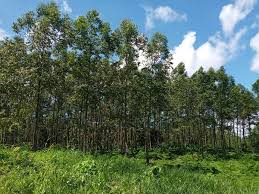
KFPL is the country’s largest sustainable managed Forestry Company. It had been in operation since 1989 and has approximately 200 full-time staff and 1,800 contractors, one of the biggest private sector employers in the country, the opposition statement said.

For feedback, contact: [email protected]

‘Climate change burdens women and youths in Marovo’

0

BY INDY MAEALASIA

IN Marovo Lagoon, Western province climate change is placing a heavier burden on women and youths compared to men.

According to Dr Mary Tahu of the Solomon Islands National University (SINU), rising sea levels and prolonged tidal patterns- caused by climate change are negatively impacting resource gathering and harvesting

In her research titled ‘Gender, Climate Change, and Indigenous Ecological Knowledge in the Solomon Islands Mangroves’, that was carried out in communities surrounding Seghe, Marovo highlighted how women and youths travel greater distances to gather essential food resources for survival.

Tahu highlighted that historically sea level rise and low tides followed predictable patterns, which enable women and youth to harvest sea resources at the right time

However, recent observations indicated prolonged and irregular tidal cycles, disrupting the normal harvesting process.

“Now, when there’s high tide, it goes for three months. When there’s low tide, it goes for certain months. So, it’s not normal,” Tahu explained.

“… therefore it is making it difficult for them(women) to harvest most of these shells and food.”  

While these challenges persist, the effects of climate change have also led to unexpected ecological benefits.

“Over the past years, women have reported a positive impact of climate change…. They noted that mangroves are now growing in areas where they were presently absent,” Tahu said.

She stressed that rising sea levels have facilitated the dispersal of mangrove seedlings, enabling them to establish in location that were not know previously to host mangroves.

Tahu stressed that these findings demonstrate the resilience of mangrove ecosystems, which continue to adapt even as climate change poses new obstacles for communities.

For feedback, contact:[email protected]