Home Blog Page 392

Pongi’s gov’t strives for good governance

0

BY SAMIE WAIKORI

Premier Derek Pongi-led Alliance for Reform and Progress Government (ARPG) of Rennell Bellona province is striving to restore good governance in the province.

Since they took office, they have been trying to reform the province on many fronts especially the governance of Rennell Bellona province, Mr Pongi has said.

A recent success in their effort to restructure the province is the notable restoring the province’s PCDF status.

Pongi however expressed that this comes with challenges and nothing is easy about leading a province.

He said some people would say, leading a small province like Rennell Bellona would be easy.  

“This is not true, and let’s not take that view. To look after the governance of a province is not easy.

“Infrastructure deficiency faced, the PCDF status of the province over the past years and many others have contributed to the poor governance faced by the province.

“We are faced by these challenges, but we are working head-on to address them not only to help our people, but to show resilience to transform Rennell Bellona province,” Pongi said.

He said his government wants tor restore the good governance of the province, because the future of Rennell Bellona lies on good governance.

According to Premier Pongi, the progress of the province cannot happen without good leadership, and there’s no substitute to it.

However, he stressed that good leadership and governance of the province must be maintained.

“It should not be taken by change. It is not for another group to put it down and another to restore it.

“We must build the capacity and maintain it for the good of the province and our people of Rennell Bellona province,” Pongi said.

For feedback, contact: [email protected]

Central Islands Premier takes firm stand against land grabs in economic zone bill

0

BY NED GAGAHE

Central Islands Province Premier Michael Salini has strongly opposed provisions in the Special Economic Zone (SEZ) Bill that would allow compulsory land acquisition by the government, stating that his province “will not support” any such measures during a parliamentary hearing on Tuesday. 

Speaking before the Bills and Legislation Committee, Mr Salini drew a clear line on land rights.

 “We don’t support compulsory acquisition by the Minister. Land acquisitions for the special economic zones must properly involve provincial governments and landowners who must be fully consulted and happy with the process.” He said.

The Premier specifically objected to subsection 5 of division 2 of part 2 of the bill, which grants the minister authority to acquire land for SEZ development. 

Salini emphasized that all land acquisitions should follow traditional processes, initiated either by landowners themselves or with their complete support.

“We will bear the consequences of any bad decisions,” he warned, stressing that provincial governments demand greater involvement in development decisions affecting their jurisdictions. 

While cautiously welcoming the bill’s potential economic benefits – “Perhaps this is what our people have been waiting for” – the Premier issued several non-negotiable conditions.

He called for depoliticized management of SEZs, insisting development authorities must operate free from political interference and expressed concerns about corruption risks in major projects. 

The Premier’s stance highlights growing tensions between national development plans and provincial autonomy in Solomon Islands, where 87% of land remains under customary ownership.

His testimony echoes concerns raised by other provincial leaders about protecting local interests while pursuing economic growth. 

For feedback, contact: [email protected]

PM responds to statements from Western and Choiseul provinces

0

By Loretta B Manele

Prime Minister Jeremiah Manele has responded to statements from premiers of Western and Choiseul provinces.

He spoke about this at a recent press conference this week.

Manele said questions have been posed to the government in relation to recent comments attributed to the respective premiers of Western and Choiseul provinces.

He added that he also understands that the premier of Central province has also made a similar comment over last weekend.

Manele pointed out that Solomon Islands is blessed with a vibrant democracy.

In this regard, he said the comments can be attributed to concerns raised by the provinces in the non-passage of the Constituency Assembly Bill in Dec 2024.

Manele expressed that while he sees the opposition as primarily responsible for the defeat of the bill, his government is committed to presenting the amendment again this year.

“This time I hope the MPs whose provinces wish for this work to continue will support the bill.”

Manele said he has received an explanation from the Premiers office in Western province as well as an apology from the Premier of Choiseul province for statements he made on social media.

“I have accepted the explanation and the apology.”

Manele noted that the Government for National Unity and Transformation (GNUT) has been supportive to all provinces including Choiseul and Western and Central province and will continue to push an agenda that unifies and transforms our country.

For feedback, contact: [email protected]

Temotu Premier backs SEZ Bill while advocating for outer islands’ protection

0

BY NED GAGAHE

Temotu Province Premier has voiced strong support for the Special Economic Zone (SEZ) Bill during his presentation to the Bills and Legislation Committee (BLC), framing it as a critical tool to rebalance Solomon Islands’ consumption-driven economy.

Highlighting alarming trade imbalances, Stanley Tehiahua stated that the productive export sector’s decline to below 25% (2018–2023) while wholesale/retail trade ballooned by 248,000%—a trend he called unsustainable. 

The Premier emphasized that the bill must prioritize inclusivity for rural and outer islands like Temotu, proposing amendments to ensure provincial governments and landowners retain decision-making power over SEZ locations, direct a portion of SEZ investments to local infrastructure and establish employment quotas for provincial residents 

Premier Tehiahua’s stance reflects Temotu’s unique challenges as the far-east province, where underdevelopment persists despite its strategic location and rich cultural heritage.

However, the Premier cautioned against top-down implementation, urging safeguards against political interference in SEZ governance.

“On behalf of the government of Temotu Province and the people of Temotu, I sincerely thank you for this opportunity to appear before your committee to present and share our views on the Special Economic Zone Bill 2024.

“Purpose of the presentation, Mr. Chairman, I appear before you today with the purpose of voicing our support for the Special Economic Zone Bill 2024 and to humbly highlight areas that require strengthening to ensure the bill is inclusive, responsive to our national development realities and beneficial to all provinces, especially the rural and outer islands.” Premier Tehiahua said.

For feedback, contact: [email protected]
Central province demands independent oversight and revenue protection in SEZ Bill

0

BY NED GAGAHE

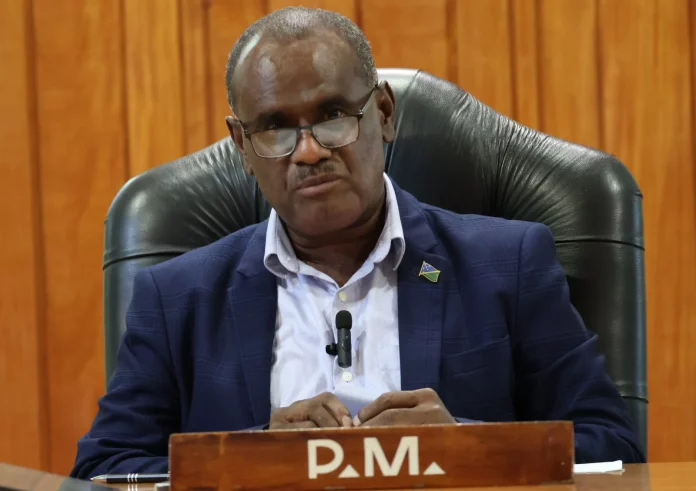
Central Province Premier Michael Salini has called for significant amendments to the Special Economic Zone (SEZ) Bill, demanding depoliticized governance and financial safeguards for provincial governments. 

Speaking before the Bills and Legislation Committee, Mr Salini proposed that the Cabinet Secretary – rather than politically-appointed officials – should chair the SEZ review panel.

“These are long-term investments needing stable oversight, not short-term political interests,” he said.

The Premier also expressed concerns about potential interference from the Policy Implementation Monitoring Unit. 

Salini also strongly opposed diverting provincial fees and rates to SEZ incentives.

“We rely on these revenues to fund essential services,” Salini stated, warning that stripping these income streams would cripple already struggling provincial budgets.

“If these revenues are removed, our financial situation will become dire,” he said. 

Salini’s demands highlight growing provincial concerns about maintaining autonomy in national development projects, protecting limited revenue sources and ensuring SEZs benefit rather than burden local communities.

For feedback, contact: [email protected]

Choiseul premier raises caution on SEZ bill

0

BY INDY MAEALASIA

THE Premier of Choiseul Province, Harrison Pitakaka, has praised the potential economic benefits of the Special Economic Zone (SEZ) Bill 2024 but raised concerns over the limited role and influence provincial government would have if enacted.

Speaking before the Bills and Legislation Committee (BLC) yesterday, Premier Pitakaka cited clause 22 which stated that developers within SEZs are required to submit copies of their development plans and approvals to both the SEZ authority and the provincial executive before proceeding.

Despite this procedural requirement, the Premier emphasized that overall management and administration will be under the authority.

Premier Pitakaka cautioned that this would run “risk” of making provincial governments in host provinces to become bystanders instead.

He highlighted provisions in the bill that allow provinces to engage in joint ventures with reliable investors to operate processing or manufacturing businesses in the SEZs.

While these provisions offer some opportunity for involvement, the premier underscored the need for clearer definitions of the roles and functions of host provinces and the SEZ authority.

The SEZ Bill 2024 aims to establish and regulate special economic zones in the Solomon Islands, fostering business growth, attracting investment and generating employment to drive national development.

For feedback, contact: [email protected]
Premiers urged to reflect on SEZ

0

BY JOHN HOUANIHAU

Opposition leader Mathew Wale has urged provincial premiers to think seriously about the Special Economic Zone Bill 2024.

Appearing before the Bills and Legislation Committee (BLC) were Renbel, Malaita, Choiseul, Isabel, Makira, Western, Temotu and Central premiers and provincial government officials.

The purpose of the Bill is to foster economic growth and job creation through the establishment of special economic zones across the country.

Speaking before the premiers, Mr Wale provided examples how the bill would cost the country and its people if is not properly scrutinise.

“In terms of ports, for example, if one SEZ is established.  There will be a necessity for a port facility, specifically an international port for export purposes. However, the current legislation does not address port regulation, nor does it identify the relevant authority, leaving it in a regulatory void.

“At present, the situation in Honiara is poorly managed. Although Solomon Ports operates an international port, political influences have led to a wharf being managed by a Chinese entity. This raises concerns about the port being a privately owned facility, which is not inherently negative, but it poses challenges for regulation and oversight,” Wale told the premiers.

He stressed that there are also significant social concerns, particularly regarding the influx of methamphetamine.

“The drug often enters through logging wharfs and we lack sufficient customs officers to ensure compliance across all port facilities utilized by companies. These issues have not been adequately addressed within this bill. When we discussed this with the Permanent Secretary, he acknowledged the existence of a gap, which is indeed a serious matter,’’ he said.

He said that this gap extends beyond regulatory and corporate concerns; it also encompasses social implications that could impact the surrounding community, especially if drugs are introduced.

“Fiji is currently grappling with similar challenges, as both Fiji and Tonga are experiencing crises related to methamphetamine and cocaine use, driven by transnational trafficking. Criminal organizations are utilizing transshipment routes from Colombia and Asia through Australia and New Zealand, exploiting the Pacific region due to insufficient law enforcement and customs coverage,’’ said Wale.

He told premiers that these issues are critical and it is their responsibility to address them should they arise in their province.

He also highlighted a report from the World Bank and IMF that highlights concerns regarding money laundering.

“An investor may begin with 40 million SBD, but this can facilitate criminal activities by allowing illicit funds to be laundered once invested. Money that enters through accounts in the Solomon Islands can be legitimized, enabling substantial investments without any genuine intention of creating value locally, effectively turning the region into a transit point for legitimizing illicit funds,’’ he said. He said that such incidents have occurred, presenting a challenge for the Solomon Islands.

For feedback, contact: [email protected]
MAL and DAFF conclude strategic workshop on animal biosecurity

0

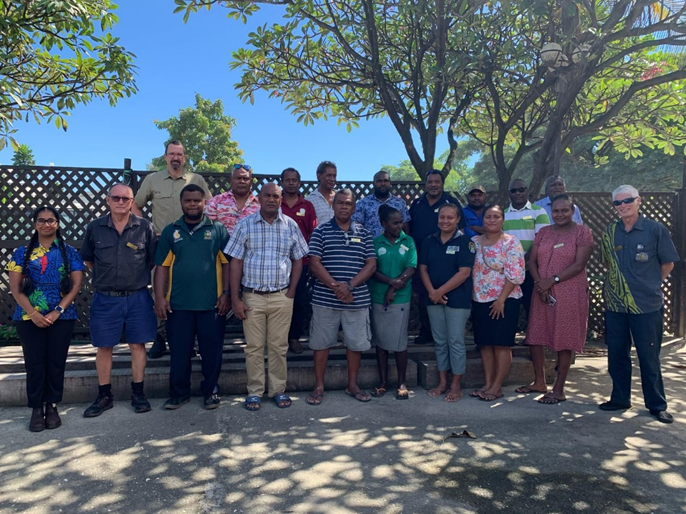
The Ministry of Agriculture and Livestock (MAL), in collaboration with the Australian Department of Agriculture, Fisheries and Forestry (DAFF), hosted a three-day animal biosecurity prioritisation workshop from March 31 – April 2 at the King Solomon Hotel.

The workshop brought together 22 key participants from across the livestock and biosecurity sector to assess, prioritise and enhance Solomon Islands’ national animal biosecurity system, a statement from MAL said.

The workshop aimed to explore country-level opportunities and challenges for refining biosecurity and animal health systems, while developing actionable recommendations to improve national preparedness and response to biosecurity threats.

With support from DAFF, a facilitated self-assessment of the Solomon Islands’ animal biosecurity system was conducted, enabling in-country stakeholders to identify key gaps, optimise resource allocation, and develop targeted strategies, the statement said.

The workshop attracted participants from various sectors including government officials, primary producers, industry representatives, and NGOs.

Discussions focused on the broader national biosecurity framework, livestock value chains, and on-farm biosecurity practices, the statement said.

Participants evaluate the current system strengths and areas needing improvement. Emphasis was placed on reducing the risk of transboundary animal diseases, protecting rural livelihoods, and enhancing food and nutrition security.

Deputy Secretary Special Duties, Simon Baete officially opened the workshop expressing sincere gratitude to the Australian DAFF team for their continued partnership and support, the statement said.

He acknowledged their vital role in strengthening knowledge exchange and collaboration in animal biosecurity.

“This workshop is not just about learning, it’s about fostering collaboration, sharing experiences, and developing practical solutions tailored to the needs of our local farming communities,” Mr Baete said.

Baete further encouraged participants to remain focused on the shared goal of strengthening the national biosecurity framework to protect agricultural resources, ensure food security, and sustain livelihoods, the statement said.

Robert Palmer from the Livestock Department noted that the workshop served as a valuable platform for fostering deeper engagement and collaborative discussions among Livestock and Biosecurity stakeholders.

“There were productive exchanges on key areas such as border controls, internal monitoring, and farm-level biosecurity.

“I hope the recommendations from this workshop will be taken forward promptly to enhance biosecurity strategies in the Solomon Islands,” Mr Palmer said.

WORKERS’ PAY UP

0

Landmark memorandum of agreement between Malaita Assembly and Workers Union sees 3.5 percent increase in salary 2024/25 and 2025/26

BY NED GAGAHE

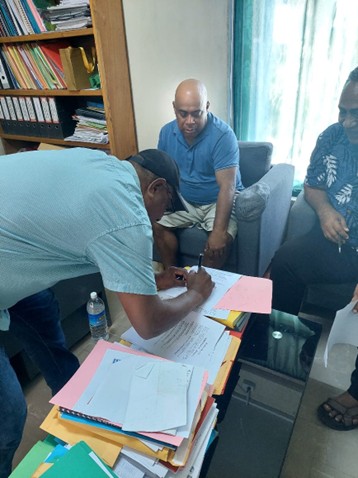
A landmark Memorandum of Agreement (MOA) was signed on April 3 between Malaita Provincial Assembly and the Workers Union of Solomon Islands (WUSI), securing long-awaited salary adjustments and arrears for provincial employees. 

According to the MOA, employees will receive a 3.5 percent salary increase for 2024/2025 and 2025/2026, payable immediately. 

Backdated salary adjustments (also 3.5 percent annually) from 2016/2017 to 2023/2024 will be paid in phases based on the province’s financial capacity. 

On revised salary structure, updated salary rates will take effect in the next pay cycle and the Health Department will fast-track arrears payments for medical staff. 

Under the MOA, the province has 14 days to review allowances and incentives before finalizing the Principal Collective Agreement. 

The deal ensures stability for Malaita’s workforce while maintaining industrial harmony. WUSI and the Provincial Assembly will reconvene soon to formalize the broader agreement. 

In a statement yesterday, WUSI said it is pleased with the successful signing of the MOA with the Malaita Provincial Government marking a historic milestone for direct employees under the provincial administration, including medical and health workers.

“This agreement comes after eight years of persistent negotiations and unwavering patience from Malaita’s dedicated public servants served as direct employees under Malaita Province.

“WUSI extends its deepest gratitude to Premier of Malaita Province and the Provincial Executive for their leadership and commitment.

“The Provincial Secretary and Senior Management Staff for their cooperation. The Malaita Provincial Medical and the Health Director, Nursing Director, and Kilu’ufi Hospital Secretary for their support,” the statement said.

WUSI sincerely thanked the direct employees under the Malaita Provincial Administration and the Medical and the Health Direct Employees for their resilience and patience throughout this prolonged process.

“Your steadfast dedication has been instrumental in reaching this achievement. While this signing marks a significant step forward, the final part of the agreement will be concluded after the Provincial Secretary reviews the remaining items for inclusion.

“WUSI remains committed to ensuring all outstanding matters are resolved in the best interest of the workers.

“This MOA represents a renewed commitment to fair labor practices, improved working conditions and stronger collaboration between WUSI and the Malaita Provincial Government.

“WUSI looks forward to continued constructive engagement to uphold the rights and welfare of all workers in the province,” WUSI said.

For feedback, contact:[email protected]

PM receives courtesy call from Sinomach officials

0

Prime Minister Jeremiah Manele met officials from the China National Machinery Industry Corporation (SINOMACH), marking a significant step toward strengthening mutual cooperation in rural development and sustainable energy initiatives.

Facilitated by the Ministry of Rural Development (MRD), the courtesy visit underscored shared commitments to addressing critical needs in rural communities across the Solomon Islands, a statement by the PM’s office and MRD yesterday said.

The visiting SINOMACH team, led by Deputy General Manager Luo Xi Vincent, expressed gratitude for the opportunity to engage with PM Manele as he highlighted the Corporation’s global expertise in infrastructure, energy, and rural development.

“We are privileged to collaborate with the Solomon Islands government to identify attainable solutions that will elevate socio-economic progress in rural communities,” Luo Xi said.

Mr Luo also conveyed his team’s deep appreciation to PM Manele for the opportunity to meet, acknowledging the prevailing trade relations between Solomon Islands and China.

The team is currently in the country on a fact-finding mission with the aims to;

  • Showcase SINOMACH’s Global Expertise: Share insights from successful projects worldwide, particularly in rural electrification, sustainable energy, and agricultural development.
  • Assess Local Needs: Evaluate immediate priorities in rural communities, including access to clean energy, freshwater distillation, and saltwater desalination.
  • Promote Food Security: Explore investments in agriculture, including the redevelopment of rice paddy fields, to bolster economic growth and self-sufficiency.
  • Explore Collaborative Opportunities: Identify synergies in infrastructure, light industries, and technology-driven solutions tailored to the Solomon Islands’ unique challenges.
  • Establish Long-Term Support: Lay the groundwork for a permanent agency to facilitate ongoing development partnerships.

While in the country, the team will meet with different Solomon Islands officials including key Ministers and government Ministries associated with provincial governments, Communities, and national development sectors in energy and electrification with various development interests in infrastructure, light industries and agriculture.

This is the second time the company’s technical officials visit the Pacific and to Solomon Islands in particular following their first visit last year.

China National Machinery Industry Corporation (SINOMACH) is a state-owned enterprise under the Central Government of the People’s Republic of China, specializing in machinery, infrastructure, and sustainable development projects worldwide.  The Corporation present in five continents, with more than 300 overseas service agencies in over 100 countries and regions.

The Prime Minister was also briefed on the services offered by SINOMACH which cover such critical national economic fields as machinery, energy, transportation, automobiles, shipbuilding, metallurgy, construction, electronics, environmental engineering, aeronautics and astronautics, and light industry.

In response, Prime Minister Manele acknowledged the SINOMACH team for meeting him while emphasizing the importance of international partnerships in transforming the nation’s development landscape.

“Our rural communities are the backbone of the Solomon Islands. By working with partners like SINOMACH, we can harness innovative technologies and investments to create lasting change,” Manele said.