Home Blog Page 387

Visitor arrival best seen since pre-covid period: Tourism Solomons

0
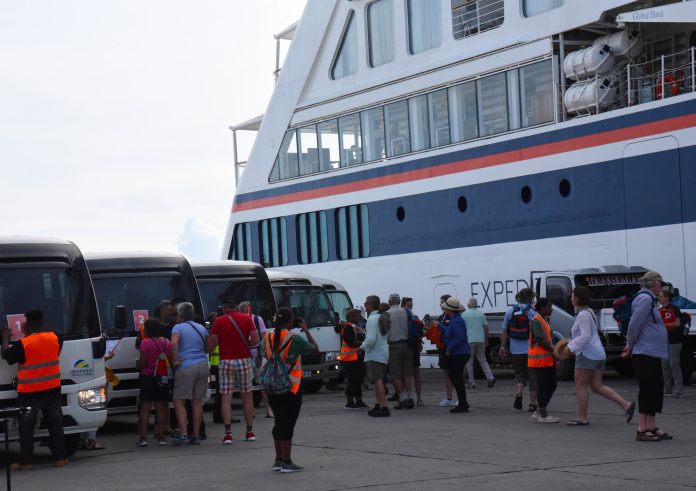
Tourists arriving in Pt Cruz, Honiara early April. Photo credit - Tourism Solomons

Tourism Solomons is celebrating its best first quarter international visitor intake since 2019.
Newly-released Solomon Islands National Statistics Office (SINSO) international visitor statistics for January-March 2025 show visitor arrivals increased from 4903 over the same period in 2024 to hit 5612, a jump of 14.5 percent, a statement by Tourism Solomon yesterday said.
Australian arrivals once again continued to dominate the statistics, the 1570 figure recorded for the quarter representing a 5.08 percent growth over the 1484 tally recorded the previous year.
The biggest single increase was seen in the North America market where numbers for the quarter climbed 16 percent from 375 to 435, the statement said.
Numbers from the destination’s other key source markets stayed relatively steady with slight gains and losses across the board.
Fiji figures increased by 2.2 percent from 499 to 510 while arrivals from New Zealand dipped 5.9 percent from 354 to 333, and Papua New Guinea recording a -5.12 percent drop from 469 to 444, the statement said.
Notably ‘collective’ numbers from other South Pacific countries for the period increased 96.5 percent – from 230 to 452.
Tourism Solomons CEO (Acting), Dagnal Dereveke attributed these figures to the country’s hosting of three major events – the hosting of the 2025 Miss South Pacific Pageant Tournament in February, the 2025 Honiara Summit – Sustainable Development Goals (SDG14): Life Below Water Forum, and the 2025 Oceania Football Confederation Champions League Tournament, both in March.
And similarly, ‘collective’ figures from Asia, driven predominantly by the Chinese passport holders, rose from 885 to reach 1282, a 44.9 percent increase over same period in 2024.
Acknowledging what he described as a “very hard worked for result”, Tourism Solomon CEO (Acting), Dagnal Dereveke said focus in 2025 has to stay fixed on rebuilding and growing the numbers to pre-COVID numbers in the destination’s key source markets and particularly the leisure market.
“Positive growth aside, it’s not the time to rest on our laurels but having said that, it has been a good start to the year and one that bodes well for our tourism industry in 2025,” he said.

Woman accused of domestic violence to take plea May 1

0

BY ROMINAH FAKA

The case of a woman accused of domestic violence against an elderly woman will return to court on May 1 for the defendant to take her plea.

Prosecution and defence told court Friday last week they will work on the agreed facts and sentencing submissions during the course of adjournment.

Defence also informed court the defendant will take her plea in the next mention date.  

Racheal Ausolo, 41, is charged with one count of domestic violence physical abuse.

According to the police, the incident took place on January 22, 2025, at April Valley.

On that day, Ausolo’s son and his grandmother were allegedly sweeping outside the house when the child began burning mango leaves they had gathered.

The grandmother then told her grandson to stop burning the leaves, which allegedly angered the defendant (the child’s mother) leading to an argument between her and the grandmother.

Police alleged the defendant struck the victim on the back of her left leg with a broom.

Philip Muliungu from Police Prosecution department prosecuting and Bobby Harunari represent the defendant.

Solomon Airlines pilots inspire students

0

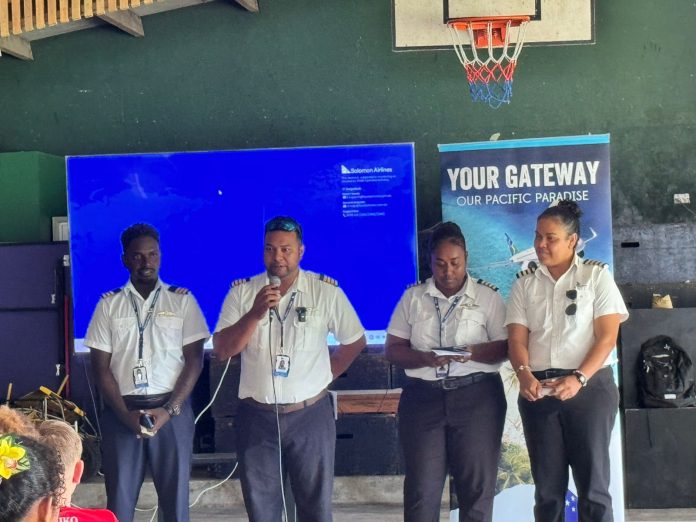
In celebration of World Pilots’ Day on April 26 Solomon Airlines extended its message of inspiration beyond the runway, reaching the hearts of the next generation.

As part of the global tribute to aviation professionals, the national carrier brought its pilots into local schools to share their journeys from classroom dreams to cockpit realities, emphasising the power of ambition, hard work, and determination, a statement by Solomon Airlines yesterday said.

The airline visited Woodford International School and Betikama Adventist College, reinforcing its commitment not only to aviation excellence but also to empowering youth across the Solomon Islands to aim high, the statement said.

World Pilots’ Day is a global occasion that honours the remarkable individuals who connect people, cultures, and countries through the skies.

As the national airline of the Solomon Islands, Solomon Airlines proudly recognises its pilots not just as aviation professionals but as mentors and role models for future generations.

“These pilots are more than just professionals; they are living proof that no dream is too high and no ambition is too bold,” said Captain Alex Takola, domestic fleet captain.

“Like many of the students they met, they too once sat in school desks, wondering about their future.

“Today, they fly aircraft across our skies, and they’re here to show that with hard work, passion, and belief in yourself, even the sky is not the limit.”

Among the visiting pilots were Captain Salome Agiomea, First Officer Gorepitu Alependava, Captain Lynda Tito Owen and Captain Bernard Tebaia.

Each of them shared personal experiences and encouraged students to pursue their dreams in aviation, regardless of the challenges they may face, the statement said.

Ms Agiomea reminded the students that their dreams are valid, regardless of where they come from.

“You don’t have to come from a pilot family or a big city to become a pilot. All you need is a dream, discipline, hard work, and the drive to make it happen,” she said.

Ms Tito, the first female Dash 8 captain for Solomon Airlines, took the opportunity to advocate for gender equality in aviation, stating, “Girls can fly just as boys. The sky is not the limit; it’s just the beginning.”

Her powerful message reflects Solomon Airlines’ ongoing commitment to diversity and encouraging women to pursue careers in aviation, the statement said.

Mr Alependava, a Twin Otter pilot, shared his personal challenges and journey into the aviation industry.

He spoke about the two years he spent waiting after graduating from flying school before joining Solomon Airlines.

“There were doubts, delays, and many people who didn’t believe in me, but my family did. You don’t need everyone to believe in you. Believe in yourself, stay focused, and trust God,” he shared.

This initiative highlights Solomon Airlines’ broader mission to support youth development and create opportunities for young Solomon Islanders to pursue meaningful careers, the statement said.

“As we celebrate World Pilots’ Day, we are reminded that every great journey begins with a dream,” said Monica Utukana, human resource manager of Solomon Airlines.

“Today’s school visits go beyond mere discussions; they are a catalyst—a powerful spark we aim to ignite within our students, fuelling their ambition, purpose, and self-belief.

“To our pilots, past, present, and future, thank you for your unwavering dedication, skill, and passion. You are not only the backbone of our airline but the wings that carry the spirit of our nation.

“Today, we honour and celebrate you.”

33 MPs no-show, parliament postpones

0

BY IRWIN ANGIKI

Yesterday parliament was forced to adjourn for today after 33 MPs did not turn up.

This mass absence coincided with the mass resignation of 10 government MPs and the motion of no-confidence notice filed yesterday against Prime Minister Jeremiah Manele.

Parliament minutes sighted by Island Sun yesterday said the session started at 9.54am where the MP attendance was noted.

Leader of Opposition Matthew Wale raised a question on quorum, which was confirmed after 15 minutes.

The Speaker then adjourned parliament for 9.30am today, according to Standing Order 12 (2) and pursuant to Section 67 of the Constitution.

According to the parliament minutes, MPs absent include: James Bonunga, Ricky Fuo’o, Wayne Osopo Ghemu, David Gina, Nestor Giro, Rick Nelson Houenipwela, Peter Kenilorea Jnr, Frederick Kologeto, John Dean Kuku, Harry Kuma, Stephen Kumi, Gordon Darcy Lilo, Manasseh Maelanga, Trevor Hedley Mahaga, John Maneniaru, Derick Rawcliff Manu’ari, William Bradford Marau, Rexon Annex Ramofafia, Lazarus Alfred Rina, Clezy C Rore, Francis M B Sade, Oliver Salopuka, Rollen Seleso, Stanley Festus Sofu, Manasseh Damukana Sogavare, Freda AB Tuki Soriacomua, Jimson Fiau Tanangada, Claudius Tei’ifi, George Temahua, Morris Toiraena, Alfred J M Tuasulia, John Tuhaika Jnr, and Daniel Suilea Waneoroa.

MPs present include: Peter Shanel Agovaka, Chachabule Rebi Amoi, Paul Popora Bosawai, Choylin Yim Douglas, Tozen Leokana, Ben Maenu, Jeremiah Manele, Cathy Launa Nori, Polycarp Paea, Makario Tagini, Bradley Billy Smoky Rodo Tovosia, Namson Tran, Isikeli Vave Jnr, Jaimie Lency Vokia, Matthew Cooper Wale, and Franklyn Derek Wasi. Parliament minutes add that the Speaker had welcomed in the public gallery ‘law students from the University of the South Pacific who were present to observe the Parliament sitting as part of their course’.

Church leaders in Honiara equipped to promote immunization

0

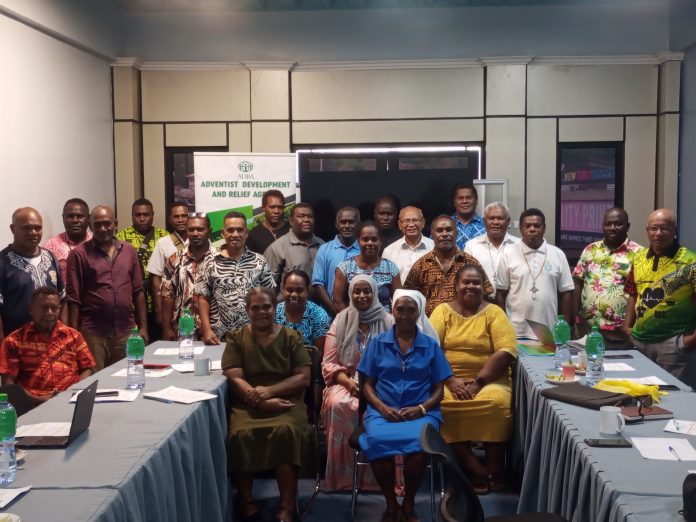
Church leaders from five main denominations in Honiara can now explain and share the importance and benefits of immunisation with their congregations following a one-day immunisation workshop held in Honiara.

The immunisation workshop was organised by the Adventist Development and Relief Agency (ADRA) Solomon Islands through its Demand Generation for Immunisation in Solomon Islands (DGISI) project which was funded by UNICEF.

The workshop was held on Thursday, April 24, at the CAM Conference Room, Mataniko Plaza in Central Honiara, a statement by ADRA yesterday said.

Around 24 representatives from the Roman Catholic Church, South Sea Evangelical Church (SSEC), United Church of Solomon Islands (UCSI), Anglican Church of Melanesia (ACOM), and the Seventh-day Adventist Church (SDA) attended the workshop.

Facilitators included the Deputy Director of the Health Promotion Division at the Ministry of Health and Medical Services (MHMS)Anne Toncan, the National Immunisation Coordinator at MHMS, Jennifer Anga, private medical doctor Divi Ogaoga, DGISI Project Manager Sharon Kele, and UNICEF Immunisation Specialist Shaza Ahmed.

The aim of the workshop was to engage church leaders in promoting improved immunisation within their congregations and communities, under the theme “Protect Every Child through Immunisation: Engaging with Faith Leaders”.

Speaking at the official opening of the workshop, ADRA Solomon Islands Country Director, Leyn Elizer Gantare shared a short thought which he said that that health is very important as written in the Bible that the Body is the Temple of the Holy Ghost which he quoted from 1 Corinthians 6:19,20.

“I encourage all of you here to bring back the result of the orientation during the workshop for the healthiness of all of your Church Members,” Mr Gantare concluded.

Reverend Superintendent Minister of the United Church in Honiara Amos Kube thanked ADRA for organising the workshop and UNICEF for their funding support.

“This workshop is an eye-opener for us UC members.

“We don’t have a structured health department within our local churches to talk about immunisation.

“Normally, only those of us in office roles are familiar with this knowledge,” he said.

“But now, after this workshop, we’ll work towards raising awareness, planning health activities, and establishing a health committee to collaborate with the Ministry of Health,” Kube added.

Father John Roroi from St Barnabas Cathedral Parish shared during the closing session that they intend to work closely with their church health office to start immunisation awareness programs.

“After listening to the presentations, we plan to advise our health office to meet with church leaders and begin information-sharing sessions during Sunday services, targeting mothers, parents, and youth,” Roroi said.

SSEC National Health Coordinator Harold Buka highlighted the importance of the workshop for his denomination:

“We’ll discuss this immunisation initiative with our leadership and plan to incorporate it into the SSEC Health Setting Programme.

“Building a strong partnership with the MHMS Immunisation Department is now one of our key goals,” Buka said.

SDA Pastor for East Honiara District and Burns Creek Church, Maebule Tome, also expressed gratitude:

“This workshop reminded us of the importance of immunisation. As SDA churches usually run health programs, we plan to integrate immunisation awareness into our upcoming district events,” Tome said.

Father Peter Kevin of the Roman Catholic Holy Cross Cathedral added that although implementing immunisation programs within the church may present challenges, they are committed to the initiative.

“We need to address the root causes, but we are planning consultations with church authorities to integrate immunisation into our existing health plans.

“We also seek moral and technical support from the Ministry of Health,” he said.

ADRA Solomon Islands, through its DGISI project, is currently implementing immunisation demand generation activities across three islands in Western Province—Kolobanagara, South Vella, and Roviana Lagoon.

The project began in November 2024 and is scheduled to conclude in September 2025, with funding support from UNICEF.

We’re solid with 25 MPs: Lilo

0
MP elect for Central Honiara Gordon Darcy Lilo.

BY IRWIN ANGIKI

Gordon Darcy Lilo says the Opposition now stands with 25 MPs in light of the motion of no confidence filed against Prime Minister Jeremiah Manele.

Mr Lilo, MP for Central Honiara, yesterday filed notice for the motion of no-confidence against Prime Minister Manele.

Ten government MPs also resigned yesterday, led by former finance minister Manasseh Sogavare.

These 10 MPs are reportedly members of OUR Party, government’s largest coalition partner. Mr Sogavare is OUR Party’s parliamentary wing leader.

Speaking to the paper last night, Lilo refuted claims that some members of opposition were meeting with government to switch over following yesterday’s mass resignation.

“No, we are solid. We are solid. We have the majority as it stands with our 25 MPs. We are solid together and no one’s moving anywhere,” Lilo said.

One of the government ministers who resigned yesterday also told Island Sun that ‘more government MPs will follow’.

“I cannot say exactly how many, but several colleague MPs from government will resign in the coming days and join us as we create a new government to lead our country out of the mess we are in,” the MP, who asked not to be named, said.

The MPs who resigned yesterday had reportedly cited their reasons being disagreements with the leadership of prime minister Manele and that of his deputy, Mines Minister Bradley Tovosia.

However, later yesterday Mr Tovosia resigned from both portfolios – Deputy Prime Minister and Minister of Mines and Energy.

In a media statement yesterday, the Prime Minister’s press secretariat said Tovosia had resigned before cabinet and still remains with the Government for National Unity and Transformation (GNUT).

Confirming the filed notice for the motion of no-confidence, Clerk to Parliament Jefferson Hally yesterday told Island Sun the notice should mature on Monday next week, fulfilling the seven days requirement by parliament standing orders.

“The motion can be moved from Tuesday 6th onwards,” Mr Hallu said.

Last year, Lilo moved Prime Minister Manele’s first motion of no-confidence, which he filed on December 5.

He was forced to withdraw it on the floor of parliament on December 13 after government MPs who had initially supported the motion reneged in the eleventh hour.

Lilo is a former prime minister. He was PM from 2011 – 2014.

Tovosia resigns as deputy prime minister and minister for mines

0

The Office of the Prime Minister and Cabinet yesterday announced that the Deputy Prime Minister and Minister for Mines, Energy and Rural Electrification, Bradley Tovosia voluntarily tendered his resignation from both positions, effective yesterday.

The decision follows a meeting of the Government for National Unity and Transformation (GNUT) coalition held yesterday late afternoon in the Cabinet Room, a statement by the prime minister’s press secretariat yesterday said.

Coalition partners unanimously resolved that the national interest must come first, and Tovosia’s resignation was made in accordance with this collective decision, the statement said.

Tovosia has expressed his sincere gratitude to his colleagues, supporters, and the people of Solomon Islands for their continued trust and support during his time in Cabinet, the statement said.

He remains the elected Member of Parliament for East Guadalcanal and has pledged his full support to the GNUT and its leadership.

The Government for National Unity and Transformation reassures the public of its unwavering commitment to unity, stability, and delivering on its development priorities for the benefit of all Solomon Islanders, the statement said.

The Government for National Unity and Transformation (GNUT) is a coalition comprising three political parties, OUR Party, Solomon Islands People’s First Party, Kadere Party

The GNUT was formed with the goal of uniting different political parties to work together towards the common good of the nation.

Each party brings its own unique strengths and perspectives to the coalition, allowing for a more diverse and inclusive approach to governance.

By coming together, the GNUT aims to address the various challenges facing the country and to implement policies that benefit all citizens, the statement said.

Under the leadership of Prime Minister Jeremiah Manele, GNUT stands firm in its commitment to promoting good governance, national unity, and sustainable development for the Solomon Islands.

We all must rally around a national, unified economic agenda

0

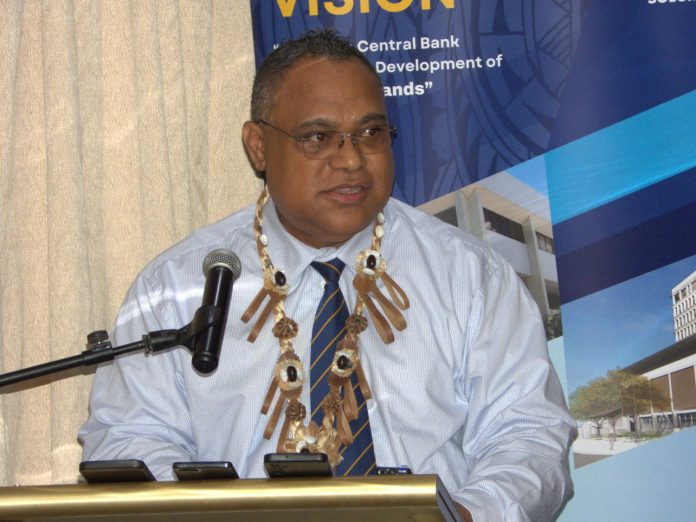
Excerpts of the speech by CBSI Governor Dr Luke Forau at the launch of the 2024 CBSI Annual Report yesterday, April 28 at the Honiara Hotel

My remarks will focus on an assessment of the country’s economic performance, and provide you with some food for thought as to how we can move forward in terms of developing our economy.

And please note, this assessment does not prescribe specific policies that should be undertaken, as some of you may have thought, rather it points out direction as to where we should focus our effort and resources to ensure optimal results are achieved in terms of improved economic wellbeing.

That said, I want to use this opportunity not simply to present statistics, but to peek beyond the numbers to the families behind every figure, the farmers behind every forecast, and the future behind every policy. Let these figures serve as a mirror, to help us reflect on our strengths and weaknesses, and as a compass to help us chart our path forward with firm commitment.

Setting the Scene: Harnessing the Spirit of the Pacific Games

Before delving further, let us pause and reflect briefly on one of our proudest moments as a nation in recent years – i.e., the 2023 Pacific Games. Remember that? For two golden weeks, our nation came alive. We cheered, we celebrated, we stood as one. Every athlete had a goal, every coach had a plan, and every volunteer had a role. And we, as a nation  from all the corners of the nine Provinces and from all walks of life  united to deliver one of the most (if not the most) successful Pacific Games ever.

What fueled this event to be successful?

You may have your own views on this, but for me, the 2023 Pacific Games was a success due to four key critical and inter-related factors:

(i) Very clear goal: – it was clear that the ultimate goal is to build a state-of-the-art stadium facility that will accommodate all athletes to compete.

(ii) Shared ownership: – having known what the goal is, and given that it is a national pride, everybody wants to own it, everyone feels the sense of belonging.

(iii) Dedication and determination: – knowing that we own the facility, we own the games, we dedicate all our efforts with determination to ensure the Pacific Games is successful.

(iv) A collective urgency to deliver excellence: – knowing that we are running out of time, there is a call for urgency to collectively ensure the facilities are completed on time.

Ladies and gentlemen, we did not just make it, but we also achieved and fulfilled our goal of hosting the Pacific Games, despite the challenges.  Today, we gather at a time of profound geopolitical and geo-economic fragmentation and uncertainty: Trade tensions are intensifying, seemingly rock-solid geopolitical ties are fracturing, and the post-war era of trade-driven globalization seems to be visibly losing steam. Meanwhile, even as the world scrambles to respond to all these challenges, climate-related shocks continue to intensify in both frequency and severity. So, yes: just as we came together, cooperated and strategized to deliver on our ambition to host the 2023 Pacific Games, so too are we called upon to unite in response to the challenges we face. Our theme today entails, “Building the future we want through determination with clear goals and a shared ownership that calls for urgent action to deliver excellence.”

Let that theme simmer in your mind, as I will return to it later. For now, let me briefly reflect on last year’s economic conditions.

2. Brief Economic Update

Global economy

In 2024, the global economy demonstrated resilience even in the midst of continued uncertainty. The International Monetary Fund estimates global growth to have grown by 3.3% last year. This slow-down was largely driven by anaemic growth in Emerging Market and Developing Economies, not least due to the conflicts in the Middle East and Ukraine, and the enduring malaise in China’s property market. Closer to home, Australia and New Zealand, too, experienced a moderation in growth as Central Banks continued to combat inflation in these economies. More generally, global inflation continued to ease throughout 2024, supported by falling energy prices and stable food prices, and a slight cooling in labour markets worldwide.

Domestic Economic growth

On the domestic front, economic growth slowed down to 2.8% in 2024, down from the Pacific Games-boosted 4% expansion in 2023. Growth in 2024 was driven mainly by fishing, forestry, mining, construction, and manufacturing, while copra and palm oil weakened further.

Labour conditions

For the labour market conditions, it remained stable, with proxy employment indicators such as SINPF member contributions and PAYE tax revenue showing increasing trends, with the former rising by 4% and 8% respectively.

Inflation Dynamics

In terms of inflation, the headline inflation rose to 4.6% at the end of 2024, compared to 3.5% at the end of 2023. This was driven primarily by domestic inflation, which surged by 6.1% in December 2024, reflecting a 20% increase in betel nut prices. In contrast, imported inflation eased to 1.2% from 4.6% in 2023, on the back of falling global fuel prices.

Core inflation fell to 1.9%, after peaking at 3.2% in June. Importantly, both headline and core inflation remain within the CBSI´s desired range.

External conditions

On the external sector, the overall balance of payments (BOP) surplus increased by 60% to $350 million. As a result, the country’s gross foreign reserves grew by 1% to $5.8 billion, sufficient to cover 11.3 months of imports. This is well above the CBSI’s precautionary import cover threshold of 6 months.

In case you are interested to know how much do we earn from remittances through seasonal workers, total remittances from the labour mobility scheme, seasonal workers, and RSE rose by 68% to $475.5 million in 2024, thank you to Australia and New Zealand for offering the opportunity. Remittances have become the third foreign exchange earner for the country after logging and cocoa exports.

Monetary Sector

Developments in the monetary sector also point to sustained growth, with broad money rising by 4 percent to $6.4 billion. Private sector credit grew by 5 percent to $2.9 billion during the year.

Fiscal

With respect to the government’s finances, the fiscal deficit narrowed to 2% of GDP (i.e., $282 million) last year, compared to 7% of GDP ($950 million) in 2023. This improvement was due to improved tax revenue and development spending. Government debt increased to 22% of GDP, reflecting additional external borrowings for infrastructure projects.

3. Economic Outlook

Looking ahead, the Central Bank projects that Solomon Islands economy will grow by 2.7 percent in 2025, on the assumption that the forestry sector will slowdown. Nevertheless, growth is expected to be driven by the agriculture, fishing, manufacturing, construction, mining, retail trade and tourism sectors.

Over the medium term, the economy is expected to return to the pre-pandemic levels and stabilize at 2.5 percent, assuming there are no new sources of growth.

Sustaining medium-to-long-term growth requires targeted policy adjustments including diversifying growth drivers, rebuilding fiscal buffers and strategically reallocating resources to where they are best utilized to improve socioeconomic well-being of our people.

Challenges, risks and opportunities

In spite of the positive growth outlook, risks remain tilted to the downside. These include a slowdown in the forestry sector, the negative impact of climate change and pests on agriculture cash crops, coupled with a limited fiscal space and a narrow economic base would limit the economy’s future growth potential and leave it susceptible to a range of shocks. Furthermore, the country continued to face challenges such as rising costs of doing business, insecure access to land and inefficient inter-island transportation system. The escalation of the US trade tariff tension, the ongoing geopolitical tensions, and a potential global economic slowdown could weigh on the growth prospects.

In case you are interested, the current Trump’s tariffs policy imposes a 10% tariff on Solomon Islands exports. However, the direct impact of this tariff on Solomon Islands is minimal, as the share of exports to the US market accounts only 0.04%, on average, between 2020 and 2023. However, the indirect impact could be higher as we import largely from China and Australia.

On the upside risk, the economy would stand to benefit from the ongoing donor support for infrastructure development, and the expansion of the Pacific Australia Labour Mobility (PALM) scheme. Digital technology also presents new opportunities to leapfrog traditional development barrier and promote e-commerce and digital financing.

4. Economic Recovery: Five Years After COVID-19

Before we return to our theme, let’s take a look at where we stand, five years after the pandemic, we’ve made progress. But we still have a long way to go. Between 2014 and 2019, our economy grew at an average of 2.7%. In 2020, it fell by 3.4%. A modest recovery followed in 2021 with 2.6% growth.

Now, growth hovers around 2.9%, on average better than our worst moments, but still far from our full potential. However, much of that growth came from a single event — the Pacific Games. Strip that away, and it becomes clear: we are not growing fast enough, and not broadly enough. We are actually growing at a pace with a one-step forward, and a two-step backward. And if you look carefully at our current state of play, we are actually reversing in development.

Let me now return to today’s theme: “Building the future we want through determination with a clear goal and a shared ownership that calls for collective urgent action to deliver excellence.”

To realize the future, we envision for our country, we need more than predictions, we need a clear plan and commitment.

Let’s reflect on two possible growth paths ahead of us: the Baseline Scenario and an Ambitious Scenario or, more precisely, the Baseline Scenario (1) and an Alternative Scenario (2).

Let me be clear: the Alternative Scenario the ambitious scenario  is not a wishful thinking. It is bold, yes but it is achievable. We have achieved even higher growth rates before. Now, it calls for a clear goal and ownership, dedication, coordination, and strong commitment to urgently deliver – just as what the Pacific Games demanded of us.

Let’s briefly examine each scenario. These inferences will impact on our well-being.

Scenario 1: The Baseline – More of the Same (or status quo)

Under this scenario, the economy remains on its current path, with growth hovering at around 2.5% annually through to 2030. Agriculture sees production level growing at the same current pace, with some gains in palm oil output but with continued underutilisation of resources in the cocoa and copra sectors. Manufacturing and trade expand slightly, but not fast enough to lift families out of poverty or meet the rising demand for employment opportunities for our growing youth population.

This path does not spell failure for our country, but it lies far below our potential, and it is not transformative in the manner our current economic and historical junctures require. This growth model has also historically been centred around a minute number of core commodities, and it has thus been far from inclusive, often locking people in the rural areas out of the positive spill-overs of development. We must also address, and indeed capitalise on, our high population growth in our economic thinking and planning – and I am afraid we will not be able to do so under this ‘business-as-usual’ scenario.

Scenario 2: Ambitious – A Bold, Coordinated, National Push

Now, let us focus on Scenario 2, the scenario we must all aim for. Under this scenario, we target the economy a sustained growth of at least 5% each year. This would triple Agricultural output, with

• Cocoa production increasing from 5,000 tons to 15,000 tons,

• Copra output increase from 10,000 tons to 30,000 tons;

• Coconut oil production expand from 5,000 tons to 15,000 tons;

• Palm oil output tripling to 72,000 tons each year.

Picture a shift towards value-added processing and the processing of raw exports to finished products. Let’s turn copra into coconut oil, cocoa into chocolate, and let’s lift manufacturing beyond the one-billion-dollar mark. When Solomon Islands becomes a renowned processing hub, where the raw products with which nature bountifully bestows us are transformed by our hands and our machines into beautifully crafted manufacturing goods, then trade opportunities will also expand, introducing our unique products to new markets across the Pacific and beyond.

However, this won’t happen by chance. It will take deliberate, sustained, and united action.

Here are a few possible policy directions that could, and should, be taken in the next couple of years to build the future economy we want:

(a) Investing in Agriculture for an inclusive and broad-based economy: From Goals to Results

Let’s take agriculture.

We often hear time and again, that agriculture is the backbone of our economy. Yet, the outcomes we observed do not always reflect this reality. Agriculture remains the most inclusive growth sector because our rural villagers participate and benefit from its positive spill overs.

However, to grow the agriculture sector to reach its full potential, we must move from goals/aspirations to deliverables that can be measured. This means translating policy objectives into concrete, measurable targets, by commodity and province, aligned with the local comparative advantages. For instance, in the next three to four years,

• we can aim to replant 10,000 hectares of aging coconut trees and expand palm oil cultivation by an additional 2,000 hectares beyond the current 6,700 hectares.

• We can strengthen cocoa production by planting 1,000 additional hectares in Makira, Guadalcanal, and Malaita.

• We can double or even triple copra production in Central, Guadalcanal, and Western Provinces by 2027.

• We must also broaden our agricultural base by scaling up new cash crops, including kava, cassava, taro, and others.

These targets must be measurable, time-bound, and monitored transparently.

(b) Investing in What Matters: Building Physical and Human Capital

Equally important is how we invest. Every dollar spent, be it private or public, must be spent where it yields the maximum impact. Investment should prioritize areas that unlock productivity growth, nurture innovation, enhance livelihoods, and build long-term resilience. This includes:

• Building rural-urban infrastructure to connect farmers to markets;

• Expanding access to affordable finance and introducing incentives to small businesses, and local farmers;

• Adequately resourcing the Ministry of Agriculture and associate agencies such as CEMA to partner effectively with farmers, the private sector, development partners and programs such as PHARMA+;

• Investing in technology and digital infrastructure to boost efficiency and productivity, as well as improve tax collection. This is where we can make a real difference in people’s everyday lives.

Moreover, our legislations must be strengthened to ensure a conducive business environment to flourish.

Having said that, I wish to highlight that one of our milestones last year was the implementation of the Payment System called the Solomon Automatic Transfer System (SOLATS), which went live in April 2024.

This milestone lays the foundation towards an inclusive payment infrastructure, as well as embracing digitalization in our economy. Going forward, I would like to see the interoperability of the payments systems with other digital financial services such as the M-Selen, Iumi-Cash, Ezipei, Accountplan, Aelan digital to ensure financial services are extended to the last mile, enabling the ordinary person (rural people) to make payments fast, safer, efficient and cost effective.

Imagine: Teachers and nurses getting paid or accessing their salaries on time through mobile services such as M-Selen, rather than travelling long distances to Honiara or provincial centres to withdraw cash. Farmers accessing information on farming techniques, prices and payments through their phones.

And a faster, and fairer tax systems that work for everyone. When we expand access to digital financial services, we don’t just make things easier we bring more people into the formal economy, thereby expanding and deepening financial inclusion for all. Just as important is that we invest in our youth. We must equip them with an education that nurtures them, transforming them into both thriving and respectful citizens and self-aware economic players.

We must also together build a healthcare system that strengthens them and protects them. But we cannot succeed if we do not also create ample and meaningful employment opportunities for them. This is not just about finding a productive way for our youths to spend their time – it is about building a more inclusive economy, one to which we all contribute, and whose rising tides can in turn lift all our boats. Let’s ensure our investment in both infrastructure and people is inclusive, climate resilient, and geared toward lasting transformation.

(c) Shared goal and collective resolve

To unlock growth, we must accelerate reforms that matter – streamline land access and administrative processes, modernize outdated laws that no longer serve today’s economy.

We need to triple our efforts, with shared leadership, shared responsibility, and shared success.

Empowering the Real Drivers of Growth: Producers and Entrepreneurs

Our growth aspirations must be inclusive. It’s not just about raising numbers — it’s about uplifting the people behind those numbers. The real drivers of our economy are our farmers, our young people, our women entrepreneurs, and our small business owners. We can achieve this by upgrading agricultural support services, ensuring our farmers have access to and adopt innovative farming methods to increase their production and trade.

We also need to expand access to affordable rural credit to help farmers and small businesses invest and expand. No one should be left out of this story of growth. Every person, in every province, must have the chance to grow, to succeed, and to contribute.

d) Monitoring, Feedback, and Accountability

Just as the Games Organizing Committee successfully used timelines and scorecards, we need to strengthen how we monitor and track our economic performance, to enhance monitoring, encourage feedback, and accountability.

We must build effective systems that track each target, whether it’s agricultural output, or infrastructure development, using timely, accurate data to inform decisions at all levels of government. Collective efforts are required from both data providers and data users to ensure the consistent flow of economic data to track our investments and monitor our progress as we chart our development aspirations forward. I must acknowledge the Ministry of National Planning and Development Coordination, for the role they play in assessing and monitoring the country’s progress towards achieving the National Development Strategy 2016 – 2035. If practical, these policy and quantifiable targets should be embedded in the National Development Strategy document.

We take the agriculture sector as an illustrative example but the same focused, results-based approach can be applied to tourism, fisheries, manufacturing, and services. Doing so will accelerate growth and open broader opportunities to shape the future we want.

Harnessing the Spirit of the Pacific Games to building the Economy we want

Ladies and gentlemen, fragmentation slows us down. If we are serious about delivering meaningful economic change, we must act with a unified purpose, across all levels of society. We all must rally around a national, unified economic agenda.

Just as we stepped up to the task by building a world class facility and successfully hosted the games (of course with the collaboration of our development partners). The Pacific Games reaffirmed to us  and the world  that we are a capable nation. Yes, you hear me right we are a capable nation, and we can do it.

Now, imagine for a moment what we could have and would achieve if we channeled that same spirit  all those resources and all that drive, teamwork, and urgency  into shaping our economic future.

Indeed, the Pacific Games taught us what’s possible when we unite behind a clear and ambitious goal. Let us apply that same spirit  that same determination, urgency, commitment, and collaboration  to build our economy.

If we could unite to host the Games, why not unite to build and transform our economy? If we could deliver excellence in two weeks, imagine what we can achieve in the next decade.

Ladies and gentlemen, let’s not settle for 2.5% growth when 5% and above is within our reach.

Let’s commit. Let’s act decisively. And together let’s build our country and the future we all desire.

DR LUKE FORAU

CBSI GOVERNOR

SINU welcomes Dr Billy Fito’o

0

BY IRWIN ANGIKI

The Solomon Islands National University (SINU) yesterday announced the inclusion of senior local academic Dr Billy Fito’o among its ranks.

Mr Fito’o joins SINU as its Associate Professor in Education Leadership.

“We are thrilled to welcome Dr Billy Fitoo as Associate Professor in Education Leadership at Solomon Islands National University,” a statement by SINU on its facebook page yesterday said.

“With his extensive experience as a senior leader in the Solomon Islands, including roles as Principal, Deputy Director at IPAM, and Director of the Postgraduate School at USP, Dr. Fitoo brings a wealth of knowledge to our Faculty of Education and Humanities.

“His academic journey spans a PhD from USP, a Master of Education from Victoria University of Wellington, and numerous publications, including A-ranked articles and children’s books.

“We’re excited to see the impact he’ll make in shaping future leaders! Join us in giving Dr Fitoo a warm welcome to our team,” the SINU statement said.

Fito’o is the former director for the University of the South Pacific campus in the Solomon Islands.

In 2024 he resigned and contested the national general elections in the Central Kwara’ae constituency but was unsuccessful.

Wale slams Government’s plan to send health workers to Cook Islands

0
Opposition leader, Matthew Wale

LEADER of Opposition Matthew Wale has slammed the government’s intention to
explore a labour mobility scheme that would see Solomon Islands nurses and
doctors sent to the Cook Islands, describing it as short sighted and reckless.


In a statement yesterday, Mr Wale said the Prime Minister’s recent announcement
reflects his disconnection from the harsh realities faced by Solomon Islanders within
the country’s ailing health system.


“Our health system is in crisis. What ordinary Solomon Islanders all throughout the
Country face daily is a system plagued by chronic underfunding, dilapidated
infrastructure, and a severe shortage of essential medicine, equipment, and medical
professionals,” Wale said.


The Opposition Leader described the proposal as lacking basic common sense.


“Government should be focused on recruiting, training, and retaining more health
professionals, not exporting the few we have left. Every clinic and hospital across the
country is in urgent need of staff. That should be the priority,” Wale said.


Wale said the Prime Minister’s announcement demonstrates a troubling lack of
policy direction and vision, the statement adds.


“There is no coherent policy here. It is deeply concerning that this is what
Government is offering at a time when our people are crying out for better services
and improved healthcare access. It is a sad indictment on this government’s
leadership,” Wale said.


While acknowledging the benefits of labour mobility programmes in certain sectors,
Wale said such schemes must not come at the cost of critical national services.


“Labour mobility programs are a useful short-term response to unemployment. But
it becomes nonsensical when it involves sending away already employed
professionals, especially when they are among the few essential health workers we
have. It is like exporting food while your own people are starving,” Wale said.


Wale stressed that Government’s focus should be on improving the working
conditions for doctors and nurses, while at the same time pursuing a robust
economic policy that is centred on job creation for Solomon Islanders in Solomon
Islands.

Wale urged the Prime Minister to abandon any policy that proposes sending nurses
and doctors overseas and instead focus on rebuilding the health system and its
workforce, the statement said.