-Prime Minister Manele shares huge list of development and progress for Solomon Islands brought by GNUT government in its first year in office
-Manele voices respect for political decision of 10 MPs who defected, welcomes motion
BY IRWIN ANGIKI
The Government for National Unity and Transformation (GNUT) is only one year in power but has achieved unprecedented levels of development and progress throughout the country.
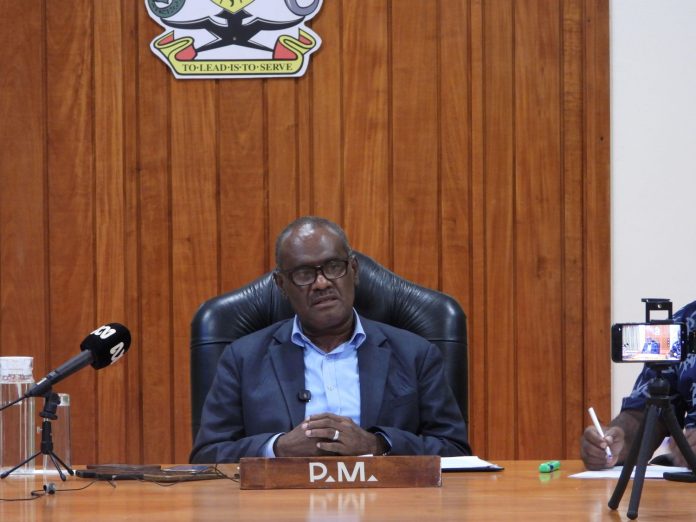
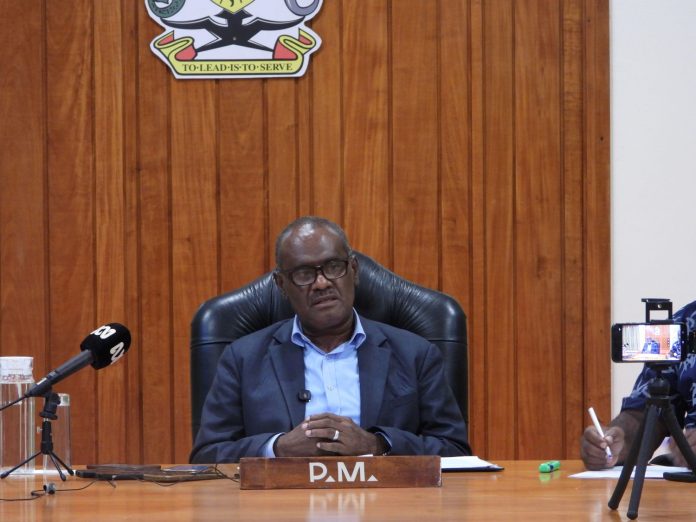
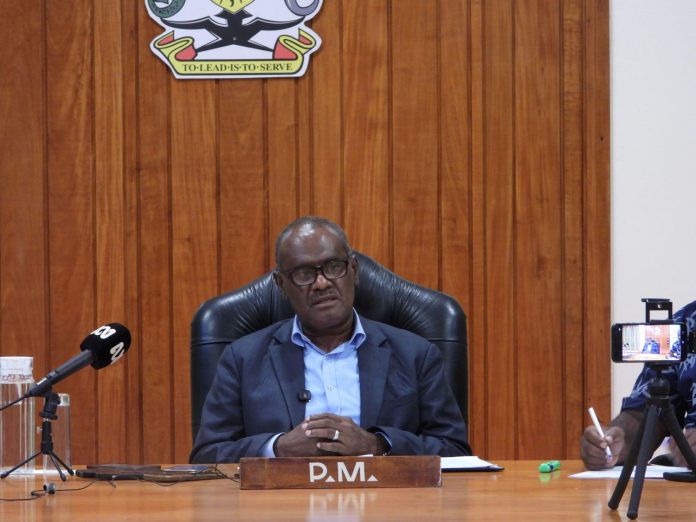
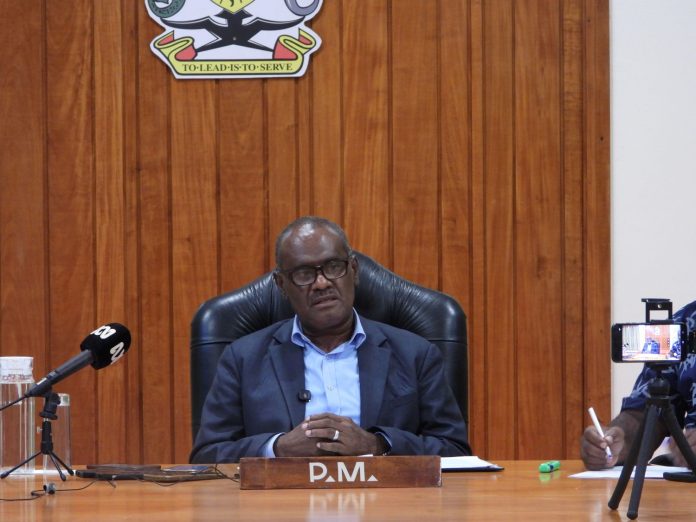
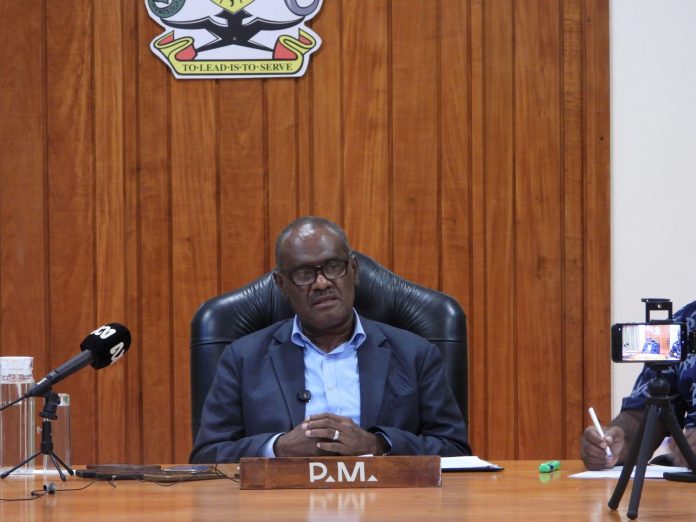
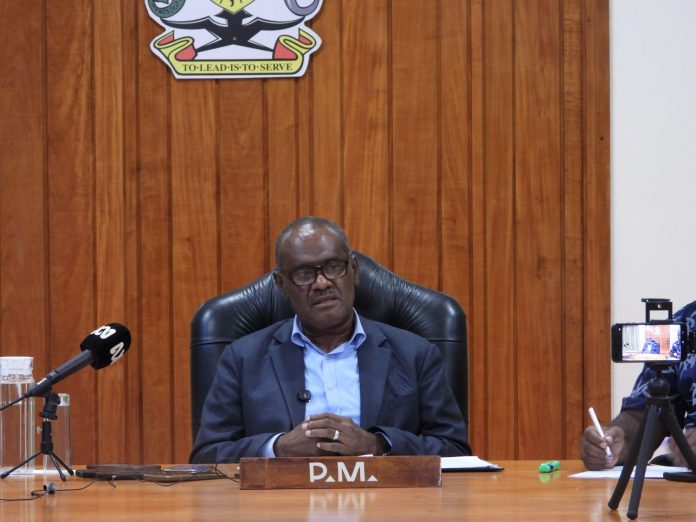
This message was voiced by Prime Minister Jeremiah Manele as he fronted media yesterday for the first time since his government lost 10 MPs on Monday and a notice served for a motion of no-confidence against him set to be tabled Tuesday next week.
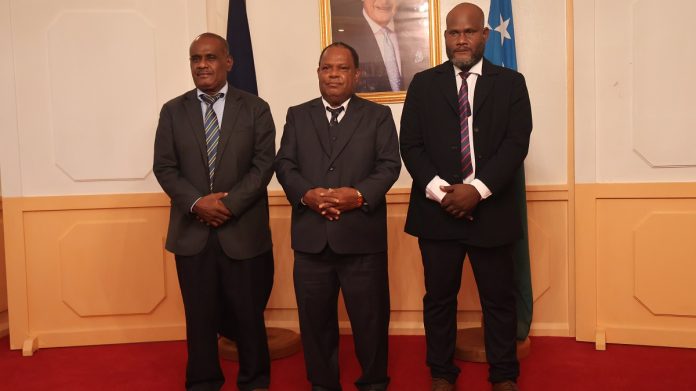
This week marked the first anniversary of GNUT government. But, before it could celebrate with the country its remarkable achievements, a group of 10 MPs led by Manasseh Sogavare resigned and defected to the Opposition side.
Not allowing this to mar its momentum, GNUT government continued the week with its normal duties providing services, implementing its policies and driving the economy forward.
Prime Minister Manele presented a brief of the achievements of GNUT in its first year. Then he acknowledged before media the political decisions by the 10 MPs who defected, saying he respects their decisions.
Unlike his accusers, PM Manele did not bother to engage in mudslinging and usage of negative adjectives, as he simply said he welcomed Tuesday’s motion of no-confidence.
He shared with media the achievements of the GNUT government in its first year in office.
Noticeably, the achievements of GNUT are huge, and show progress across all social and economic sectors.
“To claim that the government lacks leadership is to ignore the tangible progress we have made,” PM Manele said.
“We remain steadfast in our commitment to deliver on our promises and tackle the challenges facing our people.
“Our leadership is defined by unity, purpose, and service to the people – not by individual demands or disruptions.”
GNUT’s works are guided by four foundational pillars: Unity and stability, Economic transformation, Infrastructure development, Human capital development.
Unity and Stability
GNUT was faced with internal divisions which surfaced when the first motion of no-confidence against PM Manele was staged in early December last year.
However, through it all, PM Manele said GNUT overcame these challenges and managed to keep the grand coalition intact as it moved forward with its policies to improve the economy.
“We have promoted national dialogue, strengthened traditional governance systems, and deepened our partnerships with community and faith-based organisations to uphold peace, reconciliation, and mutual respect,” Manele said.
“Importantly, our foundation of unity and stability was further institutionalized through the launch of the National Security Strategy (NSS) 2025, which reflects our government’s long-term vision to safeguard peace and sovereignty. The NSS aligns closely with our national development priorities—particularly the second pillar of Unity and Stability—and strengthens our commitment to addressing both traditional and emerging security threats, including political unrest, economic disparity, land disputes, corruption, and climate-related risks.”
Economic Transformation
In its first year, GNUT has brought economic transformation to Solomon Islands, creating jobs, empowering rural economies and broadening the country’s national revenue base.
One aspect which has greatly contributed to GNUT’s success in this arena is its successful restoration of trust from donors and partners to be willing to become deeply engaged with GNUT in its programmes and projects to lift up the economy.
“Donor confidence in GNUT’s political stability and policy direction has grown. For example, the Asian Development Bank (ADB) has joined New Zealand and other partners in supporting the education sector through the Education Sector Support Program (ESSP). Australia has once again started to make direct financial contributions to the National Transport Fund. New partnerships are being worked with countries (Saudi Arabia, UAE and others) that have mutual interests with us,” PM Manele said.
GNUT has hosted national dialogues – national economic summit, energy summit, donor roundtable and others which provided a vital platform for reflection and consensus building on what and how to address our economic challenges, strengthen development partnerships and accelerate energy developments.
“The outcomes from the summits are now guiding our development priorities, resource allocation, with a focus on productive and resource sector, infrastructure investment, industry development, and job creation,” PM Manele said.
Furthering GNUT’s work to empower rural communities is the special economic zone bill that is before parliament which will stimulate investment, streamline business processes and generate more jobs.
GNUT is addressing one of the country’s outstanding needs which is a tax system that is fair, simple, and broad-based that ensures everyone pays their appropriate share.
More seasonal work opportunities are being made available for Solomon Islanders as GNUT signs more agreements with other countries, and making progress towards the target of 16,000 seasonal workers by 2028.
“Labour mobility is not just about employment—it is a pathway to skills development, human capital growth, and community empowerment,” Manele said.
Work is underway to enable micro, small and medium enterprises (MSMEs) with a national policy nearing completion with the Ministry of Commerce (MCILI).
One hallmark GNUT initiative is the revolving fund to support cocoa, copra and coconut farmers and buyers.
“As part of this commitment, the Ministry of Agriculture and Livestock has recently launched a $2.26 million revolving fund to support traders engaged in the cocoa and coconut industries,” Manele said.
Ongoing revitalisation of CEMA, with value-added processing plants are underway which will boost the agriculture sector.
Infrastructure development
Solomon Islands is seeing an era of nationwide infrastructure development, with more roads, bridges, wharves and airfields either being built or improved.
Manele briefs GNUT’s main highlights in this sector – additional USD51.2 million for the SIRAP 2 project from the World Bank – which is seeing bridges being built in Malaita, road upgrades in Noro and Malaita, airport upgrades in Malaita, Western, Temotu and Makira provinces.
With Australia and China’s help, road repairs are rolling out in Malaita and Honiara.
28 telecommunication towers are already on-air, with 37 awaiting connection, with support from China as GNUT pushes towards the target of 161 telecommunication towers.
GNUT is also moving the country towards renewable energy. It aims to have Honiara run on 100 percent renewable energy by 2030.
The Tina Hydro project is on track to complete by 2028, with GNUT recently approving additional financing of $USD75million.
Human Capital Development
“The strength of any nation lies in its people. That is why we have placed human capital development at the centre of our policies,” Manele said.
In the past year, the new Education Act has seen GNUT’s 2025 budget catering for the revised teachers’ salary structure and school grants policy, the tertiary student loan scheme allowing tertiary students access to higher education.
More and more classrooms, dormitories, ablution blocks and school infrastructures are being built across the country.
An unprecedented $125 million has been allocated to the national medical store.
“This reflects our serious commitment to improving access to essential medicines and health supplies. And yes, we have made significant progress to addressing the drugs and medicines shortage,” Manele said.
Upgrades have been done to the national referral hospital and Kiluufi hospital with Japan and China’s help. With Australia’s help, the Naha birthing centre is helping many families in the capital.
For feedback, contact:[email protected]