Home Blog Page 285

Tabaka Technical Institute opens new infrastructure projects

0

BY BEN BILUA
GIZO

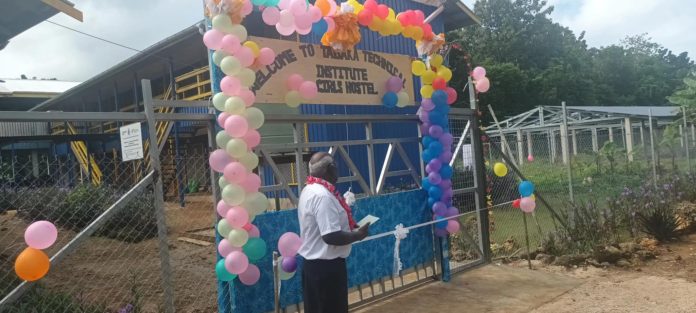
Tabaka Technical Institute (TTI) in Western Province marked a milestone in its development journey on Friday, August 29, 2025 with the official opening of three major infrastructure projects that aim to improve learning conditions and student welfare.

The projects include a refurbished double-storey classroom and workshop, a new boys’ dormitory, and perimeter fencing for the girls’ dormitory.

Representatives from the Assembly Office, Tabaka Board Members, community leaders, staff, students, and families of the institute witnessed the program.

Principal of TTI, Mr. Joash Lawrence, described the new facilities as a testament to the institute’s commitment to providing quality education in line with the Solomon Islands Tertiary Education and Skills Authority (SITESA) quality standards.

“These developments are more than just buildings. They are spaces that will create opportunities, ensure security, and help nurture the talents of our young people,” he said.

Lawrence said the double-storey classroom and workshop will provide improved spaces for both theory and practical lessons, while the boys’ dormitory addresses long-standing accommodation challenges.

He adds that the fencing around the girls’ dormitory enhances safety and security for female students.

The Assembly Office acknowledges the tireless contributions of Principal Lawrence, his staff, and students in bringing the projects to completion.

“These infrastructures represent a collective achievement and a solid foundation for TTI’s continued growth,” an Assembly Office spokesperson said.

The new facilities are expected to significantly benefit students by creating a safer and more conducive environment for learning and personal development.

For feedback, contact:[email protected]

Science project linking classroom learning to real island life

0

BY CHRIS ALEX

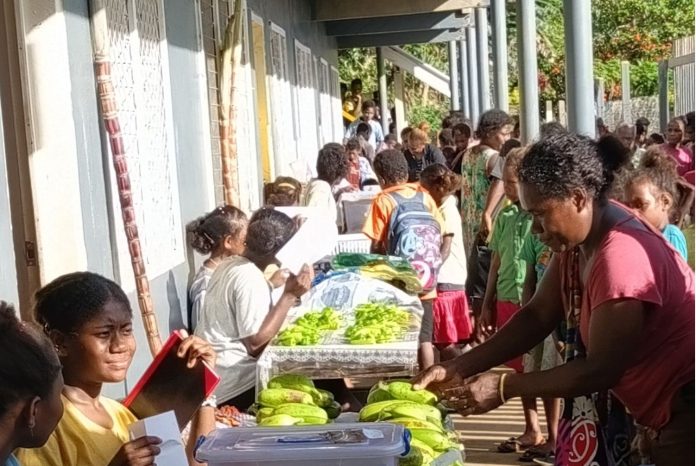
The Head Master of Anuta Primary School in West Makira, Alfred Uranagi acknowledges the successful completion of the Year Six Final Science Performance Task, calling it a major milestone for students, teachers, and the surrounding communities.

The task, titled “Selling Garden Produce” required Year Six students to carry out a community-based survey to determine which local garden produce is more or less economical.

This hands-on project was specifically designed to test students on scientific knowledge they gained throughout the year as well as to encourage them to apply their learning in a real-life, culturally relevant context.

“This final task is more than an assessment. It’s a celebration of learning that reflects our way of life.

“I proudly acknowledge the efforts of our students, teachers, and parents in making this milestone possible,” said Ura.

Assessment marks will be awarded based on a clearly defined marking criteria, focusing on students’ scientific understanding, data analysis, and their ability to effectively communicate their findings. This performance task forms a vital part of the students’ academic growth and progression.

Ura extended heartfelt appreciation to the Year Six teacher, school staff, parents and the surrounding community for their unwavering support.

“Your teamwork and encouragement helped turn this task into something greater than just a school assignment. It became a meaningful experience that challenged and inspired our learners,” he said.

He further emphasized the lasting impact of the initiative.

“This is the kind of learning that lasts. It’s grounded, hands-on, and rooted in the life we live here on Anuta Island. Together, we continue to grow strong, curious, and capable learners ready for the next chapter,” he said.

The project is being celebrated as a model of how education can be deeply relevant, practical, and empowering for students in rural communities.

For feedback, contact:[email protected]

Chinese delegation visits SINU

0

BY MORRIS NAFU

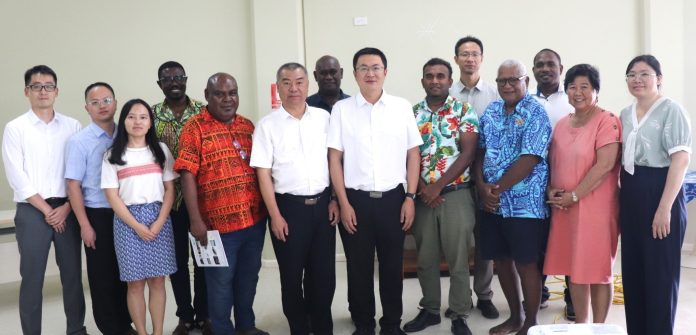
Delegation of six members of the Ministry of National Resources (MNR) of the People’s Republic of China (PRC), China visited the Solomon Islands National University (SINU) on Friday, August 29, 2025.

A statement from SINU said the visiting delegation was led by Dr Tan Jun, Deputy Director of the Island Research Center and included senior experts such as Dr Yu Fan, Mr Xie Jian, Ms Zhou Shuihua, Mr Su Bo, and Dr Ye Xiaomin, all bringing expertise from various marine and environmental departments within China’s MNR.

As stated, the visitors were warmly received by Pro-Chancellor and Council Chair Dr. Morgan Wairiu, Pro Vice-Chancellor Academic Associate Professor Erick Katovai, and key faculty members from the Faculty of Agriculture, Fisheries and Forestry (FAFF), including Dean Dr Vaeno Vigulu, Fisheries Head Dr Kofi Apreku, Dr Lindon Havimana, and International Relations Officer Mr Andrew Awa.

The discussions focused on shared interests and future collaboration opportunities in marine disaster prevention, ecological protection and restoration, and blue economy initiatives.

This visit highlights the vital role of international partnerships in promoting marine sustainability and reinforces SINU’s dedication to advancing research that benefits Solomon Islands and the broader Pacific community.

For feedback, contact:[email protected]

Fuel prices for September announced

0

BY NED GAGAHE

The Ministry of Commerce, Industries, Labour and Immigration (MCILI) has announced updated fuel prices for Honiara, which will come into effect starting September 1, 2025.

The new maximum wholesale and retail prices were approved under the Price Control Act 1982 (Cap 64) following consultation with the Prices Advisory Committee (PAC).

In a statement issued on Friday, August 29, 2025, the ministry confirmed that the new prices apply to petrol, diesel, and kerosene, and reflect ongoing changes in the global fuel market, international freight charges, and movements in the Solomon Islands dollar (SBD) against foreign currencies.

Under the new pricing structure:

  • Petrol (PMS) will be sold at $7.38 per litre wholesale, and $9.34 per litre retail.
  • Diesel (ADO) will be sold at $7.99 per litre wholesale, and $10.04 per litre retail.
  • Kerosene (KERO) will be priced at $7.35 per litre wholesale, with a retail pump price of $10.27 per litre.

The Ministry also clarified that kerosene is sold directly at service station pumps, and the retail price includes applicable government taxes and retailer margins.

A comparison with this month’s fuel prices (August 2025) shows mixed movements across the three products.

Petrol prices have decreased. The wholesale price fell from $7.54 to $7.38 per litre, a drop of $0.16, while the retail price dropped from $9.52 to $9.34 per litre, a decline of $0.18.

Diesel prices increased, with the wholesale price rising from $7.82 to $7.99 per litre, and retail climbing from $9.84 to $10.04 per litre, an increase of $0.20.

Kerosene prices also went up, with the wholesale price moving from $7.26 to $7.35 per litre, and the retail pump price increasing from $10.14 to $10.27 per litre, a rise of $0.13.

The Ministry explained that the adjustments are largely driven by global fuel market trends, including the Mean of Platts Singapore (MOPS) prices, which influence local fuel import costs. Other contributing factors include shipping rates and foreign exchange fluctuations.

The Ministry encourages members of the public, businesses, and fuel distributors to take note of the new prices and to contact relevant authorities for any queries.

For feedback, contact:[email protected]

LMU encourages care-workers to be good ambassadors

0

BY JOHN HOUANIHAU

The Labour Mobility Unit (LMU) has encouraged recently deployed care-workers to be good ambassadors for Solomon Islands.

Eight female care-workers left on Thursday, August 24, 2025 to begin their four-year contract with Bolton Clarke.

Bolton Clarke is Australia’s largest independent not-for-profit aged care provider, offering home and community support, retirement living and residential aged care.

The Labour Mobility Unit Solomon Islands their Official Facebook page said these workers will work at two different sites in New South Wales, Australia.

According to the LMU SI statement, four females will work in Murwillumbah while the other four will be based in Pa Nora Point.

“One of the females, Joyce Anna Rusi, a former nurse, expressed her excitement, stating that this is a great opportunity for her to learn new skills and earn money. However, she is also emotional at the same time, as having to leave her family and kids behind is really hard,” the LMU SI statement said.

The statement further said that 20 female workers under the Recognised Seasonal Employment (RSE) scheme also left the country on Thursday to begin their short-term work in Auckland, New Zealand.

The LMU statement said that the 20 female workers will be working for Gourmet Paprika, one of the well-established horticulture companies in New Zealand.

“The RSE scheme is facilitated through licensed recruiting agents,” LMU said.

For feedback, contact:[email protected]

Japan’s commitment to SI goes beyond UXO

0

BY JOHN HOUANIHAU

The Ambassador of Japan to the Solomon Islands, His Excellency Keiichi Higuchi said Japan’s commitment to the development of Solomon Islands goes beyond unexploded ordnance (UXO).

He highlighted this in an exclusive interview with Island Sun on Thursday this week, when he responded to an article published in this paper on Monday, August 25, 2025.

The article had insinuated that Japan and the US had not done anything towards the UXO clearance effort in the Solomon Islands. The article has since been retracted.

“I want to say that our office and embassy here remain very focused on what we can do towards the improvement of life in Solomon Islands. Not just UXO, but all kinds of aspects of life here in the Solomon Islands.

“We will continue to be committed to the development of this country. That also covers the area of UXO as well, but it’s much broader and has a very deep root in all the provinces. Not just Guadalcanal, but some of the remote provinces we have,” said Keiichi.

He said that Japan keeps sending volunteers and keeps listening to the needs of local provinces.

He said that Solomon Islands is fortunate in the sense that it has a lot more land than some other Pacific Island nations.

“But Solomon Islands does have a lot of landmass area that, if cleared of UXOs, can be put to good use. Even with such a population increase, I think your country has some room to grow, unlike other less fortunate Pacific Island countries,” he said.

He said that Japan discussed with Solomon Islands National University (SINU) recently about agricultural help to reduce the non-communicable disease (NCD).

“We’re bringing in more experts to help with all aspects of welfare in this country. I want to state that that’s a very clear position that we have,” he said.

For feedback, contact:[email protected]

Tunnel Boring Machine arrives at Tina River dam site

0

BY NED GAGAHE

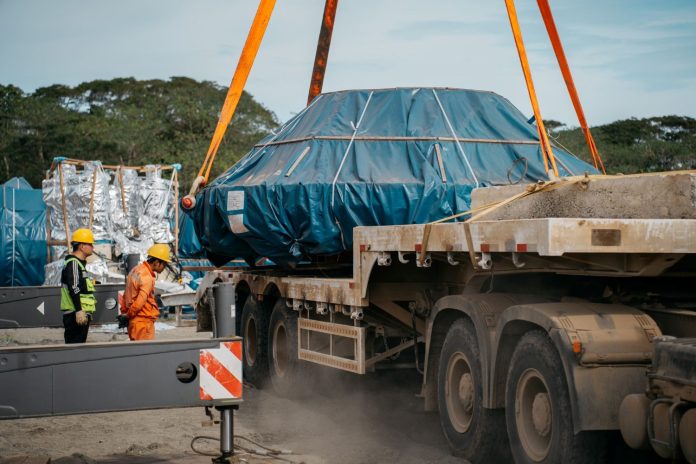
The arrival of a massive Tunnel Boring Machine (TBM) at the Tina River dam site marks a critical milestone in Solomon Islands’ journey towards clean, affordable, and sustainable energy.

The team behind the Tina River Hydro Project (TRHP) confirms that the 75 metres machine arrived in the country last month and was safely transported to the remote construction site on Sunday, August 17, 2025. The dam site is located approximately 30 kilometres southeast of Honiara.

Once fully assembled, the TBM will excavate a 3.2-kilometre tunnel through gravel and sandstone, a key component in the development of the Solomon Islands’ first large-scale hydropower station. Tunneling works are scheduled to begin later this year.

The project is considered one of the most transformative infrastructure developments in the country’s history, with the potential to power over 180,000 homes upon completion, mostly in and around Honiara.

The new hydropower station will supply up to 15 megawatts of clean energy, expected to cover nearly 70% of Honiara’s electricity demand, significantly reducing reliance on imported diesel, which currently dominates the country’s power supply.

It is also projected to lower electricity costs by over 40% and drastically cut carbon emissions, making it a flagship renewable energy project in the Pacific.

According to a statement from the World Bank this week, the project is currently 28% complete, with major civil works progressing steadily.

“A massive Tunnel Boring Machine has successfully reached the Tina River dam site near Honiara. The machine’s safe arrival marks another step forward in one of the most ambitious infrastructure projects in Solomon Islands’ history. Tunneling will begin later this year, paving the way for clean, affordable, and more reliable power for over 180,000 Solomon Islanders,” the statement read.

The Tina River Hydro Project has been in development for over a decade, with planning and consultations beginning in 2009.

It is being implemented by Tina Hydropower Limited (THL), in partnership with K-water of South Korea, and overseen by the Ministry of Mines, Energy and Rural Electrification (MMERE).

The project has received strong backing from a coalition of international development partners, including the World Bank, the Australian Government, the Asian Development Bank (ADB), the Korea EXIM Bank’s Economic Development Cooperation Fund, the Abu Dhabi Fund for Development, and the Green Climate Fund (GCF).

These partners have provided a combination of technical expertise, grant funding, and concessional financing to make the ambitious $240 million project financially viable.

By the end of 2025, all major preparations for dam construction are expected to be completed, paving the way for full-scale construction to begin in 2026. Once operational, currently scheduled for commissioning in 2028.

The Tina River Hydro Project remains a top national priority and is central to the Solomon Islands Government’s long-term vision of energy independence, economic sustainability, and climate resilience.

Photo: World Bank

For feedback, contact:[email protected]

LEADING PARTNERS

0

US, Japan remain committed to UXO clean-up efforts in Solomon Islands

BY JOHN HOUANIHAU

The United States and Japan remain committed to the World War II unexploded ordnance (UXO) cleanup effort in the Solomon Islands.

Japan and US are the two leading countries helping in the UXO removal campaign in the Solomons.

The US and Japan embassies in Honiara gave this assurance in response to an article which Island Sun had published Monday this week but then later retracted, titled – ‘Clean Up Your Mess’. The article was not balanced and had called on the US and Japan to clean up WWII UXO and insinuated that the two countries had not done anything towards this cause.

Speaking to Island Sun on Thursday, US Embassy Chargé d’affaires in Honiara, Dan O’Hara and the Japanese Ambassador to Solomon Islands, His Excellency Keiichi Higuchi, put the record straight.

“More than a decade ago, our two countries began a war legacy partnership to help identify and remove bombs and other UXO remaining from World War II. The United States and Solomon Islands have made progress on this UXO priority together.

“And this partnership has accelerated over the last few years, as we work to protect citizens from these hazards. To date, since the beginning of that cooperation, about a decade ago, the United States has provided more than $93.5 million Solomon dollars,” Chargé O’Hara explained.

He said that the US primary partner here in Solomon Islands, as in many other countries, is the HALO Trust.

“In the past two years, the HALO teams that the United States government has funded have deployed to over, as of the latest data we have, 197 locations across the Solomon Islands, and identified more than 3,000 UXO items for the RSIPF to destroy.

“HALO is seen as one of the most highly accomplished clearance, humanitarian UXO clearance organisations. They’re famous for doing demining. They do lots of UXO work. They do lots of different things. They’re incredibly professional in what they do. But unlike in other places I’ve worked alongside HALO Trust, here in the Solomon Islands, they are limited to only being able to do what the government allows them to do.

“In this case, the Solomon Islands government has limited HALO to only doing what’s called non-technical survey, which is essentially historical research and using observable conditions,” he said.

He said that with the funding that the United States has provided HALO, in the last two years they have conducted a non-technical survey of 1,008 suspected hazardous areas covering nearly 35 million square metres.

“In that time, citizens have reported more than 3,000 UXO items to HALO personnel, and HALO has submitted all of those items on 437 call-out forms to the RSIPF to address. HALO Trust has conducted 1,540 risk education sessions in nearly 200 locations around the country, providing information to citizens on how to protect themselves and properly report war remnants.

“So, I think the bottom line is the US is doing everything we can within the framework that exists. And alongside Japan, we’re doing everything we can to expand that framework so that more can be done,” he said.

Japanese Ambassador Keiichi Higuchi, meanwhile, said that the work on the UXO clean-up effort is an evolving effort.

“It’s not like we put some money up and then finish. It’s not like that.  Every year, we review whether it’s an appropriate contribution that we made as the Japanese government. And if there’s more that we could do, then of course we will think about what we can do to solve the problem here,” he said.

Higuchi said that through the partnership, a team from Tokyo came to Honiara, providing training for the RSIPF team.

“We assess after we go back to Tokyo, whether it was an appropriate level of involvement, or whether we could work more closely with other teams. I mean, with a team from Australia, a team from the United States. So, all of this makes our understanding more accurate and up to date so that we know more accurately what we can do in the future towards reducing the risks associated with the UXO,” Higuchi said.

Japan has donated towards the UXO removal programme in the Solomons in many ways.

Some of Japan’s assistance include:

-On May 17, 2023 former ambassador HE Yoshiaki Miwa and then Foreign Affairs Minister, Jeremiah Manele, signed and exchanged notes for the Economic and Social Development Programme project which is worth JPY 120 million (around SBD 6.7 million).

-Japan has also donated a 12-metre landing craft to help boost UXO removal operations.

-The Project for Unexploded Ordnance Disposal in Central and Western Solomon Islands under the Grant Assistance for Grass-Roots Human Security Projects (GGP) programme worth JPY 85,084,020 (around SBD 6.2 million).

-Enhancing the National Unexploded Ordnance (UXO) Programme in the Solomon Islands which involves conducting environmental assessment and establishment of a coordination office for disposal of UXOs, worth JPY 79,107,000 (around SBD 4.4 million)

-Donation of a pneumatic shovel worth SBD 2.6 million, two all-terrain carts worth SBD 298,000, a station wagon worth SBD 358,000, pick-up truck single cabin worth SBD 746,000, 2 fully-fitted rayboats worth SBD 418,000, two storage boxes for explosives worth SBD 47,700, and a fire extinguisher machine worth SBD 29,800.

For feedback, contact:[email protected]

‘NO ONE LEFT BEHIND’

0

9th PWWM Forum calls for collective action to ensure Pacific Islands progress together

BY LORETTA B MANELE

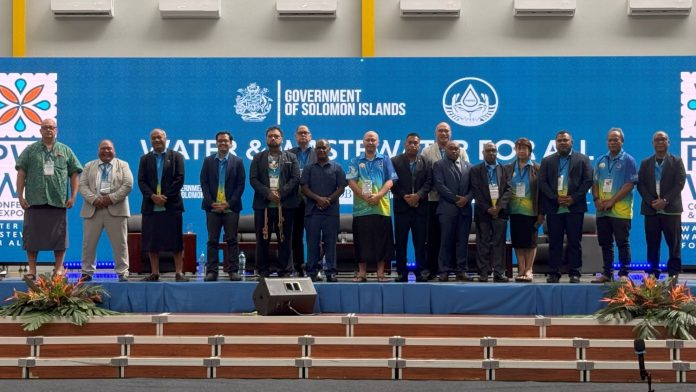
The 9th Pacific Water and Waste Water Ministers (PWWM) Forum calls for collective action to ensure that no Pacific Island is left behind in achieving sustainable water and wastewater services.

The Forum held from August 25-26 in Honiara have released a statement titled “Water Resource Security for Resilience”, in which ministers and ministerial representatives stressed on components such as;

-The varying nature of challenges across Pacific Islands

-How disproportionately affected the Pacific is by water and wastewater related impacts of climate extremes

-The critical importance of national hydrological services

-The fundamental role of water in peace and security

-Urgency for resilient and inclusive solutions

On how the nature of challenges vary across Pacific Islands, ministers stressed that this includes the unique and significant challenges faced by atoll and low-lying communities that are reliant on rainwater and shallow aquifers.

They also stressed on the value of sharing locally developed solutions through sustained communities of practice such as the Pacific Partnership for Atoll Water Security.

Another point raised during the meeting was how disproportionately affected the Pacific is by water and wastewater related impacts of climate extremes.

The ministers stressed that this comes with the expectancy of climate change to significantly increase the likelihood of hydro-meteorological disasters like flooding and droughts which as mentioned, already accounts for over 75% of reported natural disaster events in the region.

Critical importance of national hydrological services was also highlighted.

The ministers noted that this is essential to enable evidence-based decision making for sustainable water resource management, disaster risk reduction and climate change adaptation.

On this note, they welcome the development of a regional hydrology strategy to identify and address urgent national capacity needs.

Ministers also emphasised the fundamental role of water in peace and security and building Pacific resilience.

Henceforth, they call for prioritization and deeper integration of water and sanitation into national development plans, climate change strategies and disaster preparedness frameworks namely; the 2050 Strategy for the Blue Pacific Continent Implementation Plan and the Boe Declaration on Regional Security and its Action Plan.

Further on is the emphasis on the urgency of resilient and inclusive solutions.

On this front, ministers reaffirmed their commitment to regional cooperation, capacity building and innovation.

They call for collection action to ensure that no Pacific Island is left behind in achieving sustainable water and wastewater services.

For feedback, contact:[email protected]
SI delegation backs launch of Pacific inter-parliamentary association

0

BY NED GAGAHE

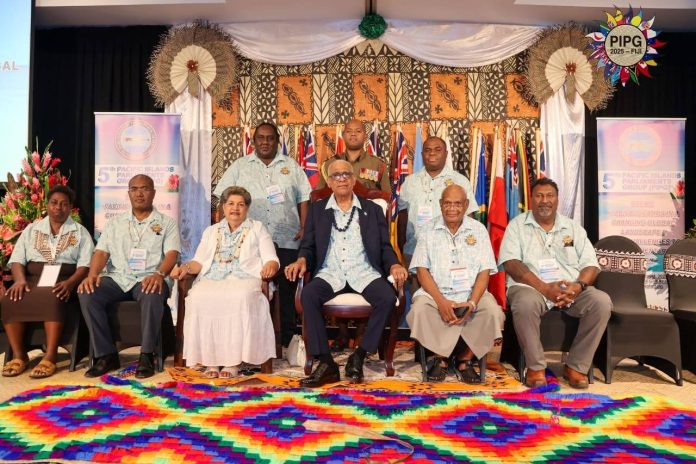
A six-member delegation from the National Parliament has returned after participating in the 5th Pacific Islands Parliamentary Group (PIPG) Conference held at the InterContinental Hotel in Natadola, Fiji, from August 26–29, 2025.

Speaker of Parliament Patteson John Oti led the delegation which included Clerk to Parliament Jefferson Hallu, Chairman of the Foreign Relations Committee MP Peter Kenilorea Jr, Chairman of the Environment and Conservation Committee MP George Temahua, MP Mary Daniella Garu, and Director of Committees and Secretary to the PIPG delegation Wilson Orisi.

This year’s conference was historic, marking the official transformation of PIPG into the Pacific Inter-Parliamentary Association (PIPA)—a new regional body aimed at uniting Pacific legislatures to confront common challenges.

In a statement, Parliament said the move from PIPG to PIPA represents “a bold step forward in strengthening democratic governance, fostering integration, and building resilience across the Pacific.”

Held under the theme “Pacific Islands in a Changing Global Landscape: From Challenges to Parliamentary Action”, the conference spotlighted the vulnerabilities of small island states while emphasizing the critical role of parliaments in defending sovereignty and driving collective action.

Since its inception, PIPG has provided a platform for political dialogue, peer learning, and regional solidarity.

PIPA will now carry forward this legacy with a renewed mandate to strengthen parliamentary cooperation across the region.

Kenilorea Jr reaffirmed Solomon Islands’ full support for PIPA, announcing that Parliament had unanimously approved a motion mandating Speaker Oti to sign the statutes on the country’s behalf.

“This endorsement by Parliament underscores Solomon Islands’ commitment to regional unity and democratic values,” Kenilorea said.

Speaker Oti also played a central role in shaping PIPA’s institutional framework, serving as one of five technical committee members who co-authored its foundational report.

The conference featured powerful keynote addresses from distinguished leaders and scholars, including former Kiribati President Anote Tong on parliamentary oversight and sovereignty, Ambassador Kaliopate Tavola on ocean resources and cultural assets, Dr. Tarcisius Kabutaulaka of the University of Hawai‘i on the potential of a regional parliament, Dr. Manumatavai Tupou-Roosen on embedding Pacific values in governance, and Sione Tekiteki of AUT on parliamentary cooperation amid global uncertainty.

Delegates also visited the Nacocolevu Agriculture Station in Sigatoka to observe sustainable farming innovations before concluding with the signing of the PIPA statutes and the election of the inaugural Executive Board.

Tahiti has been confirmed as the host of the first official PIPA meeting in 2026.

Earlier this month, Parliament in Honiara gave its full backing to the initiative, with a motion moved by Kenilorea Jr receiving unanimous support.

For feedback, contact:[email protected]