
Home Blog Page 284

5M allocated to protect WWII relic sites in Central Province

0

BY NED GAGAHE

The Central Islands Provincial Government is set to begin formal protection of World War II relic sites in Tulagi, thanks to a $5 million funding support from the Ministry of Culture and Tourism (MCT).

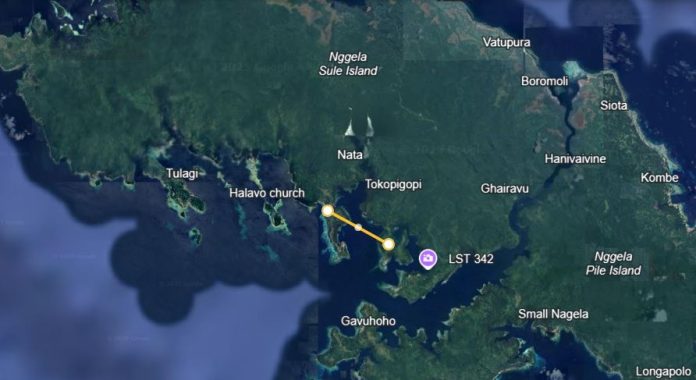
Premier Kenneth Sagupari confirmed this in response to ongoing concerns over threats posed by private collectors attempting to acquire and smuggle wartime relics from Ngella and surrounding villages.

“The province will now start protecting war relic sites in Tulagi under the $5 million support from the Ministry of Culture and Tourism.

“We will also appropriate funds in the coming provincial budget to do the same for nearby war relic sites,” Premier Sagupari told Island Sun.

The initiative comes amid rising tension and reports that individuals have been offering large sums of money to villagers, up to $10,000 in exchange for valuable WWII artifacts.

According to community members, these relics are then shipped out under the cover of darkness, primarily bound for Honiara.

Premier Sagupari acknowledges that while the provincial government is keen to preserve these historical treasures, challenges remain, especially given that many of the relics lie on customary land.

“Right now, we don’t have much authority because those areas where relics are located are on customary lands, and landowners still have full rights over them.

“But as a responsible government, we will engage in dialogue with our landowners to highlight the importance of keeping and preserving these relics,” he said.

He also revealed plans to create a new ordinance focused on the legal protection and preservation of war relics across Central Province.

“The government is looking forward to creating an ordinance for the safekeeping of these relics because they are important assets of the people and the province,” he said.

Villagers in Halavo (Ward 3) and Bola (Ward 5) recently reported offers from collectors seeking to purchase relics for high prices, prompting community backlash and calls for government intervention.

Premier Sagupari and concerned residents have both warned that the loss of these artifacts not only erodes historical identity but also jeopardizes future tourism development in the province.

With the opening of the Number 1 House Museum in Tulagi imminent, and growing tourist interest in WWII history, the push to protect these relics is now more urgent than ever.

For feedback, contact:[email protected]

ACOM eyes land at Munda for new senior high school

0

BY BEN BILUA
GIZO

The Anglican Church of Melanesia (ACOM), through the Diocese of Isabel, is in talks with landowners in Munda as part of plans to purchase land for major developments.

A delegation from the Diocese of Isabel, led by Bishop Elison Quity, recently met with local landowners, marking the beginning of negotiations to secure a one-hectare plot.

Reverend Jacob Pitu, Development Officer of the Diocese of Isabel, confirmed the initiative and said the church is keen to develop a senior high school alongside housing facilities for church organizations.

“Western Province is known for its steady growth both economically and spiritually, which is why Isabel Diocese is willing to invest in education here.

“This school will not only serve Isabel Diocese but also provide education opportunities for children in Western Province and across the country,” he said.

Western Province’s Minister of Education and Human Resources, Gordon Zebo, welcomed the initiative, saying such a partnership is vital in addressing the high number of school dropouts in both Isabel and Western Province.

“ACOM’s Education Authority has consistently performed well in delivering quality education.

“Establishing a senior high school in Munda will greatly benefit students who are often left without options after completing lower secondary levels,” he said.

Island Sun understands that ACOM owns two platinum senior secondary schools namely Saint Nicholas College and Selwyn College.

If negotiations are successful, the project is expected to further strengthen ACOM’s role in education delivery and contribute significantly to human resource development in Solomon Islands.

For feedback, contact:[email protected]

SINTA & Govt sign deal

0

BY JOHN HOUANIHAU

The Solomon Islands National Teachers Association (SINTA) and the Solomon Islands Government Negotiation Team signed a Master Agreement (MA) on Friday, 29 August, 2025 to address the longstanding welfare issues of teachers across the country.

This is to solve the SINTA’s nationwide 28-day strike notice issued to the Ministry of Education and Human Resources Development (MEHRD) on Tuesday, July 22, 2025 and laps on the 29th of August, 2025.

The MA was signed by Dr. Franco Rodie, Permanent Secretary of the Ministry of Education and Human Resources Development (MEHRD), Chair of the SIG Negotiation Team, Dr. Melchior Mataki, and Mr Robert Lafisi, General Secretary of SINTA.

Under this submission, SINTA has outlined seven formal demands for MEHRD to consider.

“I think we were pleased that we have reached an agreement on the issues that have been brought forward to us. Of course, in any agreement, we have to concede or sometimes you have to give and take, and I think what’s important is that both sides, in the true spirit of collaboration and partnership, in a way, we reach an understanding on these issues,” said Chair of the SIG Negotiation Team, Dr. Melchior Mataki after the signing.

He thanked the government team, a joint team from within government, the Prime Minister’s Office, Ministry of Education, Ministry of Public Service, and the Ministry of Finance.

The signing was witnessed by Luke Cheka, Permanent Secretary of the Public Service; McKinnie Dentana, Permanent Secretary of the Ministry of Finance and Treasury; and Frank Roboliteé, Acting President of SINTA.

The terms of agreement are:

  • Job Security for Teachers
  • Recognition of Teachers’ Experience
  • Teachers’ Salary backdating to January 1st, 2024
  • Early Childhood, Technical and Vocation Education, Training, and Special Needs Education Teachers’ Salary and Classification
  • Long and Dedicated Service Benefit
  • Establishment of the Teachers Housing Taskforce
  • Teachers’ Annual Leave Package
  • Balancing Employment benefits with professionalism, conduct, and performance

“I’d like to acknowledge the support from the government itself, from our political leaders who have been following closely the discussions as well as the issue as it unfolded over the past 27 days. So, I believe that this agreement will also lead to the withdrawal of the strike notice by SINTA,” he said.

For feedback, contact:[email protected]
No military:Ramoni

1

BY SAMIE WAIKORI

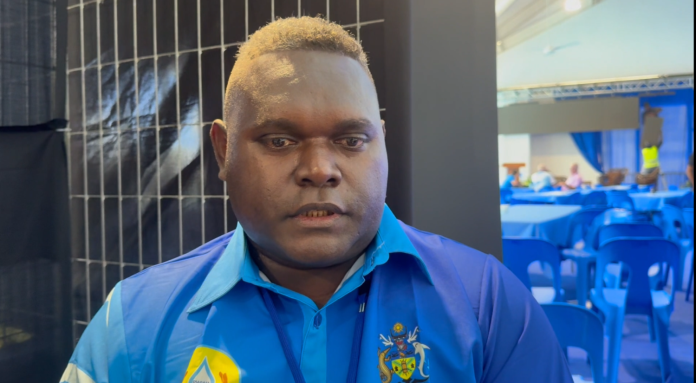
The Royal Solomon Islands Police Force (RSIPF) says the country has no military and is not planning to have any says Supervising Assistant Commissioner for National Operations, Francis Ramoni.

He made the statement to clarify an uniform worn by members of local police, during one of their recent patrols in Honiara that raised public concern.

Members of the local police were wearing uniform similar to military attire, and the general public was curious to know if RSIPF had a military unit.

Speaking during a talkback show at SIBC on Sunday, August 31, 2025, Mr Ramoni clarified that the country doesn’t have a military and is not planning to have one.

“I would like to make awareness to good listeners in the country that we don’t have military.

“The unform is part of the capability of police and the usage of the unform is for rural operations of RSIPF,” he said.

Ramoni furthered explained that the uniform can only be used by RSIPF during special tasks and in rural areas of the country.

He added that members of RSIPF cannot wear the uniform while on duty in Honiara as it is only meant for operations in rural areas.

“Basically, there is no military, there is no plan for the country to have a military,” Ramoni said.

He reiterated that the uniform is part of RSIPF’s capability and will only be worn for special tasks in rural areas of the country.

For feedback, contact:[email protected]

‘HANDS OFF OUR HISTORY’

0

Premier Sagupari warns against illegal trade of WWII relics in Ngella

Urges protection for tourism and future generations

BY NED GAGAHE

Premier of Central Islands Province, Kenneth Sagupari, is strongly calling for protection of World War II relics in Ngella amidst growing concern over reports that certain individuals are secretly collecting and shipping these historical artifacts to Honiara under the cover of darkness.

The information, first shared on the Central Islands Province Facebook Forum, alleges that a group has been approaching villagers in Halavo (Ward 3) and Bola (Ward 5), offering up to $10,000 for each wartime firearm or relic they can acquire.

Premier Sagupari, responding to questions from Island Sun, acknowledged that while the claims are yet to be confirmed, such activities if true must stop immediately.

“This news is still a rumor, but to those individuals who go around must stop.

“These relics are vital for Central Province as we work towards developing the tourism industry as the next tourism hub,” Premier Sagupari said.

He emphasized the cultural and historical significance of the relics, stating that efforts are underway to expand heritage tourism across the province. Among such efforts is the upcoming opening of the Number 1 House Museum in Tulagi.

“I call upon the people of Central Province, who are custodians of these relics, to come forward to the provincial government tourism division and discuss a way forward.

“Seek support from the province and the responsible line ministry to upgrade and protect these valuable sites,” he urged.

A concerned resident of Tulagi said that they recently received reliable information that a group has been moving through Ngella, purchasing relics and preparing to ship them to Honiara during the night.

“This is very concerning if the source of this information is true.

“These relics are not just old war items, they are part of our history and culture, and they attract tourists,” the resident said.

The resident stressed that tourism is a top priority for Central Province, and the removal of these artifacts could undermine future development opportunities.

“We already have a museum in Tulagi, and our province’s future depends greatly on tourism. If these relics are taken away, we lose both our history and our future.”

The resident further calls on Tulagi Police to investigate the matter urgently and monitor known relic sites to prevent further theft or illegal sales.

“By law, these items cannot be removed without proper permission.

“Tourists are already showing strong interest in sites like Halavo and Bola. We must protect these relics for future generations and for the continued benefit of our province.” Premier Sagupari said.

Central Province, particularly the Ngella group and Tulagi was a major battleground during World War II, hosting Allied and Japanese forces in some of the Pacific’s most intense military operations.

Today, the remnants of that era ranging from rusted firearms and ammunition to military vehicles and equipment are scattered across the province.

These relics hold immense historical and cultural value, and in recent years have become key attractions for wartime and heritage tourism.

Tulagi, once the British administrative capital and a strategic military base during WWII, is now positioning itself as a tourism hub for the Solomon Islands.

However, unregulated collection and illegal trading of relics is threatening this vision.

The Central Islands Province government encourages local communities to report any suspicious activities and collaborate with authorities to ensure the preservation of their historical legacy.

For feedback, contact:[email protected]
Gizo Primary School host culture and tradition event

0

BY BEN BILUA
GIZO

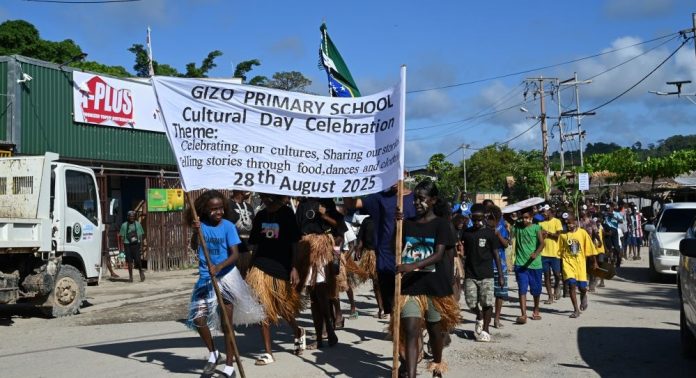
Gizo Primary School came alive on Friday, August 29, 2025 with vibrant colours, sounds, and flavours as a successful host to a cultural and traditional event, bringing together students, parents, and the wider community.

The event showcased traditional costumes, dances, and food from across the Solomon Islands, highlighting the country’s cultural richness and diversity.

Students were divided into groups representing different provinces, an initiative to help them learn and appreciate traditions beyond their own heritage.

The celebration began with a colourful parade from the PT109 area to the school hall, where activities and performances took place.

Guest of honour and Minister of Education for the Western Provincial Government, Gordon Zebo, described the event as a vital platform for instilling cultural pride in young people.

“Events like this will help the younger generation to appreciate their culture and tradition. I encourage parents to also take time to train our children about their culture and traditions,” Zebo said.

While praising the school’s initiative, Zebo also expressed concern that cultural and traditional studies are absent from the national education curriculum.

He called for a review of regulations to ensure cultural studies are included.

“Our cultures are our identity. They reflect our way of life. It is important that we pass them down to the next generation,” Zebo added.

Principal of Gizo Primary School, Dickson Nathan, thanked students, parents, and teachers for their contributions, saying the school was proud to host the event.

“Culture and tradition are important not only to students but also to those who know little about the diverse provinces.

“Engaging children at a young age to learn about culture and tradition is very important,” Nathan said.

He confirmed that Gizo Primary School plans to continue organising similar events in the future.

For feedback, contact:[email protected]
M-Selen users affected by Kwaifala tower shutdown 

0

By RODRICK DESURI 

AUKI 

M-Selen users in the Dorio region of West Kwaio, Malaita Province, are raising concerns about the quick repair of the Kwaifala tower.

A resident of the Kwaifala area, who wishes to remain anonymous, said that the shutdown of the tower slows their services and is causing frustration among their customers.

He mentioned that many people there depend on M-Selen services for withdrawals to buy food for their families and to send money to their children in Honiara.

However, the current situation is causing a setback.

“The shutdown of the tower really denies us the service that we depend on. The service that M-Selen provides here is very reliable, but since the service is broken, it affects us and our customers,” he said.

In the meantime, the source emphasised that the complete shutdown of the tower was caused by an argument between two parties.

The source said two parties claim to be the rightful owners of the land on which the tower is located.

“The issue here is the two landowning groups, both of which are claiming the land. The first landowning group is the one that has been assigned an agreement with Our Telekom, and the second group is the one that applied for ownership of the land,” the source explained.

He said the argument has also ended up in the high court. The M-Selen providers are calling on Our Telekom to fix and resolve the issue and bring the service back online.

Our Telekom posted on their official Facebook page on August 14, 2025 informing their valued customers and the public that mobile services in South Malaita were currently experiencing a complete outage.

Telekom said the disruption was due to a land access issue at Kwaifala, with the landowning group also preventing Our Telekom engineers from safely reaching the critical site that links all South Malaita mobile sites.

“Our technical teams are actively exploring alternative solutions to restore connectivity to all linked sites as soon as possible.

“We sincerely apologize for the inconvenience this has caused and thank our customers and affected communities for their patience and understanding,” said Our Telekom.

For feedback, contact:[email protected]
Real-time resilience – digital turbidity monitoring

0

BY CHRIS ALEX

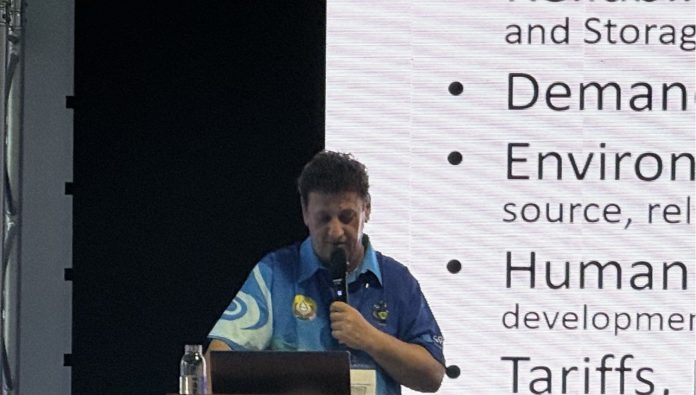
At the recent 16th Pacific Water and Wastewater Association (PWWA) Conference in Honiara, Mandus Boselalu, the country’s lead for Fluvio, captured attention as a passionate advocate for the future of water management.

A key figure among water professionals, Boselalu took the opportunity to share his journey in the water sector, emphasising the significance of collaboration among professionals across the Pacific to build a sustainable water future.

Boselalu detailed the exciting advances in water monitoring brought about by the Fluvio project, which has transformed how the Solomon Islands Water Authority (SIWA) tracks water turbidity.

Previously reliant on manual methods to record turbidity levels, SIWA now benefits from a cutting-edge system developed through the project.

The new mobile app and real-time monitoring stations have revolutionized how water quality is measured, especially in challenging circumstances such as at night or during floods.

“Through the Fluvio project, we’ve been able to digitize data collection and monitoring,” Boselalu explained.

“This makes it much easier to keep track of water quality, especially when weather conditions make manual checks nearly impossible,” he added.

Real-time monitoring stations have now been installed across SIWA’s water sources. These stations automatically record turbidity levels every 10 minutes, transmitting the data to a cloud database.

SIWA can then access these real-time reports and take immediate action when turbidity levels spike, particularly during the rainy season.

This innovation has not only saved valuable time but also enhanced decision-making, ensuring that water quality is effectively managed.

Boselalu also shared the pressing issue of water pollution, particularly concerning the Kongulai water source, which supplies Honiara’s main water supply.

The catchment area has been severely affected by logging operations, which pose a threat to the water quality.

To combat this challenge, SIWA is working on strategies to protect the catchment areas, including establishing a governance system with local landowners.

This collaborative effort ensures that landowners are not only safeguarding the water source but are also compensated for their role in protecting this vital resource.

“We’re not only focusing on protecting the catchment area, but are also working closely with landowners to ensure they benefit from preserving the water sources.

“This partnership will help create a sustainable model for managing our water resources while providing landowners with an income,” Boselalu said.

With the combination of real-time data collection and community collaboration, SIWA is taking significant strides towards ensuring a cleaner, more sustainable water supply for Honiara’s residents.

For feedback, contact:[email protected]
Honiara’s sanitation access faces complex challenges and potential solutions

0

BY CHRIS ALEX

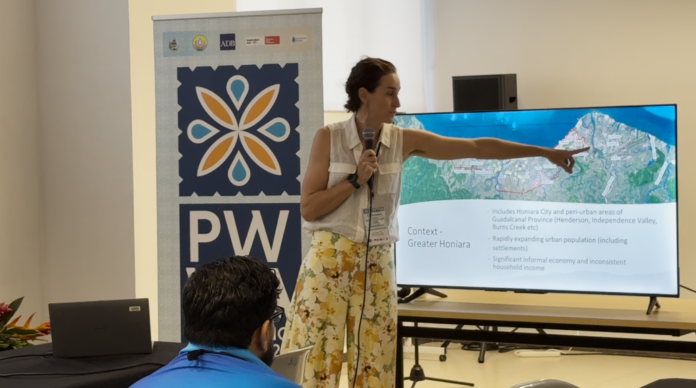
Rosie Sanderson, a Sanitation Expert, shed light on the critical sanitation challenges faced by Honiara during her address at the recent 16th Pacific Water and Wastewater Association (PWWA) Conference in Honiara.

Speaking before local and regional stakeholders, Sanderson called for a “Citywide Inclusive Sanitation” (CWIS) approach to address the city’s growing sanitation needs, an initiative supported by the World Bank’s Global Water Security and Sanitation Partnership (GWSSP).

As Honiara grapples with rapid urbanisation, particularly in informal settlements lie outside the city’s official boundaries, Sanderson emphasised that sanitation services must be expanded to cover the broader “Greater Honiara” area.

As informal settlements continue to expand without clear jurisdictional oversight, the city’s sanitation services are becoming more fragmented, with unclear lines of responsibility between local, like Guadalcanal provincial, and national authorities.

“Urban growth is pushing beyond the official city limits, and we need to consider Greater Honiara not just within the city boundaries when we look at sanitation services,” Sanderson remarked, noting that the city’s rapid expansion makes it increasingly difficult to implement a sustainable sanitation service model, especially as many residents in informal housing rely on inconsistent incomes.

90 pecent of Honiara’s population depends on on-site sanitation systems, such as septic tanks and pit toilets. While only 10% of the city is served by Solomon Water’s sewerage system, plans are underway to extend this coverage. However, for the majority, on-site sanitation systems will remain the primary method of waste disposal in the foreseeable future.

A significant concern raised by Sanderson was the alarming number of non-functional toilets in informal settlements. Recent surveys revealed that only half of the toilets in these areas are operational, creating a public health risk.

Sanderson highlighted the increasing risk of open defecation, particularly in densely populated areas where sanitation services are scarce.

“While there is demand for toilets, it’s more about upgrading the existing infrastructure and ensuring that it’s functioning properly,” Sanderson explained.

The current sanitation service chain in Honiara is a complex network of various actors, including the Honiara City Council, private operators, and Solomon Water.

The City Council plays a vital role in providing low-cost collection services, crucial for low-income households, but the absence of a clear regulatory framework poses challenges. Sanderson pointed out that while private operators manage much of the fecal sludge collection, they are not regulated, leading to inconsistencies in pricing and service reliability.

Furthermore, the inadequate management of fecal sludge disposal at the Ranadi landfill is a growing concern. Trucks currently dump waste into an open pit, which, due to poor management, results in environmental hazards, including leachate contamination in nearby creeks. With the landfill set to close under an Asian Development Bank (ADB) project, there is an urgent need to identify a more sustainable and safer disposal solution.

One of the most pressing issues is the lack of adequate treatment and disposal options for the city’s fecal sludge. While Solomon Water manages a few communal septic systems, they serve only a small fraction of the population. With many households relying on poorly maintained on-site systems, the risk to public health remains high.

In response to these challenges, Sanderson proposed a dual-market model for sanitation services, which would see both public and private operators working together to improve collection and transportation.

The Honiara City Council would continue providing low-cost services while taking on a more prominent role in regulating the industry. Additionally, Sanderson suggested that Solomon Water could lead efforts to construct a fecal sludge management treatment plant with support from the World Bank’s WASH.

The urgency of addressing Honiara’s sanitation issues has never been greater, as the city’s population continues to grow, and its sanitation infrastructure remains under pressure. Without strategic reforms and adequate financing, the city faces significant risks to public health and environmental sustainability.

For feedback, contact:[email protected]

SIWA’s vision for safe water

0

BY LORETTA B MANELE

Solomon Islands Water Authority’s (SIWA) five-year corporate plan sets out their vision of “safe water for a healthy nation”.

SIWA CEO Carmine Piantedosi spoke about the plan on Monday, August 25, 2025 at the 16th Pacific Water and Wastewater Association Conference and Expo 2025 at the Aquatic Centre in Honiara.

He said the plan, launched in 2024 sets out their vision for safe water for a healthy nation.

“It also spells out our mission, and that is to provide reliable safe water supply and sanitation systems. Working with communities to plan, deliver and operate infrastructure that minimises the social and environmental impacts of our activities,” said Piantedosi.

He added that the plan also spells out their core values of impartiality, morality, professionalism, accountability, consistency and transparency.

The CEO pointed out that what they mean by these values is treating all their customers and stakeholders with fairness.

“Uphold standards of what is right and good conduct.

“Provide our services with the highest degree of professionalism, competency and skills. Show our readiness to take full accountability for our actions. As well as to ensure consistency and operate in a fair and open manner and without prejudice in delivering water services,” he stressed.

Piantedosi mentioned that the values clearly underpin their corporate objectives.

“And that is being a customer centric organisation is a primary objective in our corporate plan,” he said.

Piantedosi explained that while they focus on human resource management and development, safety and financial management of the organisation is also another area objective along with sustainable use and management of environment and water resources.

He noted that they are also working on delivering services in a safe and sustainable manner.

“And enhancing our operational performance and delivering customer service standards and levels of service. But of course, all this path to recovery will be more improvable,” he said.

For feedback, contact:[email protected]