Home Blog Page 216

You are no longer outsiders: Manele

0

BY BEN BILUA
Gizo

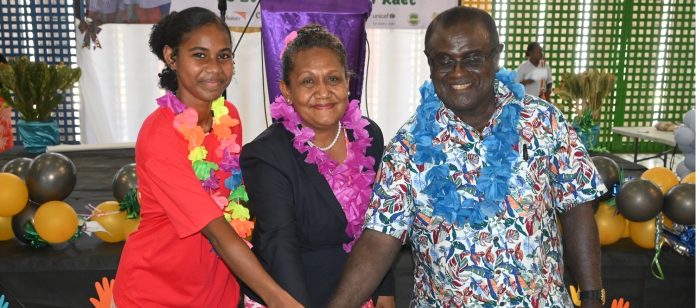
PRIME Minister Jeremiah Manele has delivered a powerful message to the people of Kolombangara — saying that they are no longer outsiders but equal partners and co-owners of the Kolombangara Forestry Plantation Limited (KFPL).

Speaking during the official handing over and launching of the Kolombangara Landowners’ Equity at KFPL on Monday November 10, Manele said the event marks a new era of ownership, justice, and partnership between the government, investors, and the people of Kolombangara.

“You are no longer outsiders. You are partners. You are co-owners of KFPL. We gather not just for another official ceremony, but to mark a historic turning point — a new dawn — in the lives of the people of Kolombangara,” he said.

Manele said the occasion fulfilled a long-held dream and the government’s promise to empower the rightful landowners.

“This event signifies the fulfilment of a promise and the realization of a long-held dream. It represents justice, empowerment, and partnership for you — the rightful landowners of this island,” he said.

Manele announced that as of October 31, 2025, landowners officially hold a 20 percent equity capital in KFPL — a development that transforms them from observers to decision-makers.

“This means you are no longer tenants of development; you are shareholders of progress. Your voices will now shape decisions. Your participation will now drive growth. Your land will now work for you,” he said.

Manele commended his government for finalizing the equity transfer, noting that previous administrations were unable to complete the process.

He said six companies representing the five tribal groups of Kolombangara have been incorporated to ensure every tribe, family, and village have voices in the new ownership structure.

Manele explained that these companies collectively hold the 20 percent equity share, while the government and other investors retain 80 percent.

He also acknowledged the work of the Kolombangara Development Advisory Committee, a Cabinet Sub-Committee that has guided the process since its establishment under the previous Democratic Coalition Government for Advancement (DCGA) and later re-established by the current GNUT Government.

“The Committee has continued to support the entities, ensuring that the companies met all legal, financial, and administrative requirements to function as legitimate business enterprises. Some technical work is still ongoing, but the foundation has been firmly laid. You are now ready to participate fully as business partners in KFPL,” Manele said.

He congratulated the people of Kolombangara and reaffirms his government’s commitment to inclusive development.

“On behalf of the GNUT Government and the people of Solomon Islands, I congratulate you all. May God bless Kolombangara Island, may God bless the Western Province, and may God bless our beloved Solomon Islands,” Manele said.

For feedback, contact: [email protected]

‘Invest in our children’: Tozaka

0

BY BEN BILUA
Gizo

MEMBER of Provincial Assembly (MPA) for Ward 10 in Western Province, Freedom Tozaka, calls on parents, community leaders, and authorities to invest in children’s development, saying they hold the key to the country’s future.

Speaking during the official opening of the Ward 10 Primary School Sports Carnival and the celebration of International Children’s Day at Leona Village on Tuesday , November 11, Tozaka emphasized that children’s growth and success depend largely on the support they receive from parents.

“Children are our future. They cannot reach their goals if parents, community leaders, and the government turn a blind eye to their needs,” Tozaka said.

He said many children in rural communities continue to miss out on education because of parental neglect, and he urges parents to take responsibility for their children’s welfare and schooling.

“To parents, we must have a good plan for children. It’s sad to see children unable to attend school because of parents’ failure. Community leaders as well as provincial and national leaders must also support children to achieve their dreams,” he said.

Tozaka reminded parents that access to education is not only a right but also an investment that will yield benefits for families, communities, and the nation as a whole.

He described children as “great assets” whose potential must be nurtured to ensure a brighter future for Solomon Islands.

Tozaka stressed that the Ward 10 Primary School Sports Carnival serves as an avenue to identify children’s hidden talents and develop qualities such as discipline, confidence, and teamwork.

“Sport is one of the investments that Ward 10 wants to share with our children. I’m so proud — you touch my heart. It’s you that we are here for. Children will learn the discipline of sports,” he said.

Tozaka further urges parents and guardians to treat children with respect and uphold their rights.

“Stop discriminating against our children. Our discipline must align with the laws of the country. I don’t want to hear any report of child abuse within Ward 10,” he warns.

Tozaka reaffirms his commitment to work closely with parents and communities to build a stronger foundation for children’s education, wellbeing, and future opportunities.

For feedback, contact: [email protected]

Western Province Ward 10 completes handwashing project

0

BY BEN BILUA
Gizo

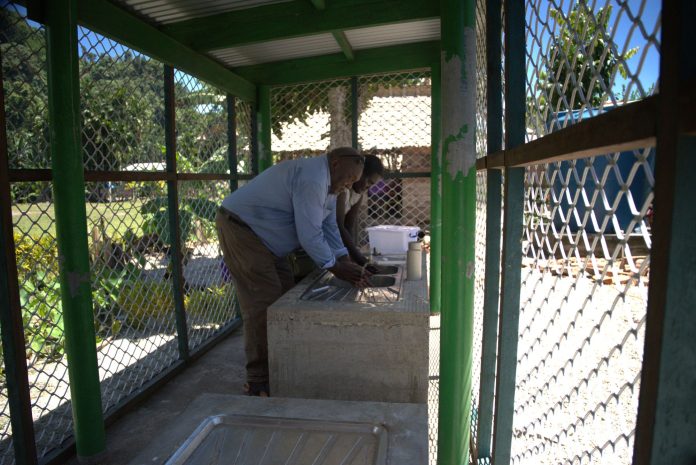
FIVE schools within Ward 10 in Western Province now have proper handwashing facilities, thanks to support from the Australian Government through the Department of Foreign Affairs and Trade (DFAT) program.

The schools that benefited from the project are JAC Primary School, Irigila Primary School, Vatoro Primary School, Leona Primary School, and Parasau Primary School.

Member of Provincial Assembly (MPA) for Ward 10, Freedom Tozaka, said the project marks another milestone in ongoing efforts to promote healthy schools and healthy children across the ward.

He said the installation of the new handwashing facilities is timely as it complements other health and education initiatives currently being implemented in local schools.

“Children are now enjoying the facilities and, at the same time, improving their personal hygiene practices,” Tozaka said.

He emphasized that good hygiene habits must begin with children, as they are the most effective agents of change within their families and communities.

“If we want to improve personal hygiene, we start with our children. I strongly believe that introducing such facilities in schools will educate them about the importance of washing hands after using the bathroom or playing on the ground,” he explained.

“This knowledge will stay with the children, and hopefully, personal hygiene will improve in communities when these children grow up,” Tozaka added.

He also acknowledges the Australian Government and DFAT for their continuous partnership and commitment to improve education and health standards in rural communities across Western Province.

The handwashing project was implemented under a community-led development approach, ensuring that school leaders, parents, and community members participated in the planning and installation of the facilities.

This approach not only promotes ownership but also ensures the sustainability of the facilities.

Teachers from the recipient schools welcomed the project, describing it as a vital improvement to their school environment.

They said the facilities will help prevent the spread of diseases such as diarrhoea and influenza among school children.

A teacher at Leona Primary School said the initiative helps the school to align with the Healthy Schools Policy promoted by the Ministry of Education and Human Resources Development (MEHRD).

The project reflects ongoing efforts by local authorities, development partners, and communities to enhance Water, Sanitation, and Hygiene (WASH) standards in schools — a key step towards creating safer, cleaner, and healthier learning spaces for students.

With the completion of the handwashing facilities, Ward 10 is now taking another firm step towards realizing its goal of building resilient and healthy communities through education and practical health initiatives.

For feedback, contact: [email protected]
PAC commences inquiry into 2026 Appropriation Bill 2025 today

0

BY NED GAGAHE

The Public Accounts Committee (PAC) has begun its inquiry into the 2026 Appropriation Bill 2025 today, Thursday November 13, at Parliament.

This follows the Committee’s deliberations earlier yesterday, during which members resolved to commence the inquiry without delay.

A statement from Parliament said the Appropriation Bill 2025 seeks to authorise government expenditure totalling $5,605,482,104 (five billion, six hundred and five million, four hundred and eighty-two thousand and one hundred and four dollars) for the services of the Government in 2026.

PAC Chairperson, Gordon Darcy Lilo, urges all supporting staff and stakeholders to be well-prepared and punctual to ensure the smooth and efficient conduct of the hearings.

It also sets annual limits on new government borrowing in accordance with the Public Financial Management Act 2013, including provisions for borrowing through Treasury Bills to address exceptional circumstances, as well as loans from development partners and domestic financial institutions to fund key infrastructure and development priorities.

The inquiry will allow PAC to closely scrutinise the proposed allocations and borrowing provisions across all ministries and agencies, to ensure that public funds are managed prudently and align with the Government’s fiscal policy objectives as outlined in the 2026 Budget Papers.

Lilo said relevant departments are working diligently to finalise preparations for the Committee Room and to ensure that all logistical and technical arrangements are ready ahead of the inquiry’s commencement.

“The Committee looks forward to the cooperation of all relevant offices in ensuring a successful, transparent, and accountable inquiry process,” Mr Lilo said.

The PAC inquiry is a key component of Parliament’s oversight role, providing an essential platform for transparency and accountability in the management of public finances.

For feedback, contact: [email protected]

We should not take peace for granted: Turner

1

BY LORETTA B MANELE

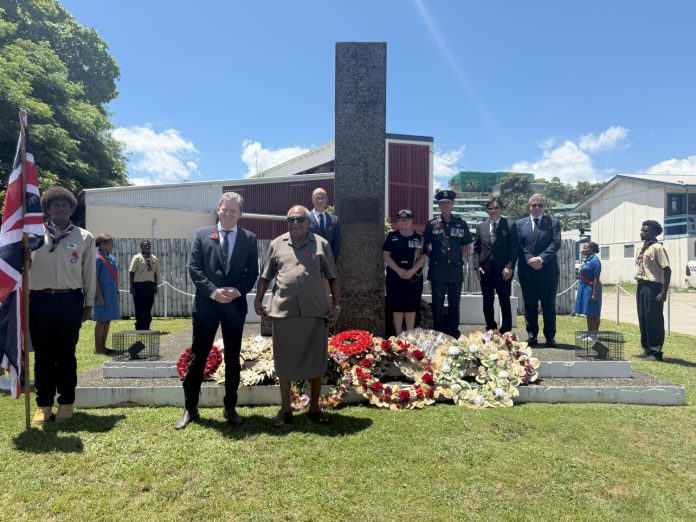
The Remembrance Day also referred to as “Poppy Day” was commemorated yesterday at Cenotaph Memorial Garden.

Speaking at the ceremony, British High Commissioner to Solomon Islands, Paul Turner highlighted that we should not take peace for granted.

He expressed that the occasion is observed across Britain and the Commonwealth to honour the men and women who served, suffered and sacrificed in times of war and conflict.

“Each year, at the eleventh hour of the eleventh day of the eleventh month, we pause to remember. The end of the First World War was declared when the guns fell silent at 11am on 11 November 1918.  Since then, this day has become a powerful symbol of reflection, gratitude, and unity,” said Turner.

He said “Remembrance Day” is a call to live our lives with compassion and to stand against injustice and aggression.

The High Commissioner emphasised that today, this message is more pertinent than ever.

“Today, the message of the Remembrance Day was more important than ever as certain powers seek to undermine the international order and the UN and multilateral system which is working for peace are at their weakest since their foundation,” he said.

Turner said we should remind ourselves of the battles of our forefathers and the horrors they saw and endured in defeating fascism 80 years ago. 

“We should not take peace for granted”, he said.

Turner said out that we wear the red poppy not just as a symbol of remembrance, but as a promise: a promise that we will not forget.

He explained that the poppy story is back when thousands upon thousands of poppies grew up in the battlefields of Flanders, Belgium in the months following WWI, blooming amidst the devastation and human carnage. 

Turner added that the poppy became a symbol that even in the darkest times, hope and resilience can endure.

He said it is true that in Britain, they focus a lot on the war in Europe and the horrors that unfolded there whether on the muddy fields of Belgium and France in WW1 or the industrial scale killings across the whole European continent during WW2.

Turner stated that the battle in the Pacific however, is not forgotten.

In this regard, he said the poppy is for all our service men and women who died serving their countries, whether that was at sea in the Pacific or fighting in the Mediterranean, on the beaches of northern France or in the jungles of the SE Asia and the Pacific Islands. 

“We remember the soldiers who never came home. The families who waited but never saw loved ones again. The communities forever changed.  We remember those who returned, carrying the invisible wounds of war that blighted their lives forever after. Most of all, we remember the peace that was won, and the cost at which it came,” said Turner.

The British High Commissioner said remembrance is not only about the past as it is also about the present and the future.

He said today, we honour those who serve in our armed forces, in peacekeeping missions, humanitarian aid, and defence of freedom. Their courage and commitment uphold the values we cherish.

“In war, as a famous quote goes, ‘There are no unwounded soldiers’,” he said.

Turner said so if nothing else this morning, let us let the simple poppy remind us of our shared humanity.

“And let it remind us that peace is fragile and should never be taken for granted,” he noted.

For feedback, contact: [email protected]
MCS Building to strengthen management of fisheries resources

0

BY BEN BILUA

Gizo

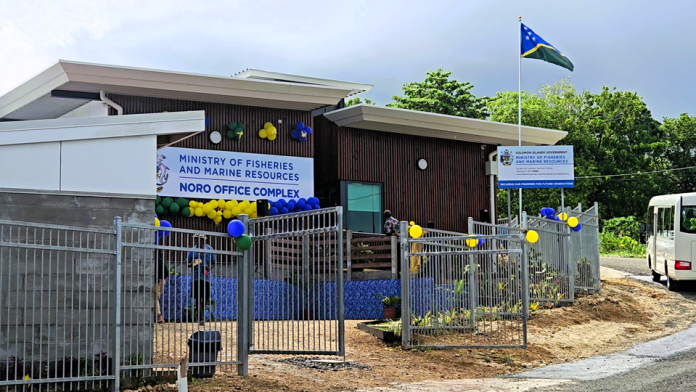
THE newly launched Fisheries Monitoring, Control and Surveillance (MCS) Building and Data Centre at Noro are set to greatly enhance the management of Solomon Islands’ fisheries resources.

Prime Minister Jeremiah Manele described both facilities as significant national assets, highlighting their vital roles in promoting good governance, sustainable development, and national resilience.

He said the MCS Building will enable Solomon Islands to strengthen national control and oversight over the exploitation, trade, and management of its fisheries resources.

“It strengthens our capacity to enforce laws, deter illegal activities, and uphold Solomon Islands’ sovereign rights within our Exclusive Economic Zone,” Manele said.

The Prime Minister revealed that the new facility also houses an electronic fish accounting system for the port of Noro — a locally developed innovation by the Ministry of Fisheries and the Ministry of Finance’s ICT team.

“This system exemplifies innovation by Solomon Islanders for Solomon Islanders — a home-grown solution to enhance transparency and traceability in the fisheries sector,” he said.

Manele further stated that the Noro Data Centre supports the implementation of the country’s Digital Transformation Roadmap (2026–2030), which aims to strengthen e-Government services across sectors such as health, education, commerce, and public finance.

“The facility will improve our digital resilience, enable more efficient service delivery, and strengthen our ability to protect and manage government data.

“Ultimately, it positions Solomon Islands as a regional model for resilient digital infrastructure in the Pacific — a demonstration that small island states can lead in innovation and resilience when given the right partnerships and support,” he said.

The Prime Minister acknowledged the support and confidence of development partners that made the achievement possible. He expressed gratitude to the World Bank for its partnership and trust in the Ministry of Fisheries and Marine Resources.

He said the World Bank’s investment of SBD17 million to construct and equip the Noro MCS Building reflects a shared commitment to protecting Solomon Islands’ sovereign rights over its fisheries resources.

“This facility stands as a testament to what can be achieved when international partnership meets national determination,” Manele said.

He also noted the World Bank’s continued commitment to the country through the construction of the Auki Fisheries Office Building in Malaita Province, valued at SBD31 million.

The Prime Minister further acknowledged the Forum Fisheries Agency (FFA) for providing training on the administration of the MCS system.

“Equally, I extend my government’s warm appreciation to the Government and people of Australia for their enduring partnership and friendship,” he said.

Manele said Australia’s AUD1.3 million investment in the Noro Data Centre demonstrates confidence in Solomon Islands’ Digital Transformation Program and in the professionalism of the ICT Services Division within the Ministry of Fisheries and Marine Resources.

For feedback, contact: [email protected]
Domestic violence workshop kicks off in Auki 

0

By RODRICK DESURI 

Auki 

A domestic violence counseling committee establishment workshop has kicked off in Auki, Malaita Province yesterday.

In an interview with the Island Sun Auki, Frank Samo Sari said the workshop aims to train all domestic violence counselors in Malaita and individual practitioners to establish the counselors’ committee and adhere to their handbook. 

He said that the workshop will cover two components.

The first component includes the Solomon Islands Domestic Violence Counseling Register while the second component focuses on the Solomon Islands Code of Ethics and Practice Standards for registered domestic violence counsellors.

Sari mentioned that provincial stakeholders from various sectors including those from the government sector, private sector, non-government organizations, as well as church-based leaders, and individuals attended the workshop.

The three-day workshop will conclude on November 13, 2025. 

For feedback, contact: [email protected]
Make it 18

1

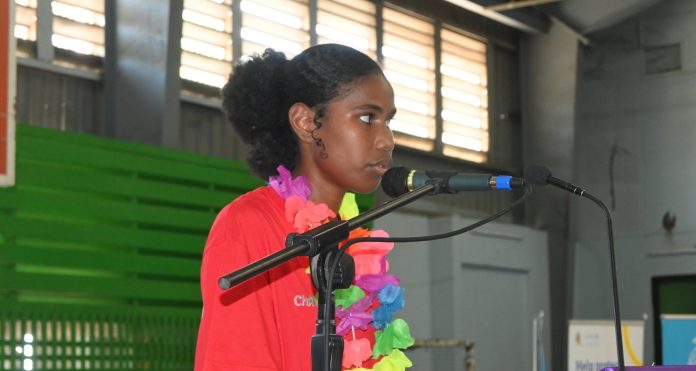
Solomon Islands girl calls for marriage age to be raised to 18

BY MORRIS NAFU

A young girl by the name of Annabell is calling for the marriage of girls in Solomon Islands to be raised to the age of 18.

Speaking at the International Children’s Day event at Multipurpose Hall yesterday, she voiced deep concerns about the early marriage age for girls in Solomon Islands, arguing that it hinders teenage girls from making informed decisions and leaves them vulnerable to exploitation.

Representing girls across the country, Annabell urges that the legal marriage age for girls be increased from 15 to 18, citing how parents and relatives often manipulate the current law for personal gain, denying girls autonomy.

“With the early marriage age, some parents and relatives take advantage to use it for their own without letting girls to make their own decisions,” she said.

Under the Islanders Marriage Act, the minimum age for marriage is 15, requiring parental consent up to 18 or judicial approval if unavailable.

In a coalition of charities report, it stated that one in five girls in Solomon Islands is married before the age of 18, and this increases to one in four in rural areas.

Around six percent of girls are married before the age of 15 in Solomon Islands.

Save the Children Advocacy and Research Director Jacqui Southey, in a statement, said there was widespread public support to increase the age.

“There was consensus between children and adults, parents and community members that children’s experiences should be playing with their friends, being at school, learning skills.

“They also thought that children getting married too young could lead to problems and we know that through the data that problems such as increased risk of domestic violence is a real concern, the inability to finish school, the inability to have good earnings prospects later in life and greater risk of exploitation,” Southey said.

However, customary marriages—rooted in indigenous traditions and linked to land inheritance—frequently involve girls under 15, complicating enforcement due to discrepancies between formal and traditional laws.

Legal inconsistencies further exacerbate the issue.

The Child and Family Welfare Act 2017 defines a child as under 18 but excludes those married, while the Penal Code (Amendment) (Sexual Offences) Act 2016 sets the age of consent for sexual activity at 15. These contradictions pose challenges for child protection.

In a related development, the government is composed to amend the Islanders Marriage Act 1945 to raise the marriage age to 18, aligning it with the voting age and international human rights standards.

Minister for Foreign Affairs and External Trade Peter Shanel Agovaka informed Parliament on August 4, 2025, that the change aims for compatibility with other laws.

“We currently allow marriage at 15 years old. We want to change that to 18, which is also the legal voting age. We are making this change so that it is compatible with other legal matters,” he said.

The push for reform is bolstered by alarming statistics from the “Endim Vaelens Agenstim Pikinini” report, revealing that one in five girls in Solomon Islands marry before the age of 18, with the rate rising to one in four in rural areas.

Advocates say the amendment will strengthen child protection measures nationwide.

For feedback, contact: [email protected]
Children should be partners in development: Alependava

1

BY MORRIS NAFU

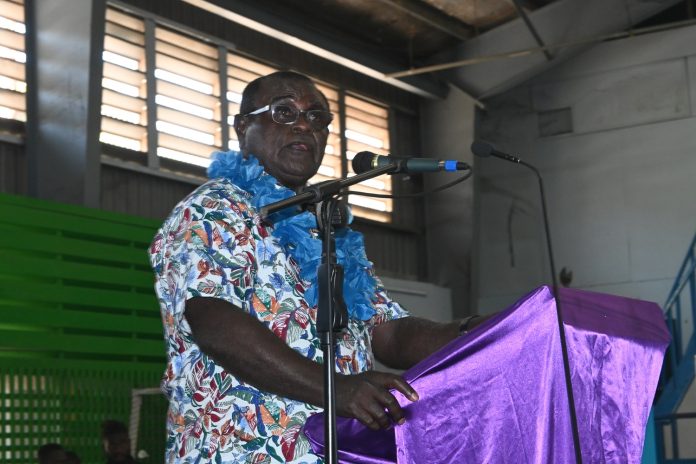
Ministry of Children, Youth and Women and Family Affairs (MWYCFA) Permanent Secretary, Cedric Alependava, says children, should be seen as active partners in development, not just passive beneficiaries.

He raised this at the International Children’s Day celebration at the Multipurpose Hall yesterday.

Addressing the gathering on behalf of the Minister and the Ministry, Alependava welcomed attendees and highlighted the event’s dual purpose; to celebrate and reaffirm commitments under the United Nations Convention on the Rights of the Child (UNCRC) in Solomon Islands.

He referenced UNICEF’s theme for the year, “Listen to the Future for Every Child and Every Right,” stressing the need to protect, nurture, empower, and amplify children’s voices.

“Children are not merely beneficiaries of development, but key partners,” Alependava stated, urging collective efforts to ensure that no child is left behind.

He acknowledged progress since Solomon Islands ratified the UNCRC, including the enactment of the Child and Family Welfare Act, the National Child Policy, and ongoing work by the National Advisory Action Committee on Children.

However, he noted persistent challenges and called for renewed promises to build a safe, dignified society for every child.

Alependava extended thanks to partners such as UNICEF, Save the Children, the Australian Department of Foreign Affairs and Trade (DFAT), the New Zealand Government, the Royal Solomon Islands Police Force, the Honiara City Council, World Vision, ChildFund New Zealand, the Central Bank of Solomon Islands’ Financial Inclusion initiative, and various NGOs and faith-based organizations for their support in advancing children’s rights.

The event, attended by children and stakeholders, highlighted the importance of children’s well-being as the foundation of the nation’s future.

For feedback, contact: [email protected]
Solomon Islands Celebrates 30 Years of UN Child Rights Convention on International Children’s Day

0

BY MORRIS NAFU

The Ministry of Women, Youth, Children and Family Affairs (MWYCFA), in collaboration with UNICEF and other partners, marked World International Children’s Day 2025 at the Multi-Purpose Hall yesterday.

The event featured a morning parade of student participants from schools in Honiara and surrounding Guadalcanal schools.

The gathering commemorated 30 years since Solomon Islands ratified the United Nations Convention on the Rights of the Child (CRC).

It brought together government officials, development partners, children’s organizations, and young representatives to review advancements in child rights and pledge ongoing dedication to safeguarding every child’s entitlement.

Minister of MWYCFA, Cathy Nori addressed the crowd on the theme “Listen to the Future for Every Child for Every Right”.

She emphasized the need to hear children’s needs, voices, and aspirations with compassion, urging leaders to align actions with divine principles.

Nori highlighted progress over three decades, including the Child and Family Welfare Act 2017 for combating abuse and neglect, the Family Protection Act 2014 against domestic violence, and the National Children’s Policy 2023-2028 as a framework for rights promotion.

She acknowledged ongoing efforts in education, justice, policy, and welfare to enhance access to services, alongside partnerships with civil society, faith groups, and communities.

However, Nori noted persistent challenges, such as limited education and health access, violence, child sexual abuse, labour, early marriages, and climate impacts, particularly in rural regions.

Calling for renewed resolve, she stressed the importance of better coordination, resources, and monitoring to ensure equitable services for vulnerable children and to empower youth in decision-making.

“Every decision we make today shapes the future of our children,” she said, urging action on their hopes and fears.

Nori thanked partners including UNICEF, Save the Children, World Vision, Child Fund New Zealand, and Plan International for their support, pledging collective efforts to create a nurturing environment where every child thrives.

For feedback, contact: [email protected]