Home Blog Page 1594

AIDING LOCAL FOOD SECURITY WITH TILAPIA FARMING

0

DEAR EDITOR,

After writing for some years about the need to improve food security in the country, including advocating fish farming, I am delighted to know that Tilapia farming will soon be introduced to all Rural Training Centres nationwide.

 This new initiative was announced recently by the Director of the Solomon Islands Association of Vocational Rural Training centres (SIAVRTC) Billy Mae.

 In a report, featured in the Solomon Star newspaper, Mr Mae outlined that the fishing scheme comes after a three years partnership development established with the Solomon Islands Association of Vocational Rural Training centre’s (SIAVRTC) and the New Zealand Win Tec Waikato School of Technology in New Zealand under the support of the New Zealand Government.

The SIAVRTC director Mr Billy Mae thanked the New Zealand government for their support.

 I, too, join Mr Mae in thanking the New Zealand Government.

 Yours sincerely

 Frank Short

MINDSET AND POLICY CHANGES NEEDED TO CREATE A SUFFICIENCY ECONOMY

0

DEAR EDITOR,

Every day in my small Soi (street) in Thailand, I greet the 83 year old Thai grandmother roasting her small, sweet bananas on a charcoal grill made from an old converted oil drum.  Ying gets up before 5 am to catch her regular customers as they pass by on their way to work.  She is often seen still serving customers late in the afternoon.

I have never seen her without a smile on her face and I guess she makes just enough from selling her bananas to justify her long hours.

Ying represents to me the ethos, self-reliance and spirit of the sufficiency economy philosophy initiated in Thailand by H.M. the late King Bhumibol in 1946.

Soon after ascending to the throne in 1946, King Bhumibol toured the country and became aware of the hardships facing the poor. At that time, the per capita GDP was about US$200. He took a keen interest in rural development, and instituted a number of royal projects to help the lot of the rural impoverished.

Sufficiency economy is not a theory about how the economy of a country works, but rather a guide for making decisions that will produce outcomes that are beneficial to development.

 The principles of SEP’s application promote enterprise, hard work, reasonableness, moderation and prudence.

Thailand’s adoption of SEP principles and practices are fully supportive of the UN’s Sustainable Development Goals

I draw a comparison with Ying’s enterprise to some in the Solomon Islands who seem still to have a cargo cult mentality and expect everything to be handed out to them, examples being roofing iron, water tanks, solar lights, outboard engines, canoes etc, without having made an effort to acquire such things by themselves by creatively working to be self-sufficient.

The argument goes that there is no money to start small self-enterprise schemes and I accept that this is essentially true and one must hope that the government and provincial authorities will encourage more small scale lenders to grant loans to those who have sound ideas to help themselves become self-sufficient.

Once less reliance on hand outs is achieved the sooner money can be put into real development and infrastructure requirements such as roads, bridges, sanitation and clean water supplies.

A change in mindset from the old cargo cult way of thinking must be encouraged to ensure self-immunity and protection from the impacts arising from the rapid socioeconomic, environmental and cultural changes in the world.

At the same time, it is essential to strengthen the moral fiber of the nation, so that everyone, particularly public officials, academics, and business people at all levels, adhere first and foremost to the principles of honesty and integrity.

Thailand values its SEP policy as a practical tool to effectively manage capitalism in a way that aligns and engages it with social sustainable development while fostering accountability and empowerment of communities.

More importantly, the main goal of The Sufficiency Economy policy is to measure economic development not just using GDP, but also by taking the reduction of social inequality and poverty into account.

Yours sincerely

Frank Short

AUSTRALIAN FOCUS TO BE ON THE PACIFIC

0

DEAR Editor,

In a newly released Foreign Affairs White paper, Canberra has placed significance importance on Pacific Islands

Relaying the news, reportedly to the delight of some Pacific scholars, Radio New Zealand International (RNZI) gave considerable converge in a news broadcast this evening, 27 November 2017.  Here is a précis of the main points (quote).

Beyond the diplomatic platitudes of shared heritage, interests, and longstanding ties, the paper announced a significant surge in its interests in measures like labour mobility, including going as far as recognising that “new approaches will be necessary” to how it deals with island countries.

“An academic from the Australian National University, said the White Paper contained one of Canberra’s strongest commitments to its own backyard in recent memory.

“It singles out our relationship with the Pacific and deepening that relationship as one of the five top objectives for Australia. I think that in itself is interesting,” said Professor Howes.

“The Pacific doesn’t normally have that high a profile in foreign policy discussions.”

“An entire chapter of the Foreign Affairs White Paper is devoted to the Pacific (A shared agenda for security and prosperity, it’s called), making supporting the region’s development one of the Canberra’s key aims.

“The stability and economic progress of Papua New Guinea, other Pacific island countries and Timor-Leste is of fundamental importance to Australia,” it said. “Our ties with these neighbours are long-standing and will be enduring.”

“From here, it lays out a plan to support labour mobility, something Australia was once reluctant to do; enhance security partnerships; the prospect of shared services, such as allowing Nauru, Tuvalu and Tonga to access Australian pharmaceutical testing; and fostering greater people-to-people relations.

“That’s a dramatic change from the last White Paper in 2003, which characterised the Pacific Islands as fraught with instability and governance issues, while alluding to the possibility it could be a breeding ground for extremism.

“Dr Howes said the 2017 paper took a more optimistic tone and, significantly, recognised that a new approach was needed.

“However, it’s not all altruism. Dr Howes said the new approach was also underlined by strategic concerns, particularly with a rising interest from distant powers – particularly China.

“It’s partly driven by a feeling we’ve only been paying lip service – we really have to deliver,” said Professor Howes.

“But it’s also driven by this feeling that other powers are entering the Pacific and challenging Australia’s role in the Pacific, so if we’re not careful we’re going to be marginalised.

“Australia remains the largest power in the region and is still, by far, the largest aid donor. For all the talk of China’s increased spending, its nearly US$2 billion pales in comparison to Australia’s US$7 billion, according to figures from the  Australian Lowry Institute..

“But in Australia itself, Pacific issues are often far from the priorities of the Canberra classes compared to Asia, the United States and even the Middle East. The shadow defence minister, Richard Marles, said this needed to change.

“The Pacific has choices, and we can’t take for granted that we will be the partner of choice forever,” said Mr Marles. “The country that cares the most will be the country that has the most influence in the Pacific.

“It’s really important that Australia makes clear that we are that country.”

“While a lot more optimistic than 2003, the paper still identified several challenges facing Pacific countries that would likely need assistance: weak governance, corruption and small economies vulnerable to shocks.”

Source:  Radio New Zealand International.

Yours sincerely

Frank Short

WHY NOT A PINEAPPLE CANNING FACTORY?

0
DEAR Editor,
A few months ago writing to the local media I mentioned how I once started a profitable garden enterprise from scratch when in charge of the Santo Prison in Vanuatu and needed to find both occupational therapy for the prison inmates and nutrious food to supplement their daily dietary needs.
There was a small barren plot behind the prison which I considered could be turned into a productive food garden but there was no money available to make a start.
Using discarded and empty beers cans filled with a light soil mix and two donated 44 gallon oil drums, the garden quickly took shape by planting tomato seedlings in the beer cans, transplanting them out when ready and ultimately selling surplus good quality organic tomatoes to the local Santo BP store.
The income from the tomato sales led to the planting of beans, taro, lettuce, peanuts, bananas and pineapples.
In the two oil drums a sack of cow manure was suspended into water which made an ideal liquid fertilizer.
Eventually, chickens and rabbits were introduced as good sources of essential protein.
The pineapples did exceedingly well in the light soil and excess produce was also sold off to add to the costs associated with buying food for the hens.
In the last few days the SIBC featured what it described as the ‘Photo of the Day’ and presumably a photo taken at one of the local markets.  In the photo were several large pineapples which appeared to be of good quality.
It occurred to me that if such good pineapples can be cultivated locally then why not start a small pineapple canning enterprise, as has been done in several regional places, Thailand being no exception.
Very often the lack of finance is the stumbling block to the start of some idea with potential, but I did it with no money at all and so, I believe, can others.
Yours sincerely
Frank Short

The Solomon Islands to ratify the UN convention on the rights of person with disabilities

0

DEAR EDITOR, in a news bulletin broadcast today, January 8, 2018, Radio New Zealand International (RNZI) quoted the Solomon Islands Prime Minister as saying the Solomon Islands will ratify the UN Convention on Persons with Disabilities.

This is the text of the RNZI bulletin.

“Prime Minister Rick Hou announced this commitment during a recent meeting with the Solomon Islands Deaf Association in Honiara.

“According to the Solomon Star, Mr Hou said supporting people with special needs was everyone’s business.

“He said schools and institutions around the country should consider introducing sign language into their curricula and training.

“Mr Hou told association representatives at the meeting, Solomon Islands would ratify the UN Convention on the Rights of Persons with Disabilities as soon the relevant documentation was finalised.

“Speaking through a sign language interpreter, the president of the Solomon Islands Deaf Association Ali Barnabas thanked the prime minister for this commitment while also highlighting the struggles associations like his continue to face because of a lack of support for people with disabilities in the Solomons”

This commitment by the newly elected Prime Minister is welcomed and one must look forward to the Solomon Islands Government early ratification, but it should be recalled that in a press statement from the PM’s Press Secretariat in September 2015, Prime Minister Sogavare said, “Ratification of the UN Convention on the Rights of Persons with Disabilities (UNCRPD) can be done in Solomon Islands and transmitted to the UN.

“Furthermore any decision by the government to ratify this convention does not even need to be approved by Parliament.

“All we need is a Cabinet Paper for endorsement by Cabinet and we will proceed to be a signatory to the UNCRPD.”

The many persons with disabilities in the Solomon Islands have lacked support for their varied needs for a very long time and I personally urge Prime Minister Hou to finalise the relevant documents and to obtain Cabinet approval for ratification of the UNCRPD and submission to the UN as soon as possible.

Yours sincerely

FRANK SHORT

Gold Ridge landowners need government support

0

BY BEN BILUA

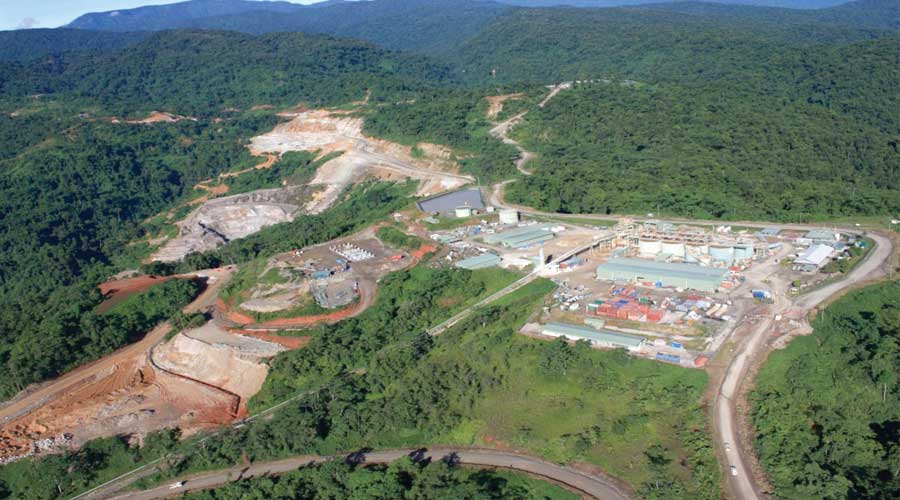
THE landowners of Gold Ridge Mining have called on the government to live up to its promise in the development of Gold Ridge Mining.

Chairperson of Gold Ridge Mining Mr Dick Douglas said operation at Gold Ridge has been on schedule but has been held back due to the bad state of the Tina Hulu Bridge.

He explained that the Tina Hulu Bridge is the gateway to Gold Ridge Mine Site and the current situation at the bridge is not conducive for the operation to continue.

Douglas said Tina Hulu Bridge has been partly damaged and needs reconstruction to speed up the operation.

He said the eastern part of Tina Hulu Bridge has been washed out by flood during the recent rainy season leaving approximately a 50 metres gap between the edge of the bridge and the river bank.

Douglas said Gold Ridge landowners and the new investor have already transported one container with equipment and tools to renovate the infrastructure to Gold Ridge while the other container is still at Ravua 2.

“We cannot transport this container to the site because the bridge is not in a good condition, so we decide to leave the container at Ravua 2 until the bridge is fixed,” he explained.

Douglas operation at Gold Ridge will not proceed unless the bridge is fixed.

This paper understand that landowners of Gold Ridge Mining have braced themselves with the support of the Government and the new investor AXF Gold Ridge Pty Ltd of Australia to reopen the Gold Mine.

In 2016 the outgoing Government (DCCG) appointed a team to facilitate programmes and activities which aimed at revitalising the gold mine.

Last year (2017) the team held numbers of consultation with the landowners as part of the programme.

However there is no progress on the reopening of Gold Ridge today.

Ombudsman office to collaborate to other integrity institutions

0

BY CAROL-ANNE SULEGA

THE Bills and Legislation Committee (BLC) strongly recommends that an administrative mechanism be established to facilitate collaboration between the Ombudsman office and other integrity institutions to enhance resource and information sharing.

The traditional role of the Office of the Ombudsman is to investigate reports of maladministration.

Governmental power, administrative processes and decision making must be exercised with due care and any citizen that suspects that they have been treated unfairly by a government agency may lodge a complaint with the Ombudsman.

This is stated to be important in ensuring that powers of the government are not abused or used in a manner that is arbitrary and unfair on citizens.

The conduct of investigations by the Office of the Ombudsman may include, summoning of information from government agencies, entry into official premises to collect information or the collection of any document or item that may be useful in its investigations.

The Ombudsman may summon witnesses and the Ombudsman may refuse to investigate a complaint if it appears that the complaint is trivial, frivolous, or if the complaint has no sufficient personal interest or the complaint is more than 12 months old.

The Committee’s report states that where the finding warrant, the Office then makes recommendations on remedial action to the Office of the Prime Minister or to the concerned Ministry.

The BLC according to its report on the Ombudsman Bill that has already gone through passage states that they were informed that where its recommendations were not adhered to, the Office of the Ombudsman must report on the matter to Parliament.

The passed legislation seeks to provide further powers to the Office of the Ombudsman to enforce implementation of recommendations.

It was reiterated during hearings on the Bill (at the time), that strengthening the roles and functions of the Office is vital in enabling citizens to hold their government accountable.

This, the report added is fundamental in a democracy such as in Solomon Islands and the BLC affirmed this important decision intention.

Maepio praise public for good festive behaviour

0
Former Western Province Premier Hon. Wayne Maepio

BY ALFRED PAGEPITU

GIZO

WESTERN Province Premier Hon Wayne Maepio has thanked the province’s public for cooperation over the Christmas and New Year’s period in Western Province.

He acknowledged church elders, community leaders, and members in particular for celebrating last year’s Christmas and New Year 2018 peacefully.

“I would like to sincere acknowledge my good people of Western Province with good behavior during renders throughout the whole Christmas and New Year week.

“I hope most families and friend from other provinces and Country feel west and love west with different varieties of programes within our Islands.

“My government has thanked all our hard working police officers to provide security within the surrounding communities and we thanked community leaders for working close with the Police office in our province,” said Maepio.

Meanwhile, Maepio said that he hopes the same working-together and partnership with the surrounding communities in Western Province will continue with the next future generation in Western and country as a whole.

Gizo market to relocate this weekend: PS

0
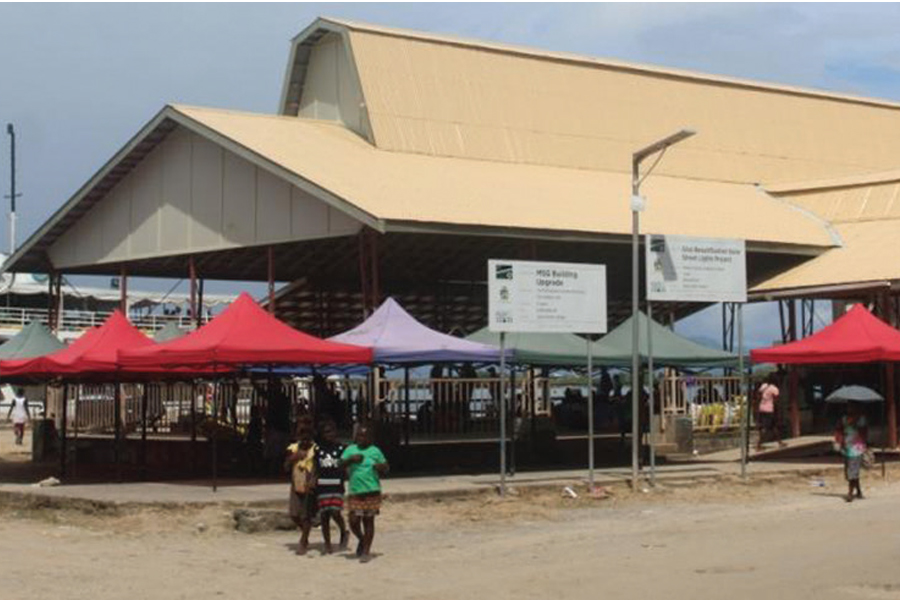
The new relocate site market venders preparing to relocate at the MSG building this Saturday

BY ALFRED PAGEPITU

GIZO

GIZO market venders will temporarily be relocated to the MSG building to make way for constructions of a new re-developed market house funded by the Australian Government.

Western Provincial Secretary, Jeffery Wickham yesterday confirmed that on Saturday market venders from surrounding islands are expected to relocate to the MSG building.

He said awareness programmes will soon be carried out in preparation of the relocation to the new site.

“I would like to encourage venders from surrounding Islands and Gizo residence to look after the building and clean the compound at all times.

“MSG building is center at the heart of Gizo town. Therefore be responsible to help the responsible authorities to look after our provincial capital town with proper waste management.

Wickham called on market vendors from Ranonga, Simbo, Vella la Vella, Kolombangara islands and Gizo residents to be prepared to move over to the site.

Vender team Leader, Joseph Hiele yesterday said venders are now prepared to relocate and they are all looking forward to see the new re-developed market for Gizo town.

He said the vendors are now prepared to build their own sites for their own stalls and well planned for the walkway for betel nut chewers to use at the back of the MSG building.

Hiele encourages vendors from surrounding islands and chewers to throw their rubbish at the right place so that everyone can enjoy their daily income services for customers.

Aussie property tycoon may be the next SI honorary consul in Sydney

0

BY ALFRED SASAKO

PROPERTY tycoon, Ian J Hosking Richards, is almost certain to be Solomon Islands’ next Honorary Consul in Sydney. In the event he does, he replaces a close friend Trevor Garland whose tenure was terminated about three years ago.

Sydneysider Richards is also almost certain to take over the oversight of the 10-bed scheme with St Vincent’s Hospital in Sydney after Hospital authorities took the unprecedented steps in banning Sir Trevor from the hospital as well as making contacts with Solomon Islands’ patients there about two months ago. It has not been revealed why Sir Trevor Garland has been banned from the hospital.

Sir Trevor has had oversight responsibilities over the programme for more than 20 years.

Mr Richards is due to arrive in Honiara today in the company of Foreign Affairs Minister, Milner Tozaka MP, Solomon Islands Ministry of Foreign Affairs confirmed yesterday.

Cabinet is due to consider a paper on Mr Richards’ formal appointments, which at this stage are subject to the concurrence of the Australian government.

Recommended by Sir Trevor for both positions – honorary consul and the oversight of the 10-bed arrangement – Mr Richards is said to be a close friend of the former honorary consul.

Given his involvement in the 10-bed arrangement, Richards has moved to set up a charitable organisation, called The Solomon Foundation. The directors of this company include Richards’ business partner Manogar Kuppusamy and another person named Cameron Holloway whose address is listed as being in Surry Hills, an inner Sydney suburb.

On the NSW Cardiology website it refers to an Associate Professor Cameron Holloway and states that “Cameron graduated from Monash University in Melbourne. He completed his physician training in both the UK and Australia and his cardiology training at St Vincent’s Hospital in Sydney, prior to moving to the University of Oxford where he trained in advanced cardiac imaging.”

It is not known if this is the same Cameron Holloway listed as a director of The Solomon Foundation.

Sir Trevor Garland is not listed as a director of this company however his personal address of 54 Hyatts Road Oakhurst Sydney NSW Australia is listed as the principle place of business of The Solomon Foundation.

The Permanent Secretary of the Ministry of Health and Medical Services, Dr Tenneth Dalipada and Dr Rooney Jagilly, attended the launch in Sydney more than a month ago. The Sydney launch was said to be attended by 212 guests, according to the list of attendees, obtained by Island Sun. It is not clear however whether all 212 guests, including four from Solomon Islands showed up.

Since then Mr Richards has printed a business card with the name, The Solomon Foundation, putting himself as the Chairman of the Charity. The card carries a Solomon Islands’ mobile number as well as Mr Richards’ mobile number in Australia.

At the time of the launch, it was said that the objective of The Solomon Foundation was to raise funds for Kilu’ufi Hospital on Malaita.

Malaita Premier Peter Ramohia denied any knowledge of the Foundation.

A newsletter produced by Mr Richards’ Rocket Property Group has now put a new spin on The Solomon Foundation. Writing in the December issue for 2017, Linda Lear, a member of the Rocket Property Group team, said of Mr Richards:

“On a personal note, Ian (Richards) has set up his charity The Solomon Foundation to help the sick poor from the Solomon Islands be flown to Australia and receive emergency medical treatment in Sydney. Ian looks after the daily needs of these patients while they are in Australia and it is his personal passion to grow the program to benefit more of the Solomon Island people.”

It is understood that Australia may not been keen on Mr Richards’ appointment.

Solomon Islands Ministry of Foreign Affairs confirmed yesterday that Mr Richards is traveling with Foreign Minister Tozaka to Honiara today. It is not clear why Mr Richards is visiting Honiara as the government is yet to endorse his appointment.

One possible explanation is that he may be asked to appear before Caucus and Cabinet or both to convince the government why he is qualified to run the 10-bed programme at the St Vincent’s Hospital in Sydney.

Mr Richards is the Chairman of the Rocket Property Group based in Sydney.