Home Blog Page 1369

Fight against TB needs more effort: Dr Bainivalu

0
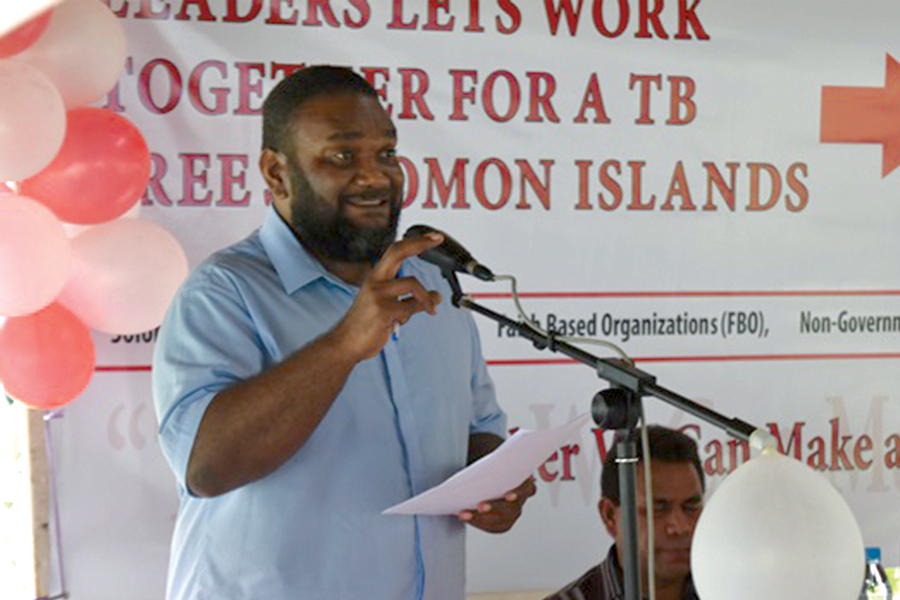
Deputy Secretary Health Improvement, Ministry of Health and Medical Services Dr Nemia Bainivalu

BY BARNABAS MANEBONA

UNDERSECRETARY for Health Improvement under the Ministry of Health and Medical Services (MHMS) Dr Nemia Bainivalu recently said more efforts are still needed to fight Tuberculosis (TB).

This is because the disease still represents a public health problem in the country.

Solomon Islands has reached the WHO Western Pacific Region’s goal to reduce by half the morbidity and mortality from all forms of TB by 2015, relative to 2000 levels.

“In this respect, MHMS has already undertaken a strategic prioritization of high impact interventions aimed at addressing the remaining challenges in the framework of a country dialogue which led to the planning of high impact activities focusing on high burden geographic locations and key populations affected by the disease,” said Bainivalu.

“These interventions have been included in the TB National Strategic Plan 2018-80, which was developed in 2017.

“The immediate purpose of the interventions is to ensure universal access to TB care and prevention through improving institutional and human capacity within the health system, empowerment and involvement of communities with meaningful patient support, collaborative activities with other disease programs including child and mother health, and engagement of all health care providers beyond the TB programme and the public sector.”

He added that their ultimate goal is to speed up the current decline of the burden of the disease so as to reach the internationally agreed targets in the framework of the ‘End TB Strategy and the Development Goals’.

World Health Organisation’s (WHO) representative Mr Dilip Hensman during the recent 2018 celebration of World TB Day said that ending TB will only be achieved with greater collaboration within and across governments, partners from civil society, communities, researchers, the private sector and development agencies.

“This means taking a whole of-society and multidisciplinary approach in the context of universal health coverage,” said Hensman.

Santupaele community with new school building

0

BY ALFRED PAGEPITU
GIZO

SANTUPAELE community in Kolombangara Island stands to benefit from a newly built school building supported and funded by the Rural Development Project (RDP).

The official opening and handing over of keys to the building was held at Santupaele village yesterday.

A Mr Adrian Atitao told Island Sun Gizo from Santupaele earlier this week, the handover marks a milestone for Santupaele and surrounding communities.

He adds that the school building stands to benefit the community now and in the future.

“Our thanks to RDP who assisted a lot in the completion of the building for our children.

“The new school building will improve and develop our children’s learning in school and we are proud owners of the new school building that will cater for our young children who always victim to seek schools daily, paddling to Kukudu and Varu,” said Atitao.

He said the school will provide Early Childhood (ECE) and Primary, although it has plans to move to class six.

The hardships women face to be leaders

0

BY ELLISON.T.VAHI

THE wish to have more women in parliament is being blocked by a number of barriers, it is reported.

These barriers are stated in the National Gender Equality and Women’s Development Policy 2016-2020, of the ministry of women (MWYCFA).

It reports that Young Women’s Parliamentary Group found during a training in 2014 that most people support the idea – but in theory only.

It was noted that despite the high support, only a few actually voted for women candidates.

One of the highlighted disadvantages cited is the prevailing practice of vote-buying, since women tend not to indulge much in the habit as compared to men.

Another problem is how most cultures prefer male leadership over females’.

Interestingly, there is a general tendency among voters to simply avoid voting for a candidate who is perceived to have a very low chance of winning.

A MWYCFA report in 2015 reveals that there is little progress in increasing the participation of women in decision making and leadership.

While the number of women in senior occupations has increased, the number of women in managerial posts has decreased.

The Solomon Islands Government recognises that intervention cannot only be targeted towards women’s representation in national parliament but also in the number of women in formal employment.

The achievement of equal participation of women and men at all levels of decision making, governance and leadership requires a complete approach to addressing the barriers to women’s participation and representation in the first place.

In this instance, that Solomon Islands Government recognises the important role played by civil society organisations at the provincial and local level to encourage and raise awareness on the right of women to participation and representation in public life.

Australia committed to share water management expertise

0
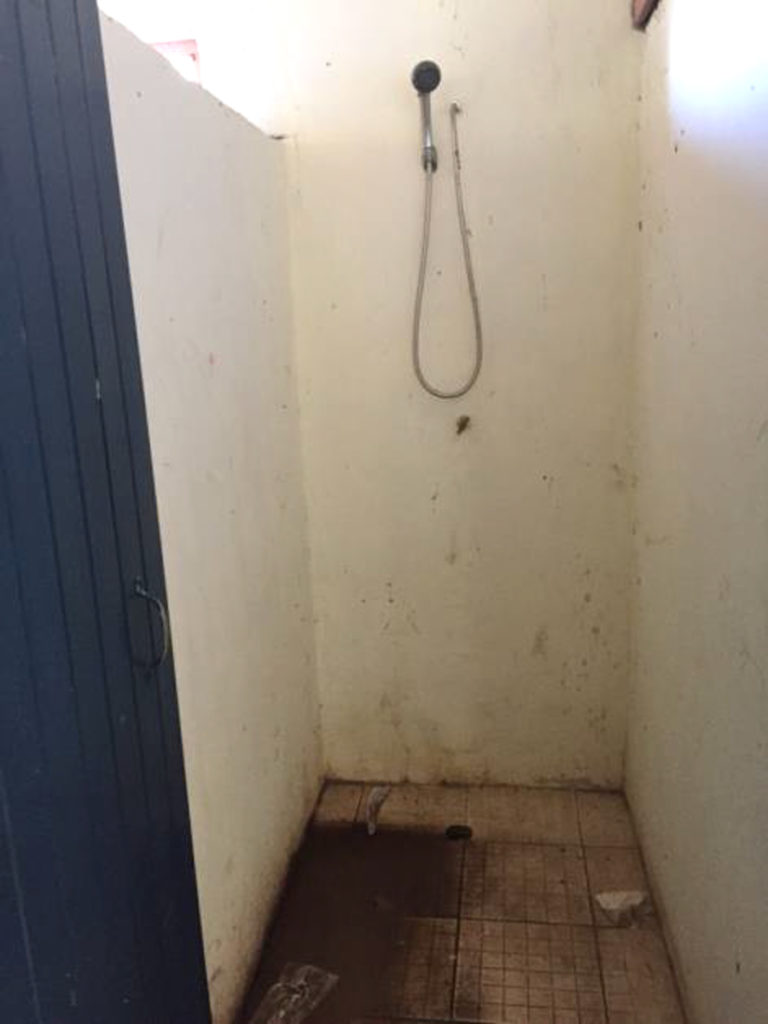
Where shower facilities lack privacy and cleanliness, girls and women prefer to attend to their hygiene needs at home

BY GEORGINA KEKEA

Where shower facilities lack privacy and cleanliness, girls and women prefer to attend to their hygiene needs at home

WITH the increase of preventable diseases, a timely research was conducted in 2016 on the menstrual hygiene management in the Pacific.

Titled the Last Taboo: Research on menstrual hygiene management in the Pacific, the report speaks volumes of the challenges women and girls in the Solomon Islands are faced with in regards to Water, Sanitation and Hygiene (WASH).

The report revealed that WASH facilities in schools, workplaces and public places are inadequate to meet the needs of menstruating girls and women.

Challenges includes lack of water for handwashing and personal hygiene, poorly maintained facilities lacking in privacy, lack of available options for the safe disposal of soiled sanitary items.

Inadequate WASH facilities contribute to unhygienic menstrual management practices (such as improper disposal of soiled materials), or the preference to return home to change soiled materials- and is likely a factor in absenteeism.

For Solomon Islands, women and girls aged 15-54 years makes up more than 27 percent of the total population.

Water, sanitation and hygiene access is some of the lowest in the region with only 54 percent of the population have access to basic water sources and only 13 percent have access to basic sanitation.

This study revealed how managing menstruation hygienically, effectively and with dignity can be challenging for girls and women in low and middle-income countries like Solomon Islands.

From research gathered in the report it is evident that government, communities, school authorities, stakeholders and employers needs to increase their support and understanding to provide basic WASH facilities for women and girls.

On the outset, Australia in its 2017 Foreign White Paper Policy has promised to share its water management expertise to help enhance agricultural productivity, improve health outcomes, strengthen economies and reduce poverty.

Also through the membership of its Prime Minister in the United Nations/World Bank High Level Panel on Water, Australia is optimistic that it will be able to assist its neighbours in this initiative.

In the White Paper, Australia says it will deliver $100 million ‘Water for women’ programme over seven years (2017 – 2024).

This is to improve water access, sanitation and hygiene practices across the Indo-Pacific region.

The ‘Water for Women’ programme is in response to evidence that gender approaches to WASH can contribute more effectively and be sustainable in WASH outcomes as well as improvements in women’s and girls’ well-being and offer an entry point to facilitate changes in gender relations, norms and attitudes.

Gender equality and social inclusion are central to the Water for women programme.

This will help ensure that women and girls have equal opportunity, representation, work and involvement in WASH programs, and benefit equally from their outcomes.

Advancing gender equality through implementation of Sustainable Development Goal 6 – the Water Goal – will see a world where women and girls do not bear the time burden of walking long distances every day to collect water for their families, where fewer babies die as a result of mothers giving birth in unhygienic health care facilities and girls no longer miss school because there are no appropriate menstrual hygiene management services.

The Water for Women Fund will work with civil society organisations (CSO) on innovative ways to improve water, sanitation and hygiene, focusing on women, girls and people with disabilities in the poorest human settlements. The Fund will also support a WASH research programme.

The Water for Women programme is part of Australia’s commitment to the High Level Panel on Water.

The High Level Panel on Water is committed to ensure availability and sustainable management of water and sanitation for all which is Sustainable Development Goal (SDG) 6, as well as to contribute to the achievement of the other SDGs that rely on the development and management of water resources.

Powerlines continue to west Gizo

0

BY ALFRED PAGEPITU
GIZO

SOLOMON Power in Gizo is said to continue with its set-up and connection of power lines towards west Gizo.

This resumption follows a memorandum of agreement between landowners of Niumada and Titiana and Solomon Power and the Western provincial government on April 24, 2018.

Solomon Power had previously connected powerlines but was halted by Niumada landowners in 2016.

With the agreement, Settlements as far as Saeraghi stand to benefit and have power when the project is completed.

Provincial secretary Jeffery Wickham thanks the landowners of the two communities for the agreement established with the two authorities.

He also acknowledges the support provided by Atkin Kamaka, Chairman of Government Caucus and MPA for ward 19, North Rendova leading up to the signing of the agreement.

Men outnumber women in Solomon Islands workforce

0
Acting Undersecretary Governance and Performance Management for the Ministry Public Service Mr Jude Devesi part of the Gender Mainstreaming and Sensitisation Workshop for Human Resources Managers and Gender Focal Points held at the Rock Haven on Wednesday

BY LYNTON AARON FILIA


Acting Undersecretary Governance and Performance Management for the Ministry Public Service Mr Jude Devesi part of the Gender Mainstreaming and Sensitisation Workshop for Human Resources Managers and Gender Focal Points held at the Rock Haven on Wednesday

WITHIN the top two highest levels of senior management positions within the Solomon Islands Public Service, men outnumber women on a ratio of 12 to 1, it is reported.

This comprises around 8 percent of all senior management positions within the government ministries.

Permanent Secretary for the Ministry of Public Service Mr Nego Sisiolo revealed the report during a workshop on the Gender Mainstreaming and Sensitisation Workshop for Human Resources Managers and Gender Focal Points yesterday.

Sisiolo said such report is truly below the global target minimum of 30 percent of women in leadership position which the United Nations Economic and Social Council endorsed in 1990 and reaffirmed the Beijing Platform for Action in 1995.

He said in Solomon Islands’ Public Service, compared to many other developed and developing countries, public administration often remains a patriarchal institution, perpetuating gender-based traditions, attitudes and practices.

He said women do not yet participate equally in public administration, especially in leadership and decision-making roles.

Sisiolo said without including mass number of women, the public service have not tapped into the full potential of the country’s workforce, capacity and creativity.

Sisiolo said, “Barriers to women’s advancement in public administration undermine the fundamental principles of equal opportunity and social justice in society as a whole.”

He adds, multiple strategies must be developed to break such barriers down, and garner ongoing support and commitment from all stakeholders.

With the workshop, Sisiolo said it is important for public servants from both government and private sectors to equip them with necessary knowledge, skills and tools.

He said acquiring such tools will enable participants carry its role actively as an effective Gender focal point in their respective ministries and agencies.

“If we want to achieve gender equality in the Public Service, we must be intentional about it,” Sisiolo said.

Election fever

0

BY BARNABAS MANEBONA

ELECTION fever is reported rising in Choiseul province as its citizens are preparing for the provincial government election next month.

Meanwhile amongst many, former Premier of Choiseul province Mr Clement Kengava urges Lauru citizens to seriously make good choices when voting for their MPA leaders.

Recently he said the confirmation by the Permanent Secretary (PS) of the Ministry of Provincial Government and Institutional Strengthening (MPGIS) at the Public Accounts Committee (PAC) that Choiseul and Western provinces provincial elections are to be held in June 2018 has been a relief for voters of the province.

This is after their rights to choose new assemblies in September last year was suppressed through deferments.

“I call on Choiseul voters to not take the provincial election lightly or treat it as a game, be serious about it because Choiseul needs a new roadmap in its relationship with the National Government,” said Kengava.

The former MP of Northwest Choiseul and also former Premier is encouraging people who believe in developing Choiseul Province to go ahead to another level in contesting for the province’s 16 seats ( Provincial Assembly).

Pharmacy shortage

0

DEAR EDITOR, the above mention that was on the Headline news SIBC.

It was announced on the news that there is a shortage of medical supplies stored at the pharmacy department store at Ramadi Prince Philip Highway.

As a concern citizen, I see this as a nationwide manmade disaster that would affect every clinic and hospital throughout the country.

The most at risk are the sick patients.

Those who depend on drugs and other medications.

A decision made by someone, due to budget or too much of this and that or whatever the obstacles that could cos a shortage in the National Pharmacy Department.

Now the simple question is, who is to blame and who is making the cut or reducing the pharmacy orders, and all the other health items that needs to have a full stock in place at the warehouse.

Is it the Director and his pharmacist, or is it the Minister of Health and his PS, or is it the Head Admin and the advisors at the Ministry of Health?

These three groups are answerable if disaster strikes.

However looking at their responsibilities.

The director and the pharmacist surely know so well all the data in every single clinic and main hospital in the country.

In fact they have been distributing drugs and medical supplies to every provinces since the NRH was set up. No doubt.

This is their field they’re the expert.

They will always ensure that medical supplies will reach those clinics and hospitals by whatever means of transportation.

Also they will ensure that stock will last before the next batch of order is placed.

Definitely these pharmacist will always place an order for a full stock to save the lives of this nation.

Now the next two person is the Minister of Health and his Permanent Secretary.

In fact we can say they’re the voice in the parliament for the Ministry of Health and Medical Services.

They’re also responsible for seeking fund from donors for the health services that the nation needs. likely I would say, both men would have a little knowledge about pharmacist and the operation in distributing drugs and ordering medical supplies plus data’s and all its mobilization and so and so. Unfortunately this is not their field.

In my opinion, as the ministry is one of the pillars in this nation.

I suggest the Minister of Health and the PS should deal directly with the Director Pharmacy to have a full stock budget when it comes to make orders, of drugs and all the other medical medications.

The Minister to the crown has the power and the authority to even approve a budget for the National Pharmacy to save lives of our beloved country.

As a former patient from NRH, for the pass two decade I’ve been living on drugs an antibiotic. Back then it’s rarely to hear doctors and nurses saying, your medication is out of stock in the pharmacy.

What I’ve heard was a lot of complains from both doctors and nurses and other welfare matter that would be submitted to the Ministry of Health and Medical Services for consideration by the heads of departments.

Here we see, it is clearly from a point of view that all matter concerning health services must be dealt with, by the head office.

So in my observation the Heads of Admin or even so called advisors could make decision to this shortage of medications for the pharmacy.

The reason behind this, could be luck of cash flow or estimation could be too much. Or other reasons.

The situation could be scary if there is absolutely shortage of drugs and vaccine in the store. What the general public is concern about is the money and budget allocate to pursuer these orders.

There is a saying –‘what goes around comes around “this is a clear message to the MHMS Head office.

Let’s be reminded that lets avoid what happen two year ago, when a larger sum of monies went missing in the hands of senior staffs.

In conclusion, let’s have passion for those who a sick. Let’s care for one another. give them what they deserve so they can also enjoy life as we do… Smol toktok nomoa.


Andrew Fioga

Honiara

Police mediate suspected sorcery case in Central province

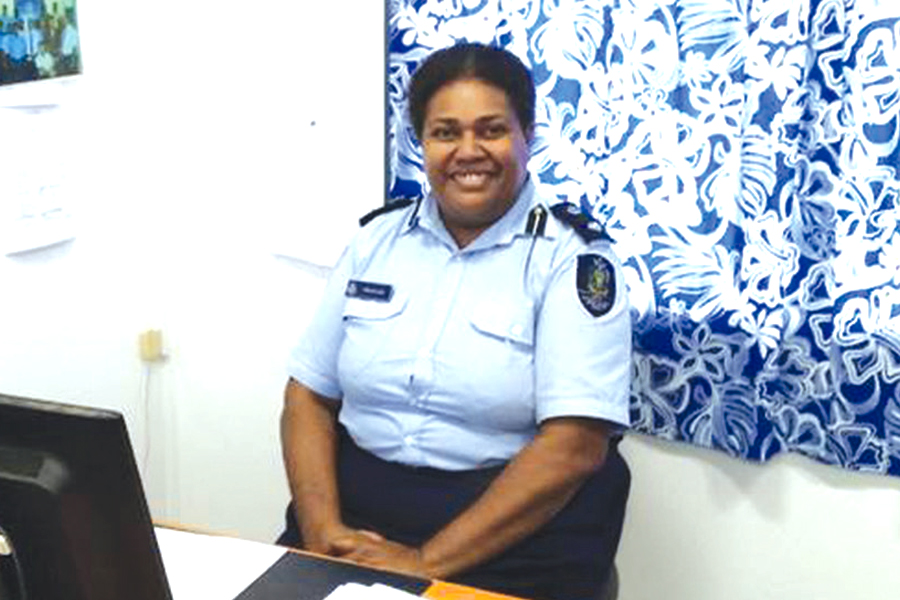
PPC Central Province Patricia Leta.

POLICE at the Tulagi police station, Central province have mediated a suspected case of sorcery at Soso village within the Sandfly area in the Florida Islands on May 14, 2018.

It is alleged that a false rumour was spread within the communities that a 50-year-old man alleged to have used black magic to kill another man in December 2017.

This has caused ongoing hatred between the two parties.

Provincial Police Commander (PPC), Central Province Superintendent Patricia Leta says, “My officers with a lot of effort by Crime Prevention Committee members, church leaders and village chiefs managed to bring both parties involved to reach a common understanding and settled their grievances through custom.

“I would like to thank both parties and all the community leaders who assisted my officers to peacefully mediate the long standing issue.

“This shows police and the community are working together to implement the Crime Prevention Strategy for a peaceful community for our children.

“My officers also conducted an awareness talk to remind the community at Soso not to take the law into their own hands, instead resolve things through amicable means or allow authorities to be involved.”

The community leaders also conveyed their sincere appreciation to police in Tulagi for their continuous partnership with the communities especially to ensure peace prevails within Central province.

–POLICE MEDIA

SINU to offer new primary teaching programme in Jan 2019

0

BY LORETTA BRIGIDIA MANELE

CURRENTLY the University has enrolled five cohorts in the current Primary Teaching Programme offered at the distance mode and they will be the last to do the programme.

This is according to SINU’s marketing and promotions officer for DFLC (Distance Flexible Learning Centre), Mr Jerry Pakivai.

He said that the university is reviewing the programme with the plan to deliver a new one by January next year and mentioned that form five leavers will no longer be direct intakes.

Pakivai explained that this is because they have found that the standard of teaching by form 3 and form 5 leavers is quite low hence have developed a platform that will train and improve their confidence in teaching.

“As a proactive decision, the University has developed the Learning Pathway Certificate to help improve the confidence of Form 3 to Form 5 in terms of content.

“We have seen from the current trend where standard of content is quite low particularly among Form 3s. Secondary Schools are complaining for the fact that the students are not well prepared in content in primary schools.

“This is also captured in the survey Distance and Flexible Learning has done, hence, it is developing the Learning Pathway Certificate to help in that regard. The Distance and Flexible Learning Centre is also working with the School of Education & Humanities for the new Primary Teaching Certificate programme,” he said.

Pakivai expressed that they are optimistic that the School of Education & Humanities will be ready to offer the new programme in January 2019.

“The programme emphasis is more on content, therefore should really help trainees to prepare primary students in content in the primary level before they transit to secondary school,” he said.